
Blooming
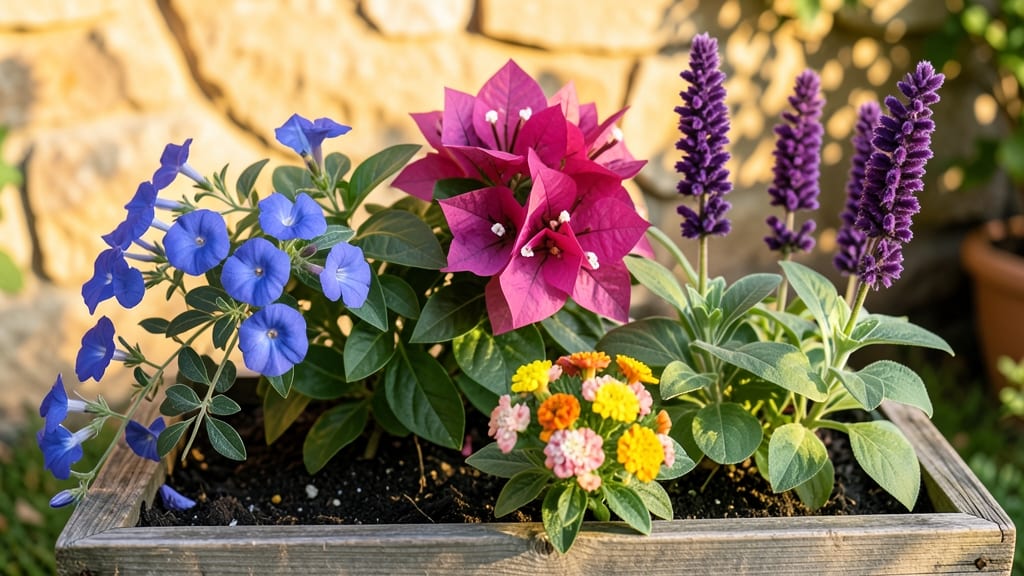
Perennial flowers that bloom all year long need warm climates without frost, where hellebores, impatiens, and certain hibiscus varieties can flourish continuously. In colder regions, year-round blooms are rare, but strategic planting can create near-continuous color.
If you're dreaming of a garden bursting with color every single month, tropical and subtropical climates (USDA zones 10-12) are your best bet. 🌺 These areas provide the consistent warmth and humidity that perennial flowers like plumbago and bougainvillea need to keep blooming.
Even in these ideal conditions, some flowers have natural dormant periods, so no garden is truly "all year" without careful selection.
For cooler climates, the key is planning: choose perennials with staggered bloom times, like coneflowers in summer followed by mums in fall, and use protective measures like mulch to extend seasons.
What many gardeners don't realize is that even in perfect climates, some flowers need periodic rest. For example, hibiscus may slow down during monsoon seasons, while impatiens can become leggy without proper pruning.
The secret to year-round interest lies in layering plants with different bloom cycles—think of it like creating a floral calendar where each plant takes its turn in the spotlight.
💡 In This Article
- Climate Zones Where Year-Round Blooming Perennials Thrive
- Strategies for Extending Bloom Seasons in Cooler Climates
Climate zones where year-round blooming perennials thrive
Perennial flowers that bloom continuously rely on two critical climate factors: consistent warmth above 60°F and stable humidity levels above 50%**. Tropical and subtropical zones (USDA 10-12) provide these conditions naturally, creating ideal environments where flowers like hibiscus and plumbago can photosynthesize and flower year-round without dormancy periods.
The key difference from temperate zones is the absence of seasonal temperature swings that trigger dormancy in most perennials. In these warm climates, plants receive 12+ hours of daylight year-round, maintaining steady energy production for continuous blooming.
The humidity plays an equally vital role—low humidity (30%) causes flowers to wilt faster and reduces transpiration efficiency. For example, impatiens (a tropical favorite) can produce 50% more blooms in 80% humidity compared to 40% humidity.
This is why coastal tropical regions often outperform inland areas for year-round blooms. The combination of warmth and moisture creates what botanists call "optimal photoperiodic conditions," where plants don't experience the light deprivation that triggers dormancy in temperate climates. 🌿
In contrast, temperate zones (USDA 5-9) experience seasonal temperature drops below 50°F, which forces most perennials into dormancy. Even hardy varieties like hellebores (which bloom in winter) need this seasonal contrast to reset their growth cycles.
The trade-off is that these zones can only support "near-year-round" bloomers through careful selection of plants with staggered bloom times. For instance, coneflowers bloom summer-to-fall while heucheras provide winter interest through foliage color—creating visual continuity even without continuous flowers.
Here's what the science shows: Perennials in tropical zones maintain consistent root activity because soil temperatures stay above 65°F year-round. This allows continuous nutrient uptake and flower production. In temperate zones, soil temperatures drop below 55°F in winter, halting root growth and forcing above-ground parts to die back.
The exception? Evergreen perennials like shrub roses or camellias, which can produce flowers in winter but still require 6+ months of dormancy each year for proper growth cycles. 🌸
For gardeners in cooler climates, understanding these mechanisms explains why even "year-round" claims often refer to extended seasons rather than true 12-month blooming.
The USDA Hardiness Zone Map serves as your guide—plants labeled for zones 10-12 will give you the closest to continuous color, while those for zones 5-9 will require seasonal rotation strategies to achieve similar visual impact.
The key measurement to track is your local last frost date and first frost date, which determine your growing season length.
Consider this comparison: A tropical hibiscus in Miami (Zone 11) might produce 20+ blooms per week continuously, while the same variety in Atlanta (Zone 8) would only bloom 8-10 weeks per year before frost.
The difference comes down to heat accumulation—tropical zones accumulate 10,000+ growing degree days annually, while temperate zones typically see 5,000-7,000. This explains why even "everblooming" perennials in cooler climates often need artificial extensions like row covers or microclimates to approach tropical performance. ✨