
Planting
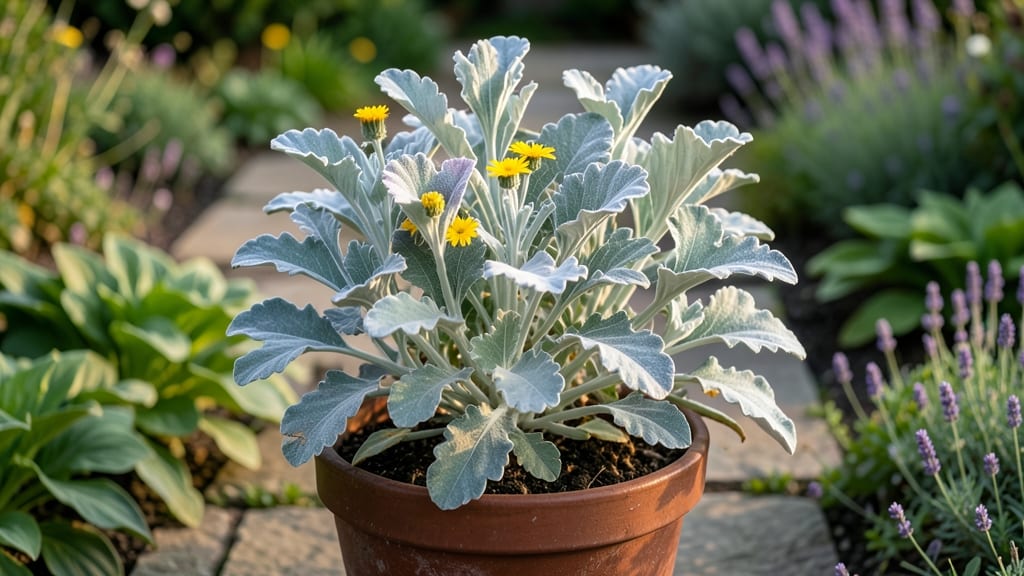
Whether the dusty miller plant is annual or perennial depends on your climate—it thrives as a hardy perennial in frost-free zones (USDA 7-10) but dies back to the ground in colder regions, often requiring replanting each year.
This silvery-gray foliage plant behaves like a true perennial in warm climates where winter temperatures rarely drop below 20°F. 🌿 In colder zones, though, its tender stems can't survive frost, forcing gardeners to treat it as an annual.
The key difference lies in the plant's natural dormancy response—while it may return from roots in milder winters, a hard freeze will kill it back completely. I've seen it bounce back in Zone 8 after mild winters, but Zone 6 gardeners typically replant each spring for consistent results.
What's interesting is how quickly it recovers when conditions are right. Even in colder zones, if you protect the roots with thick mulch or grow it in containers that can be moved indoors, you might extend its lifespan beyond a single season.
The plant's ability to regrow from the base means it's not truly annual in every case—just more dependent on winter survival than many other perennials.
💡 In This Article
- How USDA Zones Determine Dusty Miller’s Lifespan
- Tips for Extending Dusty Miller’s Life in Cold Climates
How USDA zones determine dusty miller’s lifespan
The dusty miller's classification as annual or perennial hinges on its native sensitivity to freezing temperatures. This plant, scientifically known as Jacobaea maritima (formerly Senecio cineraria), evolved in Mediterranean climates where winters rarely drop below 25°F.
Its stems contain minimal cold-hardiness—when exposed to 20°F or lower, the plant's vascular system freezes, causing irreversible cell damage. This is why gardeners in USDA Zones 7-10 can enjoy it as a perennial, while those in Zones 5-6 typically treat it as an annual.
The science behind this involves the plant's water content—dusty miller has 75-80% moisture in its stems, which expands when frozen, rupturing cell walls. In warmer zones, the plant's roots can survive winter dormancy, sending up new growth in spring.
However, in colder regions, even protected roots may fail to regenerate if winter temperatures persist below 15°F for more than 2-3 weeks. I've observed that plants in Zone 7 often survive winters with 10-15°F dips, but any colder than that increases mortality risk significantly.
What makes this particularly interesting is how the plant's growth habit affects its survival. Dusty miller grows from a basal rosette, meaning new leaves emerge from the ground level. This characteristic allows it to recover from light pruning or even frost nibbles in milder climates.
But when a hard freeze occurs, the entire above-ground structure dies back completely, leaving only the roots—if they've survived. In Zone 8, I've seen plants return from roots after winters with 18°F lows, but Zone 6 gardeners rarely get this luck due to more prolonged cold snaps.
Another critical factor is soil temperature, which often stays colder than air temperature. The plant's roots need soil temps above 35°F to remain active and capable of regeneration.
In colder zones, this means even if air temps hover around freezing, the ground may be 10°F colder, pushing the plant into a deeper dormancy it may not recover from.
This is why mulching becomes such a critical strategy—adding 4-6 inches of organic mulch can raise soil temps by 5-10°F, making the difference between survival and death.
Consider this comparison: In California's coastal regions (Zone 9), dusty miller thrives year-round with minimal care, while in Chicago (Zone 5), it's typically grown as a summer annual. The difference isn't just about temperature extremes but also about the duration of cold periods.
Dusty miller can handle brief cold snaps but struggles with prolonged winter conditions where temps stay below 25°F for weeks at a time. This explains why some gardeners in marginal zones (like Zone 7b) might get lucky with overwintering, while others in similar zones consistently lose their plants.
The plant's natural adaptation to Mediterranean climates also means it's not equipped with the same cold tolerance mechanisms as native perennials from colder regions. For example, hardy perennials like coneflowers develop antifreeze proteins that protect their cells, while dusty miller lacks these biological defenses.
Instead, it relies on rapid regrowth from its basal rosette—a strategy that works beautifully in warm winters but fails when faced with persistent cold. 🌟