Why I started Perennial Guide
I was knee-deep in a raised bed in my first apartment, wrestling with a stubborn patch of soil that refused to hold moisture. The basil I’d planted was wilting by noon, and the zucchini seedlings I’d sworn would thrive were stretching toward the light like drunkards.
My neighbor, a retired botanist, watched me struggle and finally said, *‘You’re treating them like annuals. Perennials don’t play by those rules.’* That’s when I realized no one was writing for people like me—gardeners who wanted to grow things that lasted, not just things that *looked* pretty for a season.
This site is for the rest of us: the folks who’ve killed more plants than they’ve saved, who’ve Googled ‘why is my tomato plant dying’ at 2 AM, and who still show up with dirt under their nails.
Here, you’ll find the lessons I’ve learned the hard way—what actually works in my zone (7b, if you’re keeping score), which seeds to trust, and how to turn a ‘maybe this’ll grow’ moment into something that comes back year after year. No fluff, no perfectionism.
Just the stuff that helps things *stay* alive.
Meet the founder

My grandma had a rule: *‘If you can’t eat it, don’t plant it.’* So my childhood garden was a rotating cast of herbs, tomatoes, and whatever seeds I could sneak from her kitchen windowsill.
The first time I tried growing something *just because it was pretty*—a snapdragon, I think—it died within a week. She didn’t laugh. She just handed me a trowel and said, *‘Next time, pick a fighter.’* That’s the only gardening advice I’ve ever needed.
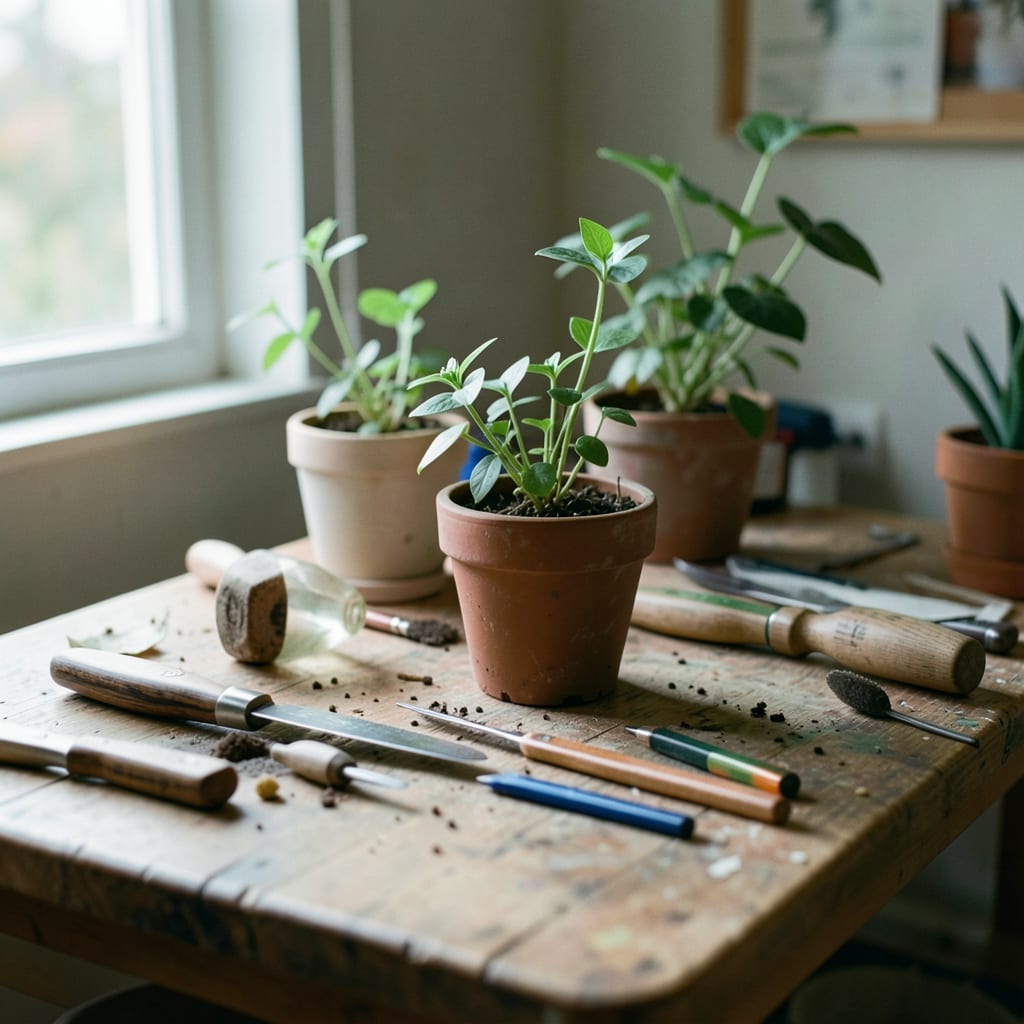
The only tool I still own from those early days is a bent-handled pruner I ‘borrowed’ from her shed. It’s missing a screw, the blades are uneven, and I’ve sharpened it so many times the handle is splintered.
But it’s the one I reach for when I’m deadheading roses or snipping back overgrown lavender. Some things survive longer than we do—and that’s the point.
The failure that changed everything was my first attempt at a cutting garden. I read a book that said *‘just stick stems in water,’* so I did—using stems from my grandma’s peonies, which she’d grown from cuttings herself. They rotted in three days.
Turns out, not all cuttings root the same way, and peonies are stubborn. Now, I test everything: what roots, what doesn’t, and why. That pruner? It’s seen more failures than successes.
I have a habit of talking to my plants. Not full conversations—just murmurs when I’m deadheading or a grunt when I’m wrestling a stubborn root. My neighbors think I’ve lost it. (I have, but not *that* much.) It keeps me from rushing. Gardening isn’t about speed; it’s about paying attention.
And if a plant’s telling you something’s wrong, you’d better listen.
‘If you can’t eat it, don’t plant it.’ —Grandma Winfield (and also, the only gardening rule I’ve ever followed)
Nolan Winfield
Meet the mascot

The first sketch of what would become the mascot started on a napkin at a café in Portland, where I’d gone to buy seeds for my balcony garden. I was doodling a seedling pushing through cracked soil, but the first scribble looked more like a confused worm than anything green.
I crumpled it up—until the barista slid it back with a coffee and said, *‘That’s got potential. Just needs more… teeth.’* (She meant the roots, but I ran with it.)
The next version was drawn on a legal pad at my kitchen table, where I’d propped up a lamp to see the light better. I added jagged roots to show struggle, and a single leaf that wasn’t quite symmetrical—because real seedlings aren’t perfect.
The soil lines were too neat, so I smudged them with a finger. That’s when it started to feel alive.
For the final version, I had to simplify everything except the roots. The leaf had to shrink to fit a browser tab, and the soil cracks had to become just three clean lines—otherwise, it’d look like a muddy mess at small sizes.
The name? *Dirt* seemed too obvious, so I went with *Sprout*. (It’s also the sound my grandma made when she was impressed, and that’s a kind of currency around here.)
‘That’s got potential. Just needs more… teeth.’
The barista who saved the mascot (and my coffee order)
What I promise you
This site isn’t about pretty photos or aspirational gardens. It’s about the stuff that *actually* grows where you live, with the conditions you’ve got. If I say a plant thrives in part shade, it means I’ve watched it struggle in full sun.
If I warn you about pests, it’s because I’ve lost a crop to them. No sugarcoating.
What you can hold me to
- Every plant listed has been grown in my zone (7b) with no special care—just what’s written here.
- I’ll tell you when I’ve failed (and how I fixed it), so you’re not guessing.
- Seasonal advice is based on real weather, not just ‘spring’ or ‘summer.’
- If a method doesn’t work, I’ll say so—and what I tried instead.
How I create a guide
A guide here starts with a question: *‘What’s the one thing that always goes wrong with this?’* For tomatoes, it’s blight. For herbs, it’s bolting. For perennials, it’s forgetting they’re still there. I don’t write until I’ve seen the problem firsthand—or until I’ve talked to someone who has.
The rest is just organizing what works.
The first step: watching
The first thing I do is watch. Not just the plant, but the *soil*—how it behaves when it’s dry, how it clumps when wet, whether it drains or pools. I’ll dig a hole, press my fingers into the dirt, and wait.
If the moisture lingers, I know I’ve got a problem. If it disappears in seconds, I’m golden. This takes time. Sometimes days. (Patience is the only tool you can’t buy.)
The moment something goes wrong, I note it: yellowing leaves, stunted growth, roots that smell like rot. That’s the data. The fix comes later. Right now, I’m just listening. And if a plant’s telling me it’s unhappy, I don’t ignore it—even if it means pulling it up and starting over.
The second step: adjusting
Once I know what’s wrong, I adjust—*slowly*. Too much water? I cut back by half. Not enough sun? I move the pot.
And if the soil’s the issue, I’m not just adding compost; I’m testing pH, drainage, and whether the plant even *likes* my dirt. (Some don’t.) The goal isn’t perfection. It’s finding what works *for you*, not what looks good in a catalog.
The fix isn’t always obvious. Sometimes it’s as simple as a deeper hole. Other times, it’s swapping out half the soil. But I never guess. If a method fails, I go back to the watching. Gardening’s not about shortcuts; it’s about paying attention—and being willing to change.
How a guide gets onto this site
A guide isn’t done until it’s been tested twice: once in the garden, once on the page. I’ll write it down while the soil’s still warm from my hands, then let it sit for a week. That’s when I cut the fluff—no ‘gardening is therapeutic’ nonsense.
If it doesn’t help someone avoid a dead plant, it’s out. And if a guide gets rewritten months later? That means it worked.
Write to me
I love hearing about the plants that surprise you—the ones that *shouldn’t* grow where you live but do anyway. Or the failures that turned into lessons. (Example: That time your rosemary bolted?
What did you learn?) You can share your stories on the contact page, and I’ll add the best ones to the ‘Reader Favorites’ section. Just no photos of your ‘before’ gardens unless you’re ready for brutal honesty.
If you’re here because you’ve killed something and want to try again, you’re in the right place. Gardening’s not about having a green thumb. It’s about having a stubborn one.
Nolan Winfield
The guides are grouped by category: Advice, Aphids, Blooming, Companion Plants, Container Gardens and Diseases.