
Flowers
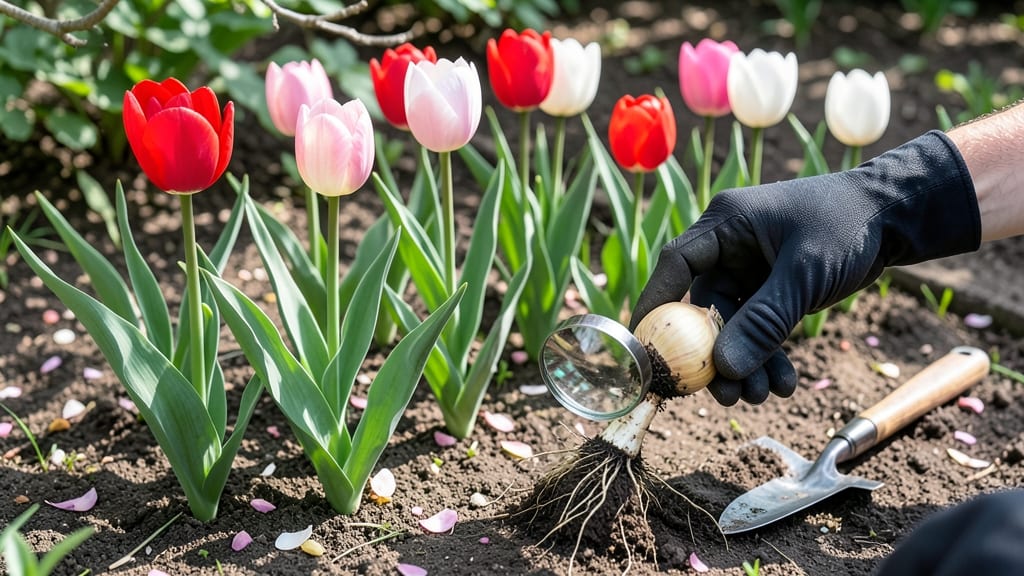
Are all tulips perennials? No—most hybrid tulips die back after flowering and must be replanted annually, while species tulips often return year after year under ideal conditions. Climate, soil, and care determine their longevity.
Most gardeners assume tulips are perennials, but the truth is far more nuanced. 🌱 Hybrid tulips, bred for showy blooms, store energy in their bulbs primarily for flowering—not regrowth.
That's why they often collapse after blooming, requiring replanting. Species tulips, however, have adapted to survive harsh winters and regrow naturally, making them the true perennials of the bunch.
What sets these apart isn't just genetics—it's how they handle stress. Hybrid varieties prioritize dramatic blooms over long-term survival, while species types focus on resilience. This explains why your prized Darwin Hybrid tulips might fade after one season, while a Tulipa tarda could thrive for decades with minimal care.
💡 In This Article
- Why Most Hybrid Tulips Act Like Annuals
- How to Extend Tulip Longevity in Your Garden
Why most hybrid tulips act like annuals
The key difference lies in how hybrid tulips store energy. 🌱 These varieties prioritize dramatic blooms over long-term survival, dedicating most of their bulb's energy reserves to producing showy flowers rather than rebuilding roots and foliage.
Wild species tulips, like Tulipa tarda, evolved to survive harsh winters by storing energy more efficiently in their bulbs—typically 50-70% of their reserves—while hybrids often allocate 80-90% to flowering alone.
Temperature sensitivity plays a huge role too. Hybrid bulbs struggle with extreme cold, often suffering from freeze-thaw cycles that weaken their structure. Species tulips, adapted to -20°F to -30°F conditions, develop thicker bulb coats and deeper root systems.
For example, Tulipa clusiana naturally thrives in mountainous regions where winter temperatures drop below -15°F, while popular hybrids like Parrot tulips may need protection below 20°F.
Breeding practices explain this behavior. Hybridizers cross tulips for larger blooms, vibrant colors, and longer stems—traits that require massive energy outputs. This selective breeding creates a trade-off: stunning flowers for one season at the cost of long-term survival.
In contrast, species tulips were never bred for show; their natural resilience comes from thousands of years of adaptation to unpredictable climates.
What most gardeners miss is the leaf-to-bulb ratio. Hybrid tulips produce fewer leaves (typically 3-5) that photosynthesize less, while species tulips develop 6-10 leaves per stem.
Those extra leaves mean more energy storage for next year's growth. 🌿 Without proper leaf maintenance, hybrid bulbs can shrink by 30-50% each season, eventually dying out.
Consider the Darwin Hybrid group—beloved for their 6-inch blooms—which often require annual replanting because their bulbs prioritize flower production over bulb replenishment. Meanwhile, a species tulip like Tulipa greigii might produce half the bloom size but return reliably for 10+ years with proper care.
The science behind this involves carbohydrate allocation in the bulb. Hybrid tulips convert most stored starches into sugars for flowering, leaving little for root regrowth. Species tulips, however, maintain a balanced starch-to-sugar ratio, ensuring both blooms and survival.
This explains why your hybrid tulips might look spectacular one year but vanish the next!