
Flowers
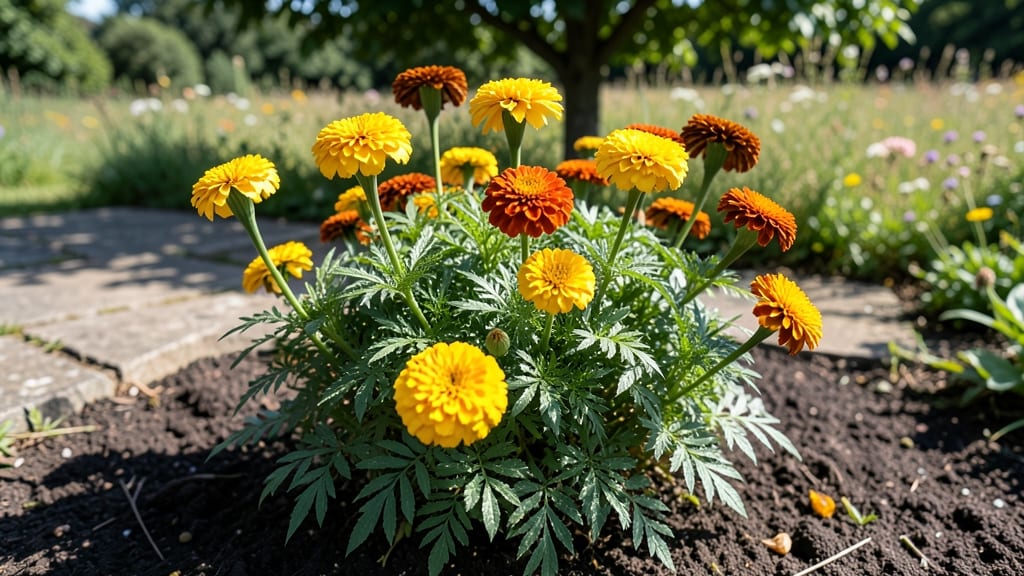
Marigolds are perennial flowers in theory, but they rarely survive winter in colder climates due to frost sensitivity—most gardeners treat them as annuals unless they take special care to protect their roots.
Marigolds actually belong to the Tagetes genus, which includes both true perennials and tender varieties that behave like annuals in cooler regions. 🌱 The key factor is your local climate: in USDA zones 8-11, marigolds naturally return each year, while zones 5-7 require winter protection to prevent frost damage.
Even in mild winters, their growth slows dramatically, which is why many gardeners simply replant them yearly for consistent blooms.
What makes this interesting is how their root systems adapt. While the above-ground foliage dies back in cold weather, the roots often remain viable underground—sometimes even producing new shoots in spring if conditions are right.
This semi-perennial behavior explains why some gardeners successfully overwinter marigolds with proper mulching or container protection, while others see them as true annuals that need replanting each season.
💡 In This Article
- Marigold Cold Hardiness Zones and Winter Survival
- How to Overwinter Marigolds for Year-Round Growth
Marigold cold hardiness zones and winter survival
Marigolds thrive as perennials in USDA hardiness zones 8-11, where winter temperatures rarely drop below 10°F. This is because their root systems can withstand mild freezes, though growth halts when nighttime temperatures fall below 50°F.
The science lies in their tropical origins—marigolds evolved in warm climates where frost is rare, so their cellular structure lacks the antifreeze proteins found in true hardy perennials like lavender or Russian sage.
In zones 5-7, where winter temperatures frequently dip below 0°F, marigolds behave like annuals because frost damages their delicate stems and leaves. However, their roots often survive if protected, especially varieties like 'French Marigold' or 'Mexican Marigold', which have slightly better cold tolerance.
The critical threshold is -5°F: below this, even healthy roots may succumb to freeze-thaw cycles that disrupt cellular membranes.
What's fascinating is how marigolds enter a state of dormancy when temperatures drop. Their leaves yellow and die back, but the roots remain alive underground, storing energy in their taproot system. This explains why some gardeners find marigolds resprouting in spring—even if they didn't take special precautions.
The roots can sustain themselves for months by metabolizing stored starches, similar to how potatoes survive winter in the ground.
Regional differences matter greatly. In Mediterranean climates (zones 9-10), marigolds naturally overwinter with minimal care, while in colder temperate zones (5-6), they require 6-12 inches of mulch or container protection.
The mulch acts like a thermal blanket, insulating roots from temperature swings that can cause frost heave—a process where soil expands and contracts, damaging delicate root structures.
For example, in Zone 6, where winters average 15°F, gardeners often mound soil or straw around marigold crowns to create an insulating layer. This mimics natural conditions in their native Mexico, where marigolds grow in volcanic soil that retains heat.
The contrast between their tropical origins and temperate climates explains why they're often treated as annuals—despite their biological potential to return.
Even in mild winters, marigolds may not bloom reliably if they've been stressed by cold. Their energy goes into rebuilding foliage rather than producing flowers, which is why many gardeners prefer to replant fresh seeds each spring for consistent blooms.
However, with the right protection, some varieties can live for 2-3 years in the ground, making them semi-perennials in colder regions.