
Flowers
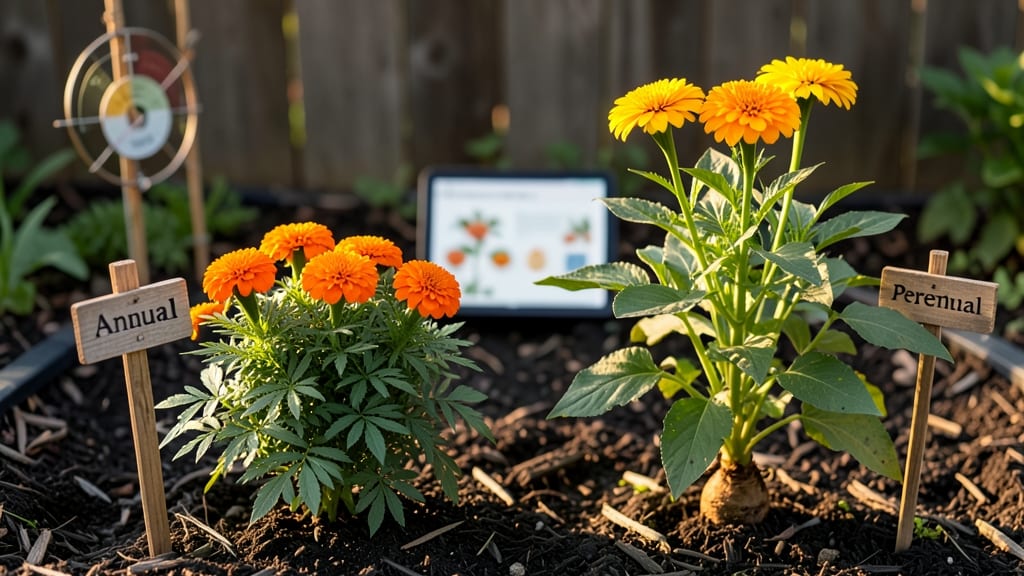
Does annual mean yearly or the perennial? When you hear "annual," it means yearly—plants that complete their entire life cycle in one season, from sprouting to flowering and seeding, before dying. Perennials, on the other hand, live multiple years, regrowing from their roots each spring after winter dormancy.
This distinction matters because annuals give you quick, vibrant blooms for a single season, while perennials offer long-term beauty with less replanting. 🌱 For example, marigolds and zinnias are classic annuals that thrive in summer but vanish when frost arrives, whereas peonies and lavender return year after year with minimal effort.
The key difference lies in their root systems—annuals store energy in seeds, while perennials rely on underground structures to survive harsh conditions.
Understanding this helps gardeners plan strategically. Annuals let you experiment with bold colors and seasonal themes, while perennials build a lasting foundation. I always mix both in my garden: annuals for instant impact and perennials for structure and reliability.
💡 In This Article
- Annual vs Perennial Plant Lifecycles Explained
- Choosing Annuals vs Perennials for Your Garden
Annual vs perennial plant lifecycles explained
At the biological level, the difference between annuals and perennials comes down to how they allocate energy and resources. Annual plants like sunflowers or cosmos invest everything into one explosive growth cycle during their single growing season.
Their entire energy goes toward producing seeds before dying—this is why they often grow so rapidly when conditions are ideal. The process involves a rapid maturation timeline, typically 60-120 days from seed to seed production, depending on species and climate.
Perennials, however, take a completely different approach by developing specialized underground storage organs like rhizomes, tubers, or deep root systems. These structures act as biological batteries, storing carbohydrates and nutrients to fuel regrowth each spring.
For example, peonies develop thick, fleshy roots that can survive -20°F temperatures, while hostas store energy in their rhizomes to emerge year after year. This survival strategy requires careful energy management—perennials grow more slowly in their first year to build these reserves before flowering.
The climate zone plays a crucial role in determining whether a plant is classified as annual or perennial. In USDA Zone 5 (where winters drop to -20°F), most garden plants that would be perennials in warmer zones become annuals.
Take lavender: it's a perennial in Zone 7 but often dies back completely in Zone 5 winters, behaving like an annual. This geographic variation explains why some plants like sweet potatoes are annuals in cold climates but perennials in tropical regions where they never experience freezing temperatures.
Another fascinating difference lies in their reproductive strategies. Annuals rely entirely on seed production for survival, which is why they often develop vibrant flowers to attract pollinators. Perennials, meanwhile, can reproduce both sexually through seeds and asexually through vegetative growth from their root systems.
This dual strategy gives perennials a survival advantage in stable environments, while annuals thrive in disturbed or unpredictable conditions where they can quickly colonize open spaces before competitors establish themselves.
Consider the example of basil: an annual that completes its life cycle in 90-120 days under ideal conditions. When frost arrives, the entire plant dies back, but not before producing thousands of seeds that can germinate next spring.
In contrast, a perennial like coneflower builds its root system over years, only flowering after establishing strength—typically taking 2-3 years to reach full maturity but then returning reliably for decades with proper care.