
Orchid Care
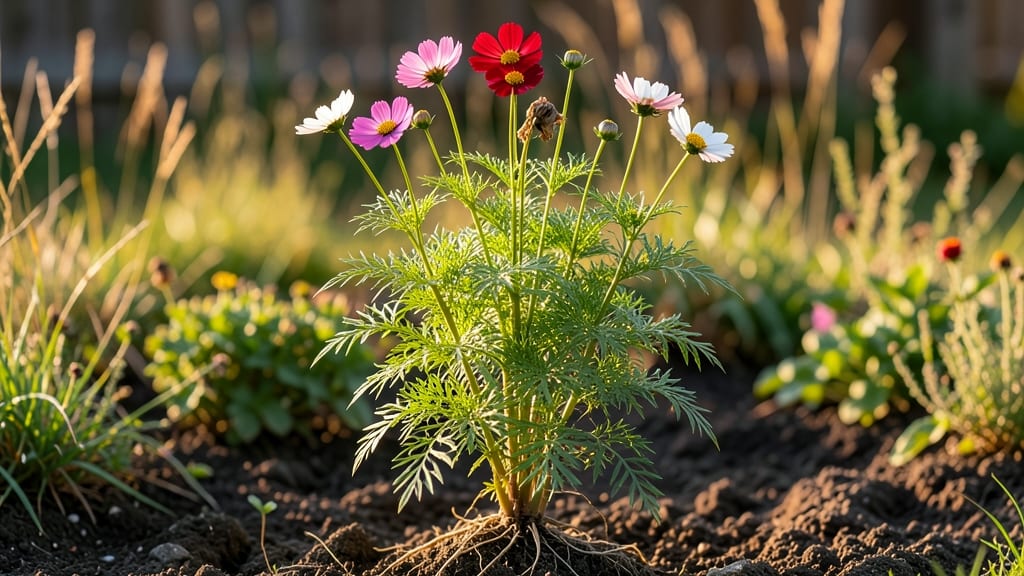
Whether cosmos are annuals or perennials depends on your climate: they grow as annuals in most regions but act as tender perennials in USDA Zones 9-11, where they die back in winter and regrow from their roots if frost doesn't kill them.
This behavior comes down to their frost sensitivity. In cooler climates, cosmos complete their life cycle in one season, producing seeds before dying.
But in warmer zones, their roots survive winter dormancy, sprouting fresh growth each spring. 🌱 The key difference is that true perennials like lavender have woody stems, while cosmos rely on their fibrous root systems to persist—making them "tender" perennials rather than hardy ones.
For gardeners in colder regions, treating cosmos as annuals means you'll get longer bloom times each year by starting fresh seeds. In frost-free areas, they'll reward you with multi-year growth if you protect them from extreme cold snaps.
The plant's adaptability is one reason they're so beloved—whether you're in Zone 3 or 11, cosmos will thrive with the right care.
💡 In This Article
- How Cosmos Act as Perennials in Warm Climates
- Growing Cosmos as Annuals in Cold Climates
How cosmos act as perennials in warm climates
The secret to cosmos behaving as tender perennials lies in their fibrous root system, which stores enough energy to survive winter dormancy in frost-free zones like USDA 9-11. Unlike true perennials such as lavender (which develop woody stems), cosmos rely on these roots to regenerate above-ground growth each spring.
Their roots can tolerate temperatures down to 25°F for short periods, but prolonged exposure to 20°F or below will kill them—this frost sensitivity is what makes them "tender" rather than hardy perennials.
Here's what happens during their dieback cycle: As temperatures drop below 50°F, cosmos enter dormancy, shedding leaves and stems while keeping their roots alive. This process is similar to how salvia behaves in warm climates, though salvia has more robust underground structures.
The stored energy in cosmos roots fuels new shoots in late winter or early spring, often within 2-4 weeks of consistent warmth above 55°F. 🌱 This rapid regrowth is one reason they're prized by gardeners in mild climates.
What sets cosmos apart from true perennials is their lack of persistent woody growth. While lavender develops thick, insulating stems that survive harsh winters, cosmos rely entirely on their root reserves.
This makes them vulnerable to any winter freeze, which is why they only persist as perennials in the warmest zones. In contrast, plants like rosemary can handle -10°F temperatures with their woody structure—cosmos simply can't compete in cold climates.
Their perennial behavior also depends on soil conditions. Well-draining, slightly alkaline soil (pH 6.0-7.5) helps protect roots from rot during winter, while heavy clay soils can suffocate them.
In ideal conditions, established cosmos plants may even produce two bloom cycles per year in Zones 9-11—first in spring, then again in fall—thanks to their ability to regenerate from roots rather than seeds.
Consider this comparison: In Zone 10, a cosmos plant might grow 3-4 feet tall in its first year, die back completely in winter, then sprout again from the same root system the following spring.
This cycle can repeat for 3-5 years if winter temperatures never drop below 25°F. The trade-off? Their perennial nature means they won't produce as many seeds as annual plants would in colder climates.
For gardeners in transition zones (like Zone 8), this behavior creates opportunities: you can mulch heavily with straw or leaves to protect roots during light freezes, potentially encouraging some perennial-like regrowth. However, any hard freeze will kill them back to the ground, making them functionally annuals in those areas. 💫