
Plants
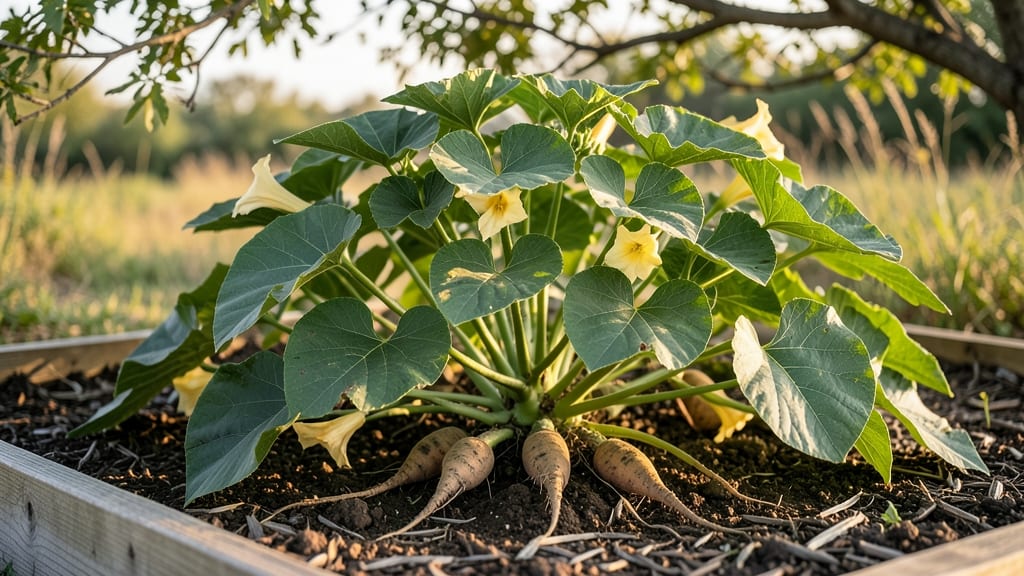
Sweet potato plants are not true perennials in most climates, though their vines may regrow from tubers in warm zones (USDA 9-11) if left undisturbed. Freezing temperatures kill foliage, but tubers often survive underground to sprout again in spring—unless harvested or frost-heaved. Their lifespan depends on winter hardiness and dormancy strategies.
Sweet potatoes might seem like perennials because their tubers act as living storage units, but they're actually annuals in most growing zones. 🌱 The key difference lies in their tubers' ability to store energy—when left in warm soil (like zones 9-11), they can push out new shoots in spring, mimicking perennial behavior.
However, in colder regions, the above-ground plants die back completely each winter, leaving only the dormant tubers to potentially regrow if conditions are right.
This behavior explains why gardeners in frost-prone areas often treat sweet potatoes like annuals, while those in mild climates might see them return year after year without replanting.
The tubers' survival strategy—storing starches underground—is what creates this confusing perennial-like cycle, but true perennials regrow from their roots, not stored food reserves.
💡 In This Article
- Why Sweet Potatoes Act Like Perennials in Mild Climates
- How to Overwinter Sweet Potato Tubers for Next Year’s Harvest
Why sweet potatoes act like perennials in mild climates
The confusion about sweet potatoes being perennial stems from their unique tuber-based dormancy system. Unlike true perennials (like asparagus or rhubarb), which regrow from specialized underground stems called rhizomes, sweet potatoes rely entirely on their starchy tubers to survive winter.
These tubers store enough energy to fuel new growth when conditions improve—similar to how a potato can sprout in your pantry. In USDA zones 9-11, where winter temperatures rarely drop below 40°F, the tubers remain viable underground, allowing vines to regenerate from the same plant year after year.
Here's the science: Sweet potato tubers contain high concentrations of starch and sugars (up to 30% by weight), which act as a biological battery. When soil temperatures stay above 50°F, these tubers can maintain metabolic activity just enough to sprout new shoots in spring.
This is why you might see sweet potato vines reappear in your garden without replanting—it's not true perennial behavior, but rather tuber-mediated regrowth.
In contrast, true perennials like yams (which are actually sweet potatoes' wild relatives) have fibrous root systems that survive winter intact, while sweet potatoes depend entirely on their stored food reserves.
The critical difference becomes clear when frost hits. Below 32°F, the above-ground vines die back completely, but the tubers themselves enter a deep dormancy. If left undisturbed in well-draining soil, they can survive for months, only to sprout again when temperatures rise.
This is why gardeners in zone 9 might see sweet potatoes "come back" year after year—it's not because they're perennial, but because their tubers act like living seed banks.
The moment you harvest those tubers, you're essentially "pruning" the plant's ability to regrow, which is why most gardeners treat them as annuals in colder climates.
Consider this comparison: A true perennial like hosta will send up new shoots from its roots every spring, regardless of whether you dig up its rhizomes. A sweet potato, however, is like a potato plant—if you remove its tubers, the plant is gone.
The only way to "overwinter" sweet potatoes is to leave the tubers in the ground (in warm zones) or store them properly (in cooler zones), which is why their behavior can be misleading.
Even in mild climates, their lifespan is limited by how long the tubers can maintain viability—typically 3-5 years if left undisturbed.
What most gardeners don't realize is that sweet potatoes have a secondary survival mechanism: their ability to produce multiple tubers per plant. Each tuber can potentially regrow, creating a network of future plants.
This is why a single sweet potato vine might produce dozens of tubers in a season—each one a potential "seed" for next year's growth.
In zone 10, I've seen sweet potato patches expand dramatically over several years without any human intervention, as long as the tubers aren't disturbed or eaten by pests.
The frost line is the ultimate decider. In zones 7 and below, even if tubers survive winter, they're often frost-heaved (pushed out of the soil by freezing/thawing cycles), making them vulnerable to drying out or rodent damage.
This is why true perennial behavior—where the plant structure itself survives—is impossible for sweet potatoes in colder climates. Their entire strategy revolves around energy storage and regrowth potential, not structural survival like true perennials.
Here's a quick visual comparison to remember:
- True Perennials (asparagus, rhubarb): Regrow from specialized roots/rhizomes; above-ground parts die back but underground structure remains
- Sweet Potatoes: Regrow from tubers (stored food reserves); above-ground parts die back completely each winter
- Annuals (tomatoes, beans): Complete life cycle in one season; no regrowth mechanism
The key takeaway is that sweet potatoes are geographic perennials—they behave like perennials only in climates where their tubers can survive winter undisturbed. In colder zones, they're strictly annuals because their survival strategy fails when temperatures drop too low. 🌱