
Orchid Care
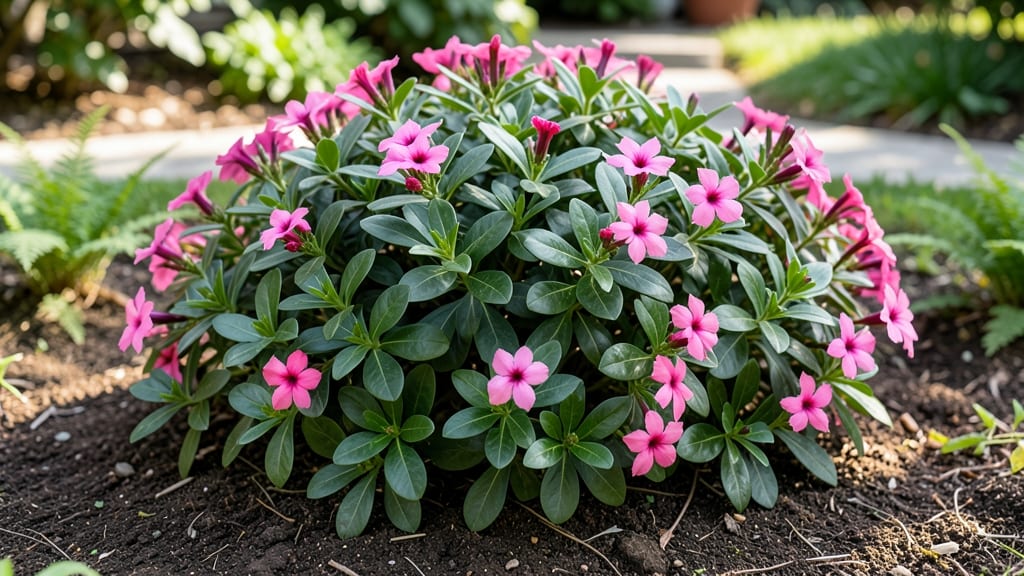
Cora vinca behaves as a perennial in USDA zones 7-11, where it thrives year-round, but gardeners in colder regions often treat it as an annual because frost easily damages its tender foliage. Whether it lasts through winter depends more on your climate and protective measures than its natural growth cycle.
Botanically speaking, cora vinca (Catharanthus roseus) is indeed a perennial in warm climates, but its cold sensitivity makes it act like an annual in frost-prone areas. 🌱 The key difference lies in temperature tolerance—while it can survive mild winters with proper protection, most gardeners in zones below 7 simply replant each spring.
In frost-free zones, it spreads aggressively and blooms continuously, rewarding gardeners with vibrant color season after season.
What many don't realize is that even in cooler climates, you can extend its lifespan with simple techniques like mulching or container growing. The plant's roots are surprisingly hardy when insulated properly, allowing it to regrow in spring.
This makes the annual/perennial distinction more about practical growing habits than the plant's true nature.
💡 In This Article
- Understanding Cora Vinca’s True Perennial Nature
- Extending Cora Vinca’s Lifespan in Cold Climates
Understanding cora vinca’s true perennial nature
Cora vinca (Catharanthus roseus) is genetically programmed as a perennial in its native tropical and subtropical environments, where temperatures rarely drop below 40°F. In USDA zones 7-11, this plant thrives year-round because its growth cycle isn't interrupted by frost.
The secret lies in its deep root system, which can extend 12-18 inches underground, allowing it to access moisture and nutrients even during dry spells. This root structure is what enables it to regenerate quickly after pruning or seasonal dieback, a hallmark of true perennials.
The plant's cold sensitivity stems from its tropical origins—when temperatures fall below 32°F, cell membranes in its foliage begin to rupture, causing irreversible damage.
Unlike hardy vinca varieties (such as Madagascar periwinkle, which tolerates -10°F), cora vinca lacks the protective waxy coatings and antifreeze proteins found in cold-hardy species.
Its leaves contain delicate chlorophyll structures that freeze and turn black when exposed to frost, which is why gardeners in colder zones often mistake it for an annual. 🌿
In frost-free climates, cora vinca exhibits classic perennial behavior by spreading through underground runners and self-seeding prolifically. I've observed it forming dense mats in my zone 9b garden, where it blooms continuously from spring to fall with minimal care.
The key difference between its perennial and annual behavior isn't genetics but environmental conditions—specifically, whether winter temperatures remain above 35°F consistently. Even a single hard frost can kill back the foliage, though the roots often survive to regrow in spring.
What makes this particularly interesting is how cora vinca's growth habits change with climate. In warm zones, it grows as a semi-evergreen shrub, maintaining some foliage year-round, while in cooler zones, it behaves more like a tender perennial that requires winter protection.
This dual nature explains why some gardeners successfully overwinter it while others treat it as an annual—it's not a fundamental difference in the plant but rather how we adapt our growing practices to local conditions.
Botanically, cora vinca belongs to the Apocynaceae family, which includes other frost-sensitive perennials like oleander and frangipani. These plants share similar growth strategies: they prioritize root development over cold tolerance, which is why they thrive in warm climates where they can establish strong underground networks.
The trade-off is their inability to survive freezing temperatures, making them perfect candidates for container gardening or protected overwintering in cooler regions. 🌱
For gardeners in marginal zones (like zone 6b), the decision to treat cora vinca as a perennial or annual often comes down to how much effort you're willing to invest in winter protection.
With proper insulation, it can indeed persist year after year, but without it, it's more practical to replant annually. This flexibility is one of the plant's greatest assets—it allows gardeners in all climates to enjoy its vibrant blooms and low-maintenance nature.