
Orchid Care
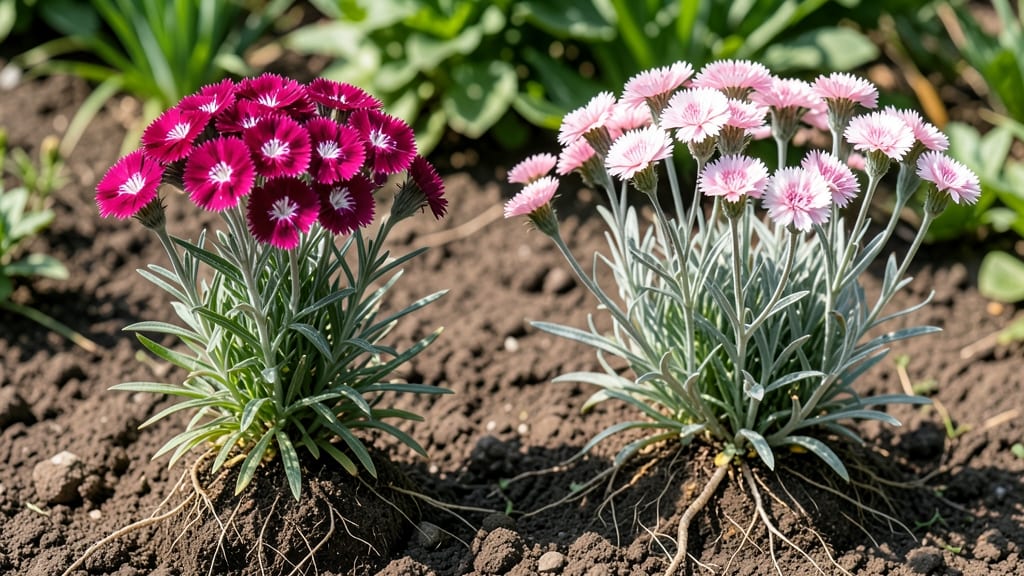
Whether dianthus plants are annual or perennial depends entirely on cold hardiness: tender varieties freeze to death in winter, while hardy species like Dianthus barbatus or Dianthus chinensis thrive as perennials in USDA zones 3-8. Always verify your local climate zone before planting for multi-year success.
This distinction matters because dianthus plants react dramatically to temperature shifts. 🌡️ Perennial types develop deep root systems that survive winter dormancy, while annual varieties simply can't handle frost and complete their lifecycle in a single season.
The key difference lies in their natural growing zones—northern gardeners automatically get perennials, while southern climates often require annual planting for consistent blooms. For example, Dianthus gratianopolitanus (Cheddar Pink) thrives as a perennial in cold zones but may act as an annual in warmer regions.
Your choice also affects long-term care: perennials need winter mulching in marginal zones, while annuals offer quick color with less commitment. I've found that container gardening solves this dilemma—just choose cold-hardy varieties and bring pots indoors before the first freeze.
This way, you get perennial benefits without worrying about ground frost damage.
💡 In This Article
- How Cold Tolerance Determines Dianthus Lifespan
- Choosing the Right Dianthus for Your Climate
How cold tolerance determines Dianthus lifespan
The fundamental difference between annual and perennial dianthus varieties lies in their cellular response to freezing temperatures. Perennial types like Dianthus barbatus (Sweet William) have evolved specialized proteins called antifreeze proteins that prevent ice crystal formation in their cells during winter dormancy.
These proteins bind to ice nuclei and inhibit crystal growth, allowing the plant to survive temperatures down to -30°F in USDA zone 3. 🌱 In contrast, tender annual varieties lack these proteins and suffer irreversible cellular damage when exposed to 32°F or below, causing their stems to blacken and roots to rot.
Root structure plays a crucial role in survival. Hardy perennials develop a deep, fibrous root system that extends 12-18 inches below the soil surface, accessing moisture and nutrients that insulate them from temperature fluctuations. The root crown—where stems emerge—contains meristematic cells that remain dormant but viable through winter.
Annual varieties, however, develop shallow root systems (6 inches deep) that freeze solid in cold climates, explaining why they complete their lifecycle in a single growing season.
What's fascinating is how dianthus plants use photoperiodism to anticipate winter. As daylight hours shorten in fall, perennial varieties begin producing higher levels of abscisic acid, a hormone that triggers dormancy. This chemical process hardens cell walls and reduces metabolic activity by up to 90%, conserving energy until spring.
Annual varieties don't have this adaptive mechanism—they simply grow until frost kills them, then decompose back into the soil, enriching it for future plantings. 🍃
The transition between annual and perennial behavior often occurs within just a few degrees of temperature. For example, Dianthus chinensis thrives as a perennial in zone 4 but may behave as an annual in zone 8 if exposed to prolonged 28°F temperatures.
This explains why gardeners in marginal zones (like zone 7) sometimes see their dianthus die back only to regrow from the roots—it's not dead, just experiencing temporary cold stress. The plant's ability to regenerate depends on whether its root crown remained protected by 3-4 inches of mulch or soil.
Color also provides clues about hardiness. Darker foliaged varieties like Dianthus 'Firewitch' tend to be more cold-tolerant because their pigments absorb more heat during the day, while lighter varieties may struggle in zone 5.
The flower color doesn't affect hardiness, but purple-hued varieties often indicate stronger constitutions—purple anthocyanins actually help protect plant tissues from UV damage during early spring growth when other plants are still dormant. 💜
For gardeners in transition zones (like zone 6), the solution lies in understanding microclimates. A south-facing wall can create a 5-10°F warmer environment than the surrounding garden, allowing marginally hardy varieties to survive winters that would otherwise kill them.
This is why some gardeners successfully grow Dianthus gratianopolitanus as perennials in zone 6 despite its official zone 7 rating—it's all about strategic placement and protection.