
Flowers
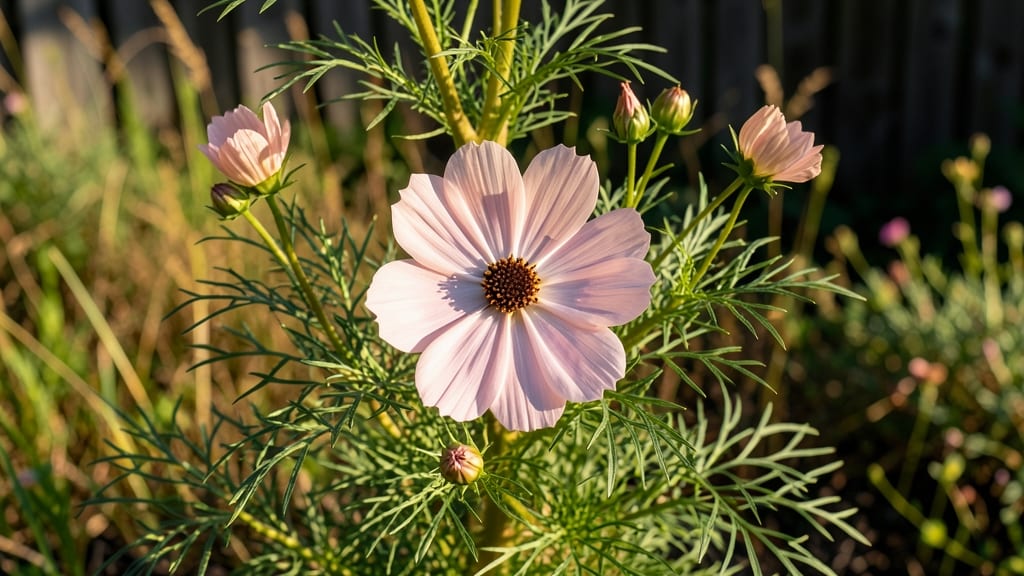
Are cosmos flowers annual or perennial? They're annuals that complete their lifecycle in one growing season, though their self-seeding habit often makes them seem perennial by sprouting new plants each spring from dropped seeds. Most varieties won't survive winter in temperate climates.
Understanding why cosmos flowers seem to return year after year starts with their self-seeding superpower.
These plants produce thousands of tiny seeds that scatter naturally, creating dense clusters of new seedlings the following spring. 🌱 While this mimics perennial behavior, the parent plants themselves die back completely after frost—true annual behavior.
The key difference is that perennials regrow from established roots, while cosmos rely entirely on new seeds for each growing season.
This seed-dispersal strategy explains why cosmos thrive in wildflower meadows and neglected garden corners. When you plant them once, they often become self-sustaining, creating the illusion of perennials without requiring any winter care.
The trade-off? You lose control over where they sprout and may end up with plants that don't match your original variety's characteristics.
💡 In This Article
- Why Cosmos Flowers Die Back Each Year
- How to Extend Cosmos Blooms Seasonally
Why cosmos flowers die back each year
The annual lifecycle of cosmos flowers begins with a rapid growth spurt that typically unfolds over 90-120 days from seed to maturity. This accelerated timeline contrasts sharply with true perennials, which develop robust root systems capable of surviving winter dormancy.
Cosmos plants allocate their energy primarily to seed production rather than root storage, which is why they wither completely when temperatures drop below 25°F (-4°C). 🌡️ The frost-sensitive stems and leaves turn brown and crispy within days of the first hard freeze, signaling the end of the parent plant's lifecycle.
What makes this lifecycle fascinating is the photoperiod sensitivity of cosmos flowers. Most varieties are short-day plants, meaning they flower more prolifically when daylight hours shorten in late summer and fall. This natural timing ensures they produce seeds before winter sets in.
The seeds themselves enter a state of dormancy that lasts until spring's warming temperatures and increased moisture trigger germination. This seed-to-seed cycle—rather than root regrowth—is what creates the perennial-like appearance in gardens.
The botanical mechanism behind this involves thermomorphogenesis, where plants respond to temperature changes. Cosmos flowers detect the 30-50°F (1-10°C) temperature drops that signal winter's approach and immediately shift resources from leaf production to seed maturation.
This adaptation explains why you'll rarely see cosmos flowers surviving winter in USDA zones 5-9—their entire energy reserve is invested in creating the next generation rather than maintaining their own structure.
Here's where the confusion with perennials arises: true perennials like coneflowers or black-eyed Susans develop crowns or rhizomes that remain dormant underground. Cosmos, however, have taproots that don't regenerate after frost damage.
The only way they "return" is through seeds that may have fallen anywhere within a 3-5 foot radius of the parent plant, creating unpredictable new growth patterns each spring.
Consider this visual comparison: A cosmos plant's lifecycle resembles a fireworks display—dramatic, colorful, and complete in one season—while a perennial is more like an oak tree, growing incrementally each year.
The fireworks analogy fits perfectly because cosmos flowers often produce 1,000-2,000 seeds per plant, each capable of sprouting with minimal sunlight and soil quality, which is why they thrive in poor conditions where other plants might fail.
What most gardeners don't realize is that this annual behavior actually benefits the ecosystem. The rapid decomposition of cosmos plants releases nutrients back into the soil, creating ideal conditions for the next generation.
This natural fertilization process explains why cosmos often appear more vigorous each subsequent year in the same location—even though no parent plants survived the winter. 🌱