
Flowers
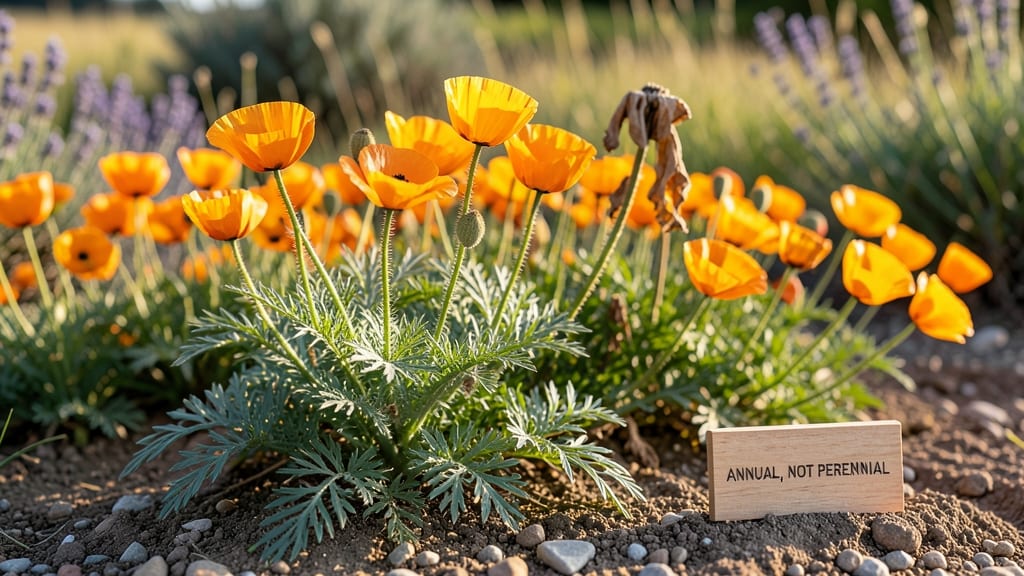
Poppy flowers are not true perennials in most climates, as they die back after blooming and typically reseed themselves annually. However, some species like the Iceland poppy may return in mild winters or with proper care.
Most poppies behave like annuals because their deep taproots make them sensitive to disturbance, and cold temperatures trigger their natural dormancy cycle. 🌱 Unlike true perennials that regrow from the same root system, poppies often self-seed to produce fresh plants each spring.
The Iceland poppy stands out as an exception—it can survive mild winters and sometimes returns year after year with minimal care. Understanding this growth pattern helps gardeners set realistic expectations while still enjoying their vibrant blooms season after season.
What truly sets these flowers apart is their ability to adapt. While they may not live indefinitely, their seeds often germinate reliably, creating natural clusters of new plants. This makes them perfect for cottage gardens or wildflower meadows where self-sufficiency is desirable.
The key to encouraging repeat blooms lies in protecting their roots during winter and avoiding over-disturbance of the soil.
💡 In This Article
- Poppy Flower Life Cycle: Why They Die Back Each Year
- How to Encourage Poppy Flowers to Return Year After Year
Poppy flower life cycle: why they die back each year
The annual dieback of poppy flowers stems from their unique root structure. Most poppies develop a deep taproot that stores nutrients but makes them vulnerable to soil disturbance.
Unlike perennials that regenerate from a robust crown, poppies prioritize energy toward seed production over root survival, causing their above-ground growth to wither after blooming. This is especially true for common poppies like Papaver rhoeas, which have a 2-3 month lifespan from seed to seed.
Cold temperatures act as the primary trigger for their dormancy cycle. When nighttime temperatures drop below 40°F, poppies enter a natural senescence phase where their leaves yellow and stems collapse. This response is hardwired into their genetics as a survival mechanism—preparing to drop seeds before winter kills the plant.
The Iceland poppy (Papaver nudicaule) breaks this pattern by developing a shallow, fibrous root system that can withstand 10-15°F temperatures, allowing it to persist through mild winters.
What most gardeners miss is how poppies actually "cheat" perennial behavior through their seeds. While the parent plant dies, it drops thousands of seeds per plant that remain viable in the soil for 2-3 years.
This seed bank ensures new plants emerge each spring, creating the illusion of perennial growth. The key difference? True perennials regrow from the same root system, while poppies rely entirely on this annual reseeding strategy.
Light exposure plays a crucial role too. Poppy seeds require light to germinate, which is why they often appear in disturbed soils. Their shallow seed placement (just 0.25 inches deep) means they won't sprout if buried too deeply—a common mistake that reduces their "perennial" appearance.
This light dependency explains why poppies thrive in poor, rocky soils where other plants struggle.
Consider this comparison: A true perennial like peony divides its energy between root growth and flowering, while poppies allocate 90%+ of their resources to seed production. This biological trade-off explains why they don't persist like classic perennials.
The Iceland poppy's ability to return stems from its biennial growth habit—it stores energy in its first year to flower in the second, then dies back, but its seeds create the next generation.
Here's what happens under the soil: Poppy roots contain high concentrations of alkaloids that deter predators, but these same compounds make the roots less winter-hardy than true perennials. When temperatures drop below 20°F, most poppy roots simply rot away, leaving only the protected seeds to carry on the species.
This is nature's way of ensuring genetic diversity through annual regeneration rather than clonal reproduction.
The exception proves the rule: In USDA Zones 5-7, Iceland poppies sometimes return because their fibrous roots can regenerate from small fragments left in the soil. This creates the appearance of perennial behavior, but it's actually a form of vegetative reproduction rather than true perennial growth.
For most poppies, the cycle of dieback and reseeding is an evolutionary adaptation to unpredictable growing conditions.