
Orchid Care
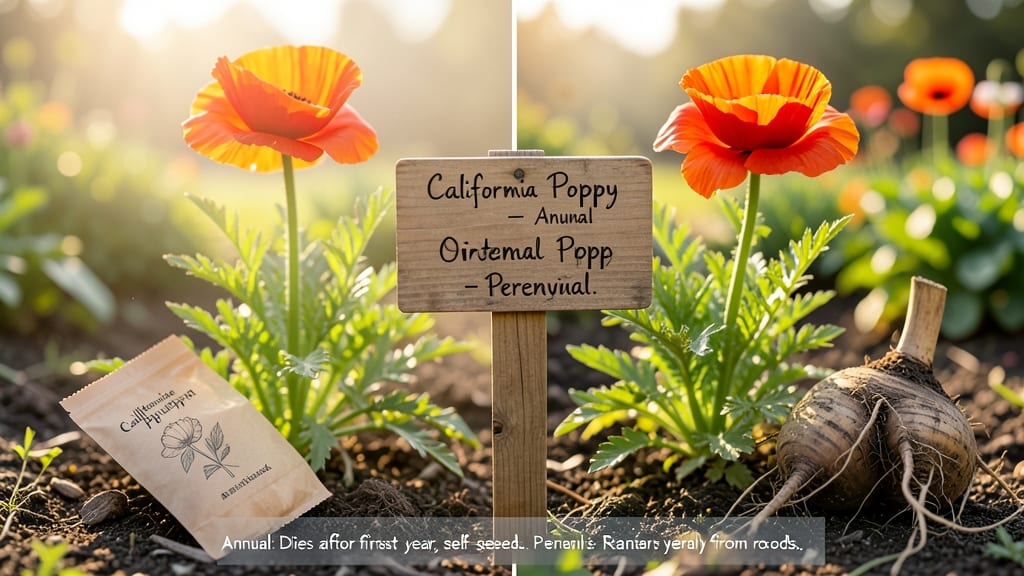
Poppies are mostly annuals or biennials, though some varieties like the Iceland poppy or Oriental poppy act as short-lived perennials. Their lifespan depends on species, climate, and growing conditions, with most dying back after flowering but returning from seed or roots in mild winters.
Most poppies follow a predictable life cycle where they sprout, bloom, and complete their growth within a single season or two, which is why they're classified as annuals or biennials. 🌸 The key difference lies in their seed production—annuals finish their life cycle in one year, while biennials take two years to flower and set seed.
However, some hardy varieties like the Iceland poppy develop deep root systems that allow them to persist through mild winters, effectively acting like perennials despite their short-lived above-ground growth.
Understanding this behavior helps gardeners plan better. For instance, California poppies thrive as annuals in warm climates but may self-seed prolifically, creating naturalizing displays year after year. Meanwhile, Oriental poppies often return from their thick, woody roots even after their foliage dies back completely.
This adaptability makes poppies surprisingly resilient once you know their natural tendencies.
💡 In This Article
- Poppy Lifespan Variations by Species
- How to Extend Poppy Blooms in Your Garden
Poppy lifespan variations by species
The classification of poppies as annuals, biennials, or short-lived perennials hinges on their seed dormancy patterns and root development.
Annual poppies like the California poppy (Eschscholzia californica) complete their entire lifecycle in just one growing season, producing seeds that can remain dormant for years until conditions are ideal.
Their shallow root systems mean they rely entirely on seasonal rains or irrigation to thrive, making them perfect for dry climates where they naturally self-seed to create long-lasting meadows. 🌵
Biennial poppies, such as the common field poppy (Papaver rhoeas), follow a two-year cycle. In their first year, they focus on building deep taproots (sometimes reaching 12-18 inches deep) to store energy, while only producing basal leaves.
The second year, they devote all resources to flowering and seed production before dying. This strategy allows them to survive in unpredictable environments where winters might be too harsh for above-ground growth.
The key difference from annuals is their ability to store energy underground, giving them a survival advantage in colder regions.
Short-lived perennials like the Iceland poppy (Papaver nudicaule) and Oriental poppy (Papaver orientale) take this adaptability further. These varieties develop thick, woody root systems that can persist for 3-5 years or more, allowing them to regrow from the same roots each spring.
The Oriental poppy, for example, produces massive, tuber-like roots that can weigh up to 2 pounds in mature plants, storing enough energy to fuel multiple years of flowering.
This makes them behave like perennials despite technically being short-lived—their "perennial" nature comes from their underground resilience rather than continuous above-ground growth. 🌿
Climate plays a crucial role in determining which type of poppy thrives in your garden. In USDA Zones 3-7, where winters are cold but not extreme, Oriental poppies often return year after year from their roots.
However, in Zone 8 and above, where winters are mild, even annual poppies may self-seed prolifically, creating the illusion of perennial behavior. The California poppy, for instance, can naturalize aggressively in Mediterranean climates, producing dense carpets of flowers that persist for decades through continuous self-sowing.
What most gardeners overlook is how light exposure affects poppy lifespan. Many poppies are light-sensitive and will bolt (flower prematurely) if exposed to long daylight hours too early in the season. This is why biennials often need a period of vernalization (cold treatment) before they'll flower.
Annual poppies, meanwhile, are more forgiving—they'll flower as soon as conditions are right, which is why they're popular in cut-flower gardens where quick blooms are desired. Understanding these triggers can help you time plantings for maximum impact.
Consider the textural differences between these types: annual poppies have delicate, papery petals that last only a season, while perennial varieties like the Oriental poppy develop thicker, more substantial blooms that can last 2-3 weeks per stem. The trade-off?
Annuals are easier to grow from seed each year, while perennials require more patience but offer long-term rewards with their bold, repeat performances. This is why gardeners in colder climates often choose perennial types—they provide reliable color year after year with minimal effort once established. 🌸