
Flowers
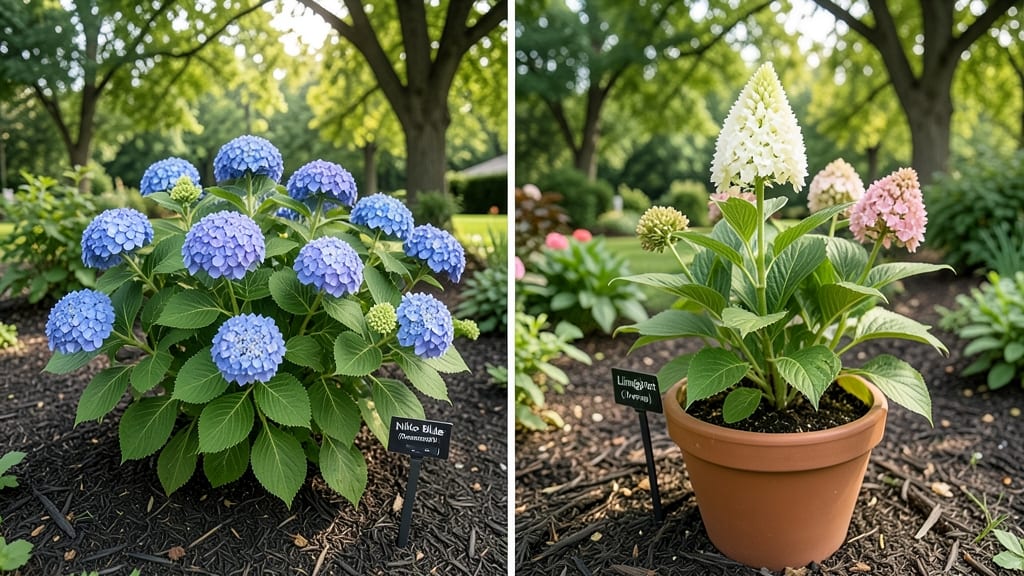
Whether hydrangeas act as annuals or perennials depends on your climate zone and the plant's underground storage system. Most varieties thrive as perennials through winter via rhizomes or tubers, but some die back to the ground in frost-prone areas, requiring annual replanting.
Understanding whether your hydrangea will return year after year comes down to two key factors: underground stems and hardiness zones. 🌱 Varieties like Hydrangea macrophylla (common bigleaf hydrangea) store energy in thick rhizomes that regrow shoots come spring, while H. paniculata (panicle hydrangea) has more cold-resistant tubers.
In zones 5-7, these plants overwinter reliably, but in colder regions (zones 3-4), even hardy types may need winter mulch or container protection to survive. The difference between annual and perennial behavior often boils down to how aggressively you protect the crown from freezing temperatures.
For gardeners in marginal climates, the choice between treating hydrangeas as annuals or perennials depends on your willingness to invest in winter care. 💛 While some varieties like H. arborescens (smooth hydrangea) handle colder winters better, others may still require digging up containers or adding thick mulch layers.
The good news? Even if your hydrangea dies back completely in winter, many types resprout vigorously from the roots when spring arrives—meaning you might get multiple seasons from a single planting if you're patient with winter prep.
💡 In This Article
- How Hydrangea Underground Stems Ensure Survival
- Choosing and Caring for Perennial vs. Annual Hydrangeas
How hydrangea underground stems ensure survival
Hydrangeas rely on specialized underground stems—primarily rhizomes and tubers—to store nutrients and energy during dormancy. Rhizomes, like those in Hydrangea macrophylla, are horizontal, thickened stems that spread just below the soil surface, storing starches and sugars to fuel new growth in spring.
These rhizomes can survive temperatures as low as -10°F when protected by mulch, though they may suffer damage in colder zones without insulation. 🌿 Meanwhile, H. paniculata varieties often develop tubers, which are swollen underground stems packed with dense energy reserves—similar to potatoes—that help regenerate shoots even after severe frost.
The regeneration process begins in early spring when soil temperatures rise to 50-55°F. Dormant buds on the rhizomes or tubers detect this warmth and release growth hormones, prompting new shoots to emerge.
This is why even heavily pruned hydrangeas can bounce back—those underground stems remain alive and ready to sprout. For example, H. arborescens (smooth hydrangea) can regrow from rhizomes even after being cut back to the ground, demonstrating how these storage systems act as insurance policies against winter kill.
Cold tolerance varies dramatically between species. H. paniculata (panicle hydrangea) is one of the hardiest, surviving down to -25°F when properly mulched, while H. macrophylla (bigleaf hydrangea) typically tops out at -15°F without protection.
The key difference lies in their native habitats: H. paniculata hails from colder Asian regions, while H. macrophylla originates from Japan's milder climate. This explains why some gardeners in zone 5 treat H. macrophylla as annuals—it simply wasn't evolved to handle prolonged sub-zero temperatures.
What most gardeners overlook is how soil moisture affects these underground systems. During winter, consistently moist soil (but not waterlogged) helps insulate rhizomes and tubers, preventing them from drying out or freezing solid. In contrast, dry winter conditions can cause them to shrivel, reducing their ability to regenerate in spring.
This is why hydrangeas in containers often need extra winter care—potted soil dries out faster, putting the storage stems at greater risk. 💧 A 3-4 inch layer of straw mulch can make the difference between a thriving perennial and a lost investment.
The crown—the area where stems meet roots—is equally critical. When temperatures drop below 20°F, the crown of many hydrangeas can suffer irreversible damage, even if the rhizomes survive.
This is why gardeners in zones 4-5 often mound soil or mulch around the crown in late fall, creating a protective barrier. The science here is simple: cold air is denser than warm air, so it settles at ground level.
By elevating the crown with mulch, you create a microclimate that's several degrees warmer than the surrounding air.
Consider this real-world example: In zone 6, an unprotected H. macrophylla might lose its top growth but regrow from rhizomes, acting as a perennial.
In zone 4, the same plant could suffer crown damage, requiring you to treat it as an annual—replanting each spring from cuttings or new plants.
The difference isn't just about temperature tolerance; it's about how well you understand and protect these underground systems that hold the secret to your hydrangea's survival.