
Planting
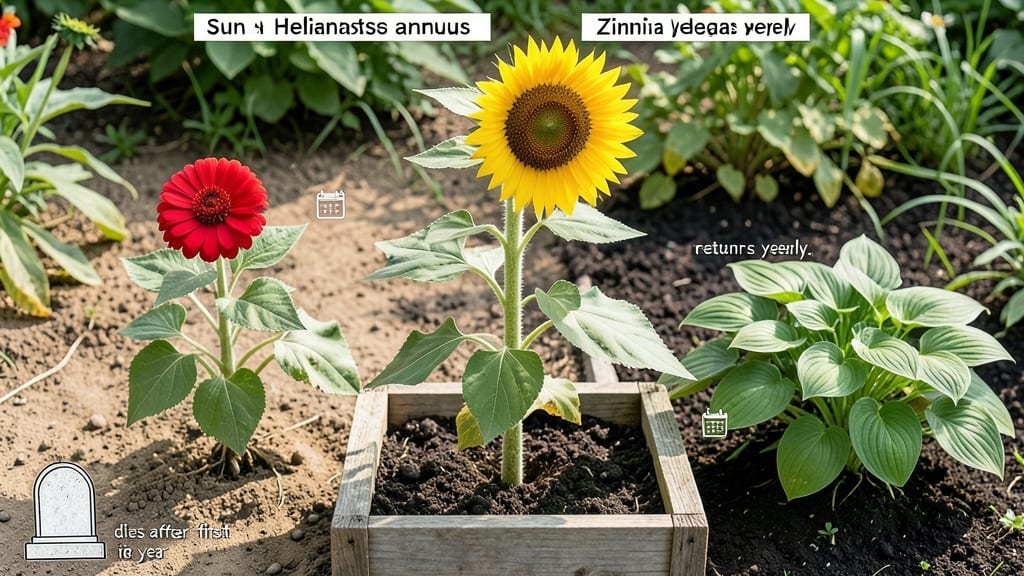
The annual vs perennial difference comes down to their life cycles: annuals live, bloom, and die in a single growing season, while perennials return year after year by storing energy in underground structures like roots or bulbs.
This fundamental distinction shapes everything from garden planning to plant care. Annuals like marigolds or zinnias deliver quick color but require replanting each spring, while perennials such as lavender or hostas establish themselves over time, offering long-term beauty with minimal replanting. 🌱 The trade-off?
Annuals give you seasonal flexibility, while perennials reward patience with decades of growth.
Understanding this difference helps you choose plants that match your goals—whether you want vibrant summer displays or low-maintenance landscaping. For example, sunflowers (annuals) will wow you for one season, while peonies (perennials) might thrive for 50 years with proper care.
💡 In This Article
- How Root Systems Determine Plant Longevity
- Choosing Annuals vs Perennials for Your Garden
How root systems determine plant longevity
The key distinction between annuals and perennials begins underground, where their survival strategies diverge dramatically. Annuals like cosmos or radishes allocate nearly all their energy to rapid above-ground growth and reproduction within 60-90 days—they store almost no reserves for the future.
Their root systems are shallow and fibrous, designed to quickly absorb nutrients from the topsoil while the plant completes its life cycle before winter. In contrast, perennials like asparagus or daylilies invest heavily in developing extensive root systems, bulbs, or rhizomes that can store 20-50% more carbohydrates than annuals.
Consider how a peony root system can extend 3-5 feet deep while producing multiple buds for next year's blooms. These underground structures act like natural batteries, storing starches and sugars during the growing season to fuel regrowth when temperatures drop below freezing.
The deeper the roots, the better they access moisture and nutrients—critical for surviving drought or harsh winters. Annuals simply can't match this storage capacity because their entire purpose is to reproduce before dying, leaving nothing for next season. 🌿
Climate plays a surprising role in shaping these root systems. In colder regions, perennials like coneflowers develop thicker rhizomes packed with insulating compounds that prevent freezing. Meanwhile, annuals in tropical climates might grow shallow but dense root mats to quickly exploit warm, moist soil.
The trade-off? Annuals thrive where you want seasonal variety, while perennials dominate in areas with harsh winters or limited water access.
What most gardeners overlook is how these root systems affect plant behavior. A perennial's first year often focuses entirely on building roots—you might see little above-ground growth as the plant prepares for future seasons.
Annuals, however, prioritize immediate visual impact, which is why they're perfect for container gardens or seasonal displays where you don't want long-term commitment. The root system literally determines whether your plant will be a one-hit wonder or a decades-long investment.
Take the example of dahlias (perennials) versus sunflowers (annuals). A dahlia tuber can weigh 1-2 pounds after a growing season, packed with enough energy to produce 50+ stems the following year. A sunflower, meanwhile, might allocate its energy to a single 10-foot stalk before dying—no reserves, no return.
This biological difference explains why perennials often look frail in their first year but become powerhouses in subsequent seasons.
Understanding these underground dynamics helps you predict plant behavior. Need quick color? Choose annuals. Want long-term beauty with minimal replanting? Invest in perennials. The root system isn't just about survival—it's the foundation of everything your plant will become above ground. 💫