
Flowers
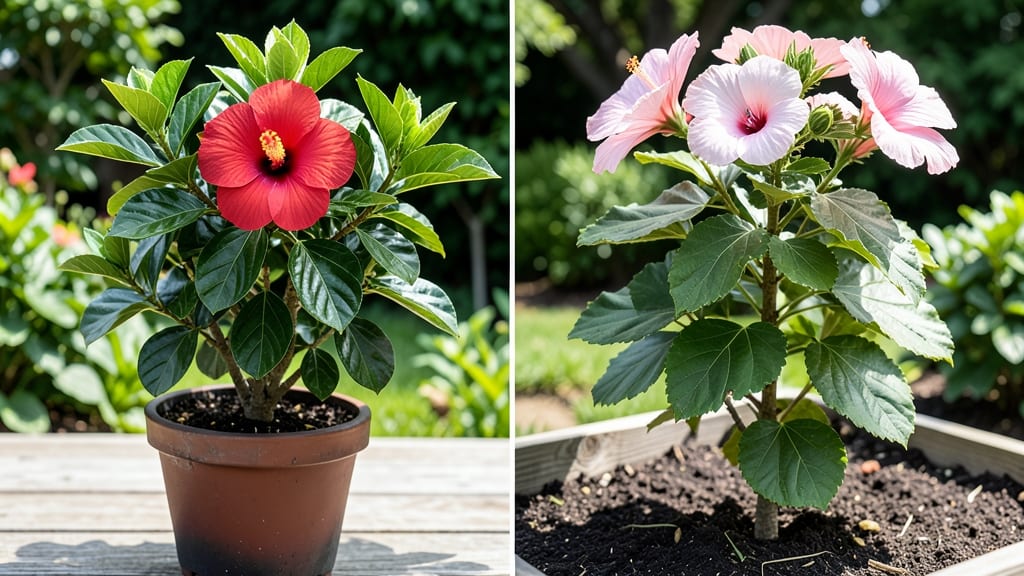
Whether hibiscus flowers are annual or perennial depends on your climate and the plant's root system—tropical varieties need warmer zones (5-11) to survive winter, while hardier types may return yearly even in cooler areas.
Your growing zone and the hibiscus type you choose make all the difference. 🌱 Tropical hibiscus (like the common red variety) freezes to death in frost, forcing gardeners in colder zones to replant each spring.
Hardy hibiscus, however, can withstand light frosts and regrow from their root crowns—though even these need protection during harsh winters. The key is understanding your local microclimate and selecting varieties bred for your conditions.
For example, in zone 6 where winters dip below 20°F, I've had success with hardy hibiscus varieties by wrapping their root bases in burlap and adding 6+ inches of mulch. Container-grown hibiscus also overwinters well indoors if you move them before temperatures drop.
💡 In This Article
- How Climate and Root Type Determine Hibiscus Lifespan
- Tips for Overwintering Hibiscus in Cold Climates
How climate and root type determine hibiscus lifespan
The difference between annual and perennial hibiscus growth comes down to two key factors: the plant's root system and your local climate. Tropical hibiscus varieties—like the showy Hibiscus rosa-sinensis—develop deep, fibrous roots that thrive in USDA zones 9-11 where temperatures rarely drop below 30°F.
These roots store minimal energy for cold survival, making them highly frost-sensitive. When temperatures hit 28°F or lower, the root cells rupture, killing the plant entirely. 🌡️
Hardy hibiscus (Hibiscus moscheutos), however, evolved with a different strategy. Their root systems produce a thick, woody crown that can tolerate brief exposures to 20°F temperatures.
The roots contain natural antifreeze proteins that prevent ice crystal formation in cells, similar to how some cold-hardy perennials like peonies survive winter. In zones 5-8, these varieties can regrow from their root crowns each spring, provided they're protected from prolonged freezing.
What makes this even more interesting is how soil temperature affects root survival. Even if air temperatures drop below freezing, ground-level roots stay warmer due to soil insulation. This is why hibiscus planted in southern exposures with 6+ inches of mulch often survive winters better than those in shaded spots.
The mulch acts like a thermal blanket, maintaining root temperatures above the critical 25°F threshold. 🌡️
Consider the example of Hibiscus syriacus (rose of Sharon), which thrives in zone 5 with proper care. Its roots develop a deep taproot system that can access moisture from 3-4 feet underground, giving it resilience against summer droughts and winter cold.
Meanwhile, tropical hibiscus planted in zone 7 without protection will almost certainly die back to the ground each winter, requiring complete replanting in spring.
The root system's ability to regenerate also depends on the variety's genetic memory. Hardy hibiscus have evolved to recognize seasonal cues—like shorter daylight hours—that trigger root dormancy and energy storage. Tropical varieties lack this adaptive mechanism, making them completely dependent on stable warm climates.
This biological difference explains why even experienced gardeners in zone 8 might treat tropical hibiscus as annuals while hardy types return reliably year after year. 🌱
For those in transitional zones (like zone 8 where winters occasionally dip below freezing), the solution often lies in hybrid varieties that combine tropical beauty with hardy resilience. These plants typically have root systems that can tolerate 25°F for short periods, bridging the gap between annual and perennial growth patterns.
The key is selecting varieties bred for your specific microclimate rather than assuming all hibiscus follow the same growth rules. 🌿