
Flowers
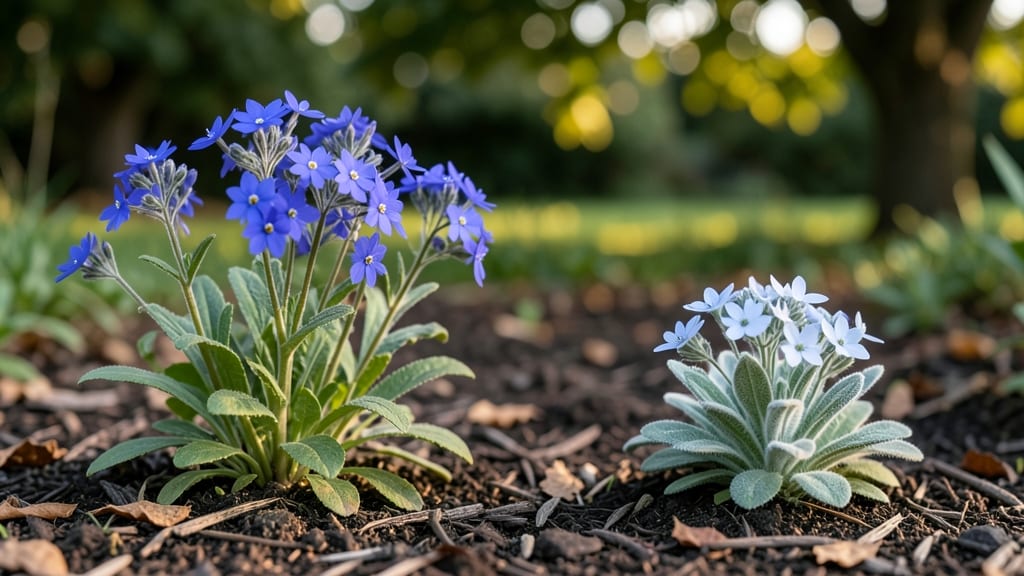
Whether forget-me-nots are annual or perennial depends entirely on their root structure: varieties with shallow roots complete their life cycle in one season, while those with deep, fibrous roots or rhizomes return each year. Species and climate play critical roles in their longevity.
Understanding this difference starts with the roots.
Annual forget-me-nots, like Myosotis alpestris, develop simple taproots that can't survive winter's freeze-thaw cycles, so they complete their growth in one season. 🌱 Perennial types, such as the classic Myosotis sylvatica, form dense fibrous root networks or rhizomes that store energy underground, allowing them to push through spring's chill.
The key factor? Winter hardiness—perennials thrive in USDA zones 3-8, while annuals often prefer milder climates where they can bloom quickly before summer heat arrives.
This distinction matters for gardeners: perennials offer years of color with minimal replanting, while annuals provide vibrant bursts of blue blooms each spring but require yearly reseeding. I've found that mixing both creates a dynamic garden—perennials anchor the space, while annuals fill gaps with seasonal flair.
💡 In This Article
- How Forget-Me-Not Root Systems Determine Annual vs Perennial Growth
- Choosing the Right Forget-Me-Not for Your Climate and Garden
How forget-me-not root systems determine annual vs perennial growth
The difference between annual and perennial forget-me-nots begins underground, where their root structures tell the whole story. Annual varieties like Myosotis alpestris develop simple taproots that focus energy on rapid above-ground growth during their single season.
These roots reach depths of just 6-12 inches and lack the storage capacity to survive winter's freeze-thaw cycles, forcing the plant to complete its life cycle before frost. 🌱 The trade-off? They produce thousands of tiny seeds that scatter easily, ensuring next year's generation.
Perennial forget-me-nots, particularly Myosotis sylvatica, take a completely different approach with their fibrous root systems or rhizomes. These roots spread horizontally and vertically, creating a dense network that can extend 12-24 inches deep while storing carbohydrates for winter survival.
The rhizomes act like natural batteries, converting sunlight into stored energy that fuels new growth each spring. This system allows perennials to regenerate from just a small root fragment—something annuals can't do.
The winter dormancy process reveals another key difference. Annual roots simply decompose, returning nutrients to the soil, while perennial roots enter a state of suspended animation. Their cells produce antifreeze proteins that lower the freezing point of their sap by 5-10°F, protecting them from winter damage.
This biological adaptation explains why perennials can survive temperatures as low as -30°F in protected microclimates, while annuals typically struggle below 20°F.
Here's where species come into play: Myosotis sylvatica (wood forget-me-not) thrives as a perennial with its robust rhizome system, while Myosotis alpestris (alpine forget-me-not) remains annual because its mountain habitat experiences extreme seasonal shifts that prevent root establishment.
The same species can even behave differently based on elevation—what grows as a perennial at lower altitudes may become annual at higher elevations where growing seasons are shorter.
What most gardeners don't realize is how the soil environment interacts with these root systems. Perennial forget-me-nots perform best in well-draining soil with 25-50% organic matter, which helps their roots establish quickly and store more energy.
Annuals, meanwhile, can tolerate poorer soils because their entire focus is on rapid above-ground growth before seed production. This explains why annual varieties often naturalize more aggressively—they're not picky about soil conditions, while perennials require more careful site preparation.
The flowering difference also stems from these root systems. Perennial forget-me-nots produce flowers on stems that emerge from the same root system year after year, while annuals allocate all their energy to a single massive bloom in their first season.
This is why perennials often have 3-5 weeks of continuous blooming, while annuals may only flower for 2-3 weeks before setting seed.
Understanding these mechanisms helps explain why some gardeners see their forget-me-nots return year after year while others must replant annually. The root system isn't just about survival—it's the foundation for everything that happens above ground. 💫