
Orchid Care
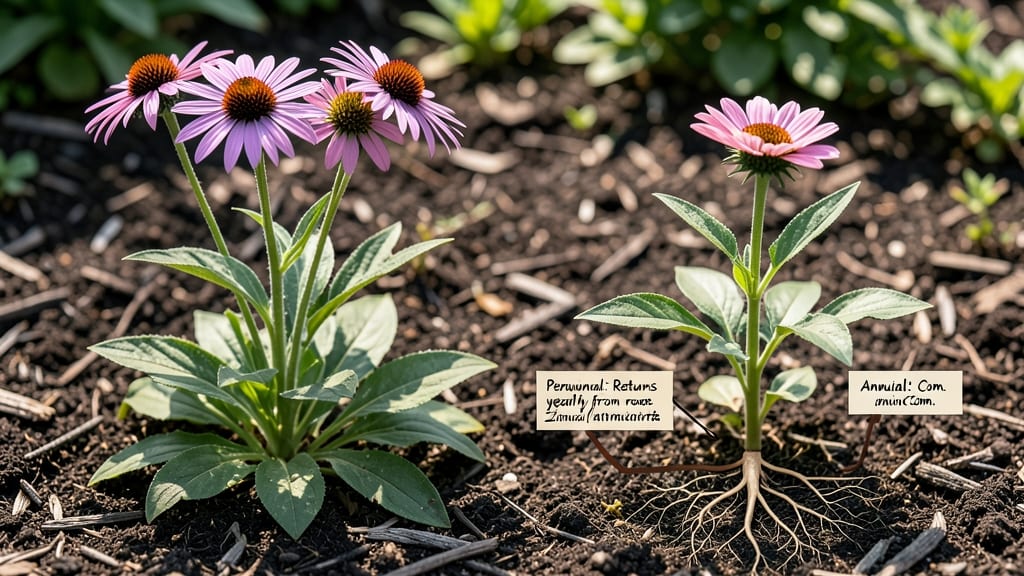
Coneflower is a perennial plant in most climates, thriving for multiple seasons with proper care, though some varieties like Rudbeckia hirta may behave as short-lived perennials or self-seed annually. Its deep roots and hardy nature set it apart from true annuals, which die after one growing season.
Most coneflowers establish deep taproots that store nutrients, allowing them to survive harsh winters and regrow each spring. 🌱 The key difference from annuals lies in their energy reserves—perennials like Echinacea purpurea store carbohydrates underground, while annuals like zinnias rely entirely on seasonal growth.
Even "annual" types like Rudbeckia hirta often self-seed, creating natural perennials over time.
For gardeners, this means less replanting and more consistent blooms. Perennial varieties typically bloom for 6-8 weeks with proper deadheading, while self-seeding types may spread unpredictably. I always recommend choosing purple coneflower (Echinacea) for reliable perennial performance in zones 3-9.
💡 In This Article
- Why Coneflower Thrives as a Perennial
- Choosing Coneflower Varieties for Long-Term Gardens
Why coneflower thrives as a perennial
Coneflowers owe their perennial status to their sophisticated root systems, particularly the deep taproot that can extend 3-5 feet underground. This root structure acts like a natural water reservoir, allowing the plant to access moisture during droughts while storing carbohydrates over winter.
Unlike annuals like zinnias, which rely entirely on seasonal growth, coneflowers build energy reserves that fuel regrowth each spring. 🌱
The real magic happens in how these roots adapt to temperature shifts. During winter, coneflowers enter dormancy but maintain metabolic activity in their roots, preserving nutrients. Studies show that Echinacea purpurea can survive temperatures down to -30°F thanks to these adaptations, while its foliage may die back.
This contrasts sharply with annuals, which complete their entire life cycle in one season without any survival mechanisms beyond seed production.
Another key advantage is their drought tolerance. Once established, coneflowers can go 4-6 weeks without supplemental water, making them ideal for low-maintenance gardens. Their deep roots also help prevent soil erosion by anchoring the plant firmly.
This hardiness explains why coneflowers thrive in prairie ecosystems—where they evolved—while annuals like sunflowers would struggle in such harsh conditions.
What most gardeners don't realize is how coneflowers' flowering strategy contributes to their longevity. Instead of producing all their flowers at once (like annuals), they develop a determinate growth pattern, creating multiple flower stems over time.
This extended bloom period—typically 6-8 weeks—allows them to set seed gradually, ensuring genetic diversity while maintaining the plant's vigor year after year. 🌸
For comparison, consider how sunflowers (true annuals) allocate all their energy to a single massive bloom, then die. Coneflowers spread their energy across multiple blooms and root development, creating a sustainable cycle. This dual focus on reproduction and survival is what makes them true perennials in most climates.
The only exception is Rudbeckia hirta (black-eyed Susan), which often behaves as a short-lived perennial. Even then, it typically self-seeds prolifically, creating dense colonies that mimic perennial behavior over time.
This natural propagation strategy gives gardeners the best of both worlds: the reliability of perennials with the adaptability of annuals. ✨