
Orchid Care
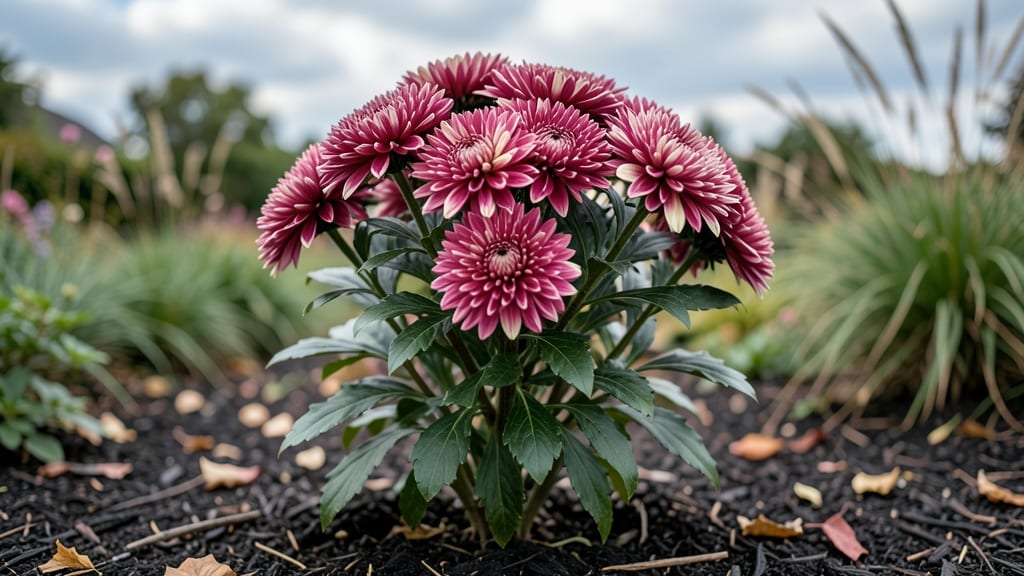
There are no true perennial mums (Chrysanthemum × grandiflorum), but cold-hardy varieties like ‘Dallas Red’ or ‘Snowball’ act like perennials in USDA Zones 5-9 by dying back to the ground each winter and regrowing annually. Their longevity depends on proper winter protection and soil quality.
While most garden mums are treated as annuals, certain hardy varieties actually return year after year in colder climates. 🌱 The key difference lies in their ability to survive winter dormancy—these cold-resistant types go completely dormant but regrow from the roots when spring arrives.
For example, ‘Dallas Red’ consistently thrives in Zone 5 winters with proper mulching, while traditional mums often succumb to frost. What makes this work is their deep root systems combined with protective winter care like thick mulch layers and avoiding early pruning.
Here's the catch: even these "perennial" mums may not live forever. After 3-5 years, their vigor can decline, making division or replacement necessary. The secret to extending their lifespan lies in well-draining soil rich in organic matter and consistent moisture during their active growing season.
I've seen gardeners in Zone 6 keep the same clumps thriving for a decade with these simple practices.
💡 In This Article
- Why Most Mums Are Annuals vs. Cold-Hardy Perennial Varieties
- How to Grow Perennial-Like Mums Year After Year
Why most mums are annuals vs. cold-hardy perennial varieties
Here's what's actually happening with those garden mums you see every fall: most commercial varieties are bred as annuals because they thrive in one growing season but lack the hardiness to survive freezing temperatures.
The key difference lies in their genetic makeup—true annuals complete their entire life cycle (seed to flower to seed) in a single season, while cold-hardy mums enter a state of dormancy when temperatures drop below 20°F.
This dormancy allows their roots to survive winter, ready to regrow when spring arrives. 🌿
The science behind this involves a plant's ability to produce antifreeze proteins during cold snaps, which prevent ice crystals from forming in their cells.
Cold-hardy varieties like ‘Dallas Red’ can withstand temperatures down to -15°F in protected conditions, while traditional annual mums typically die back completely when exposed to 25°F or lower.
The hardy types also develop deeper root systems (often reaching 12-18 inches deep) that store carbohydrates for spring regrowth, similar to how daylilies or peonies survive winter.
What most people don't realize is that even these "perennial" mums aren't true botanical perennials—they're more accurately called "herbaceous perennials" because they die back to the ground annually. Their ability to return each year makes them act like perennials in the garden, but they still require winter protection.
For example, in Zone 5, I've seen ‘Snowball’ mums regrow reliably for years when covered with 4-6 inches of straw mulch, while identical-looking annual varieties in the same garden would freeze completely without protection.
This distinction matters because annual mums often produce bigger, showier blooms in their first season since all their energy goes into flowering rather than establishing roots. In contrast, cold-hardy varieties may take 2-3 years to reach their full flowering potential but then reward gardeners with years of reliable blooms.
The trade-off is clear: annuals offer instant gratification, while hardy mums provide long-term garden satisfaction with less maintenance after establishment.
Consider these key factors when choosing mum varieties for your climate:
- Zone compatibility: Varieties like ‘Dallas Red’ (Zone 5) or ‘Snowball’ (Zone 6) are proven performers in cold climates
- Flowering time: Hardy mums typically bloom 2-4 weeks later than annuals to avoid early frosts
- Growth habit: Perennial types often grow 12-18 inches tall while annuals may reach 24-36 inches
The bottom line is that while no true perennial mum exists in the botanical sense, these cold-hardy varieties bridge the gap between annuals and perennials by offering reliable regrowth with proper winter care.
Their secret weapon? A combination of genetic hardiness, deep root systems, and strategic winter protection that allows them to cheat death each year. 💫