
Plants
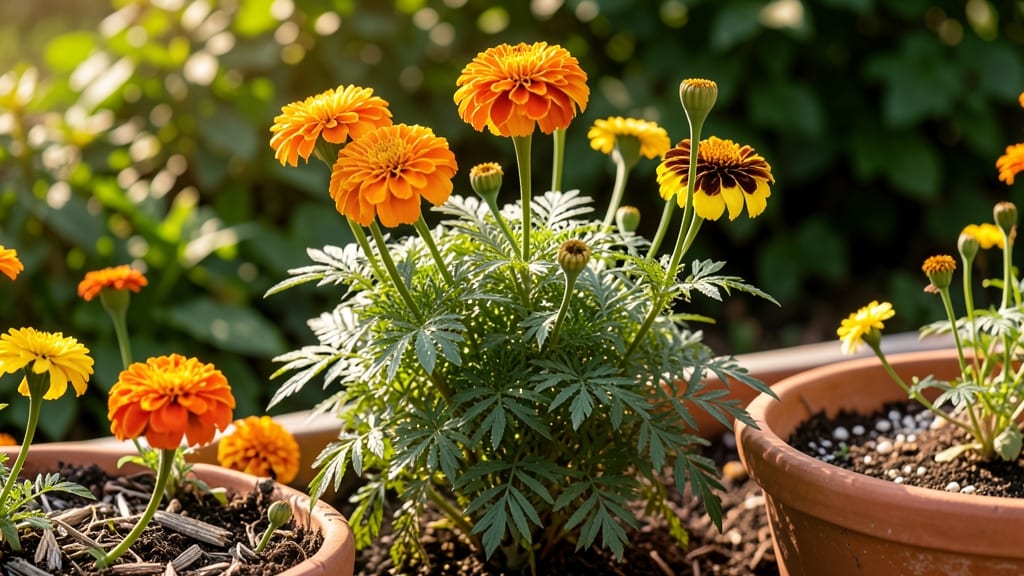
Marigolds are perennials in USDA Zones 3-9, where their tough underground rhizomes survive winter frost, regrowing each spring from the same root system. In colder zones, they may die back but resprout annually with proper care.
Marigolds earn their perennial status thanks to their fibrous root systems called rhizomes, which store energy and nutrients underground during dormancy. 🌱 Unlike annual varieties that complete their life cycle in one season, these hardy plants rely on their root reserves to push new growth when temperatures rise.
In colder regions outside Zones 3-9, gardeners often treat them as tender perennials, providing winter protection like mulch or row covers to encourage regrowth. The key difference lies in their ability to regenerate from the same root base year after year, making them low-maintenance once established.
This perennial nature explains why marigolds remain a garden staple—they return more reliably than annuals and often spread through their root systems. For example, French marigolds (Tagetes patula) typically behave as annuals in most climates, while African marigolds (Tagetes erecta) often demonstrate true perennial behavior in suitable zones.
Understanding these growth patterns helps gardeners choose varieties that match their climate and maintenance preferences.
💡 In This Article
- How Marigold Rhizomes Enable Perennial Growth
- Year-Round Marigold Care for Cold and Warm Climates
How marigold rhizomes enable perennial growth
Marigolds develop fibrous rhizomes—thickened underground stems—that act like natural energy banks. These roots store carbohydrates, proteins, and water during dormancy, allowing the plant to survive harsh winters in Zones 3-9.
The rhizome system can extend 12-18 inches deep and spread horizontally, creating a network that regenerates shoots when temperatures rise above 50°F. This biological adaptation is what truly distinguishes perennial marigolds from their annual cousins, which rely solely on seeds for regeneration.
The dormancy mechanism kicks in when temperatures drop below 40°F, triggering the rhizomes to enter a state of metabolic slowdown. Unlike annuals that die completely, perennial marigolds maintain a 5-10% moisture reserve in their roots, preventing cellular damage from freezing.
The rhizomes also produce natural antifreeze proteins that lower the freezing point of their cell fluids by up to 5°F, similar to how some woody shrubs survive winter. 🌱 This cold tolerance explains why marigolds often return stronger each year in suitable climates.
What makes this system particularly efficient is the rhizomes' ability to compartmentalize damage. Even if surface roots freeze, the deeper portions remain viable, ensuring the plant can regenerate from multiple points. For comparison, annual marigolds would need to reseed every year, making them more vulnerable to environmental stresses.
The perennial variety's underground infrastructure creates a self-sustaining cycle where the plant invests energy in root development rather than seed production.
Zone suitability comes down to two key factors: minimum winter temperatures and soil drainage. In Zones 3-9, marigolds thrive because winter lows typically don't drop below -20°F, which their rhizomes can withstand.
Poor drainage becomes problematic because waterlogged roots can't store sufficient reserves, leading to rot. This is why gardeners in wetter climates often need to amend soil with sand or compost to improve aeration.
Consider the French marigold (Tagetes patula) versus African marigold (Tagetes erecta). The former rarely behaves as a true perennial, while the latter often demonstrates perennial characteristics in Zones 8-9 due to its more robust rhizome development.
The difference lies in their genetic predisposition toward root mass rather than seed production—a clear evolutionary tradeoff for long-term survival strategies.
What most gardeners don't realize is that even in marginal zones, proper winter care can extend a marigold's perennial lifespan. A 4-6 inch layer of mulch can raise soil temperatures by 5-10°F, providing just enough protection for the rhizomes to survive occasional freezes below their natural tolerance.
This simple technique transforms what would be an annual into a semi-perennial plant that returns year after year with minimal effort.