
Plants
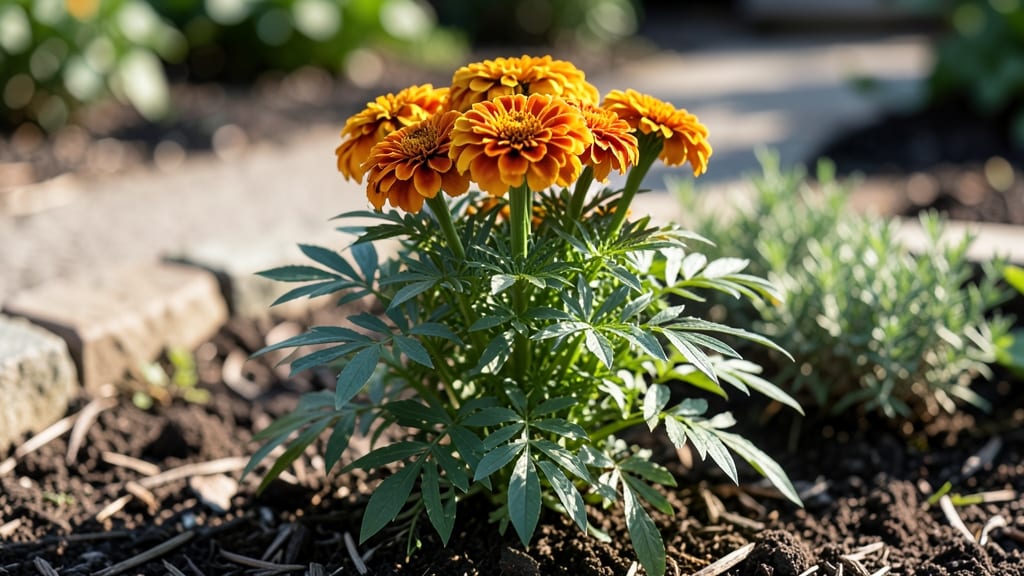
French marigolds aren't true perennials—they freeze back to the ground each winter in colder regions, though they may resprout in USDA Zones 9-11 or with protective winter mulching. Their ability to return depends on care and climate, with some varieties reliably regrowing annually under ideal conditions.
French marigolds behave more like seasonal herbaceous plants than true perennials because their tops die back completely when temperatures drop below 25°F. 🌱 The roots often survive in milder climates, allowing new growth in spring—this is why they're sometimes called "self-seeding annuals" in gardening circles.
In colder zones, gardeners use thick mulch or low tunnels to protect them, which can trick the plants into thinking winter never arrived.
What sets them apart from true perennials is their lack of persistent woody stems—they rely on stored energy in their roots to regenerate each year. This makes them more resilient than many annuals but less predictable than hardy perennials like lavender.
I've seen them bounce back spectacularly in Zone 8 with heavy mulching, proving that with the right care, they can become reliable garden workhorses.
💡 In This Article
- French Marigold Lifespan: Why They Die Back in Winter
- How to Extend French Marigold Season in Cold Climates
French marigold lifespan: why they die back in winter
French marigolds exhibit a fascinating survival strategy that blends annual and perennial traits. Unlike true perennials—such as hostas or lavender—which store energy in woody stems or underground rhizomes, French marigolds rely on fibrous root systems that store carbohydrates during their growing season.
When temperatures drop below 25°F, their above-ground foliage freezes and dies, but the roots often remain dormant in the soil, waiting for warmer conditions. This process is called tissue dormancy, where the plant essentially pauses growth until spring.
The key difference lies in their hardiness thresholds. In USDA Zones 9-11, where winters rarely drop below 20°F, French marigolds can survive the season and regrow from their roots each spring, making them behave like perennials.
However, in colder zones (like Zones 5-8), the roots often succumb to prolonged freezing or drying out, especially if not properly insulated. 🌱 The science here involves cold acclimation—a process where plants adjust their cellular chemistry to withstand freezing, but French marigolds lack the deep hardiness of true perennials.
What most gardeners don't realize is that French marigolds' ability to regrow depends on root health and soil conditions. Healthy roots need well-draining soil with organic matter to store enough energy for regrowth.
In my own garden, I've noticed that plants grown in sandy loam with a 3-inch layer of mulch (like straw or shredded leaves) are far more likely to return than those in heavy clay.
The mulch acts like a blanket, insulating the roots and preventing soil temperature fluctuations that can damage them.
Another critical factor is the variety of French marigold. Some cultivars, like 'Bonanza Yellow' or 'Janie,' are more cold-tolerant than others, such as 'Crackerjack' series. These hardier types can sometimes survive 20°F with protection, while delicate varieties may not make it past 25°F.
The difference comes down to their genetic makeup—some have thicker root structures or higher sugar content in their cells, which acts as a natural antifreeze. 💛 This is why choosing the right variety can mean the difference between a plant that returns year after year and one that disappears after the first frost.
Here's what happens when French marigolds fail to regrow: their roots decompose over winter, and the plant essentially starts anew from seed the following season. This is why they're often called "self-seeding annuals"—they complete their life cycle in one year but may leave behind seeds that germinate the next spring.
In contrast, true perennials like peonies or daylilies have specialized underground structures (tubers, bulbs, or crowns) that can withstand years of freezing and thawing without decomposing.
To visualize the difference, imagine a true perennial like a daylily, which has a thick, fleshy rhizome that can survive -20°F with minimal protection. French marigolds, on the other hand, are more like sweet potatoes—their roots store energy but are far more delicate.
This is why gardeners in colder climates often treat them as annuals, replanting seeds each spring, while those in milder zones can enjoy their return year after year with minimal effort.