
Flowers
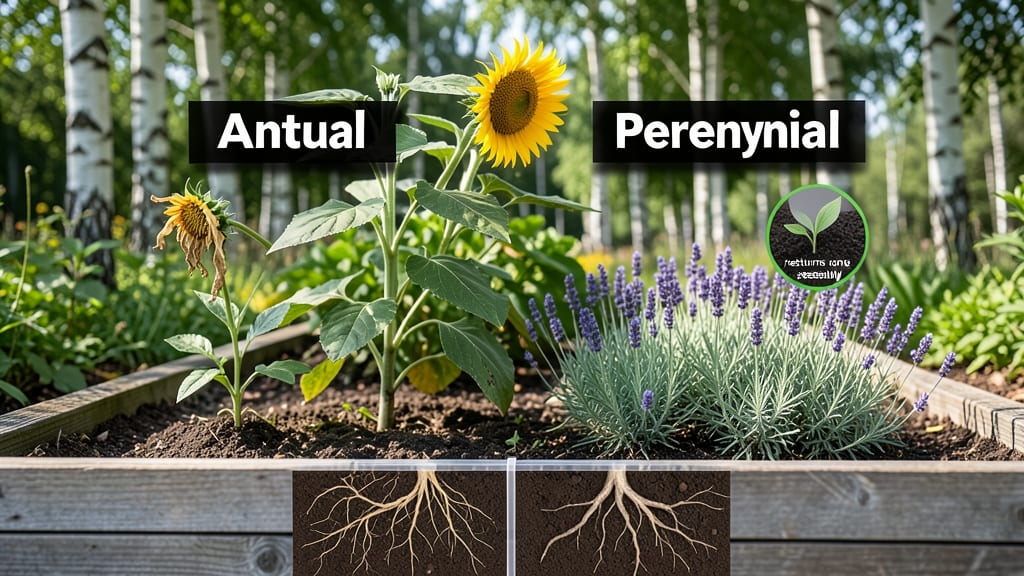
This annual and perennial flowers definition hinges on their growth cycles: annuals live and bloom for just one season, producing seeds before dying, whereas perennials return year after year from the same root system, often growing stronger with each season.
Understanding these flower lifespans is key to planning your garden. Annuals like marigolds and zinnias deliver vibrant color all season but require replanting each year, while perennials such as coneflowers and black-eyed Susans establish deep roots that survive winter, rewarding you with low-maintenance blooms for years. 🌸 The trade-off?
Annuals offer quick impact and variety, while perennials build long-term beauty with minimal effort after the first year.
For gardeners, this means annuals are perfect for filling gaps or creating seasonal displays, while perennials form the backbone of low-maintenance landscapes. Many perennials also develop stronger stems and more abundant blooms as they mature, making them a smarter investment for established garden beds.
💡 In This Article
- How Annual vs Perennial Flower Lifecycles Affect Gardening
- Choosing Annuals and Perennials for Your Garden Design
How annual vs perennial flower lifecycles affect gardening
The fundamental difference between annual and perennial flowers lies in their root systems and biological strategies. Annuals like sunflowers or petunias produce shallow, fibrous roots that focus all their energy on rapid growth and reproduction within a single season.
This fast-track approach allows them to complete their entire lifecycle—from seed to flower to seed production—in just 60-120 days, depending on the species. Their roots rarely penetrate deeper than 12 inches, which makes them vulnerable to drought once they've set seed.
Perennials, on the other hand, develop deep, robust root systems that can extend 3-5 feet underground, storing nutrients and energy for future growth. Plants like peonies or hostas allocate resources to building these extensive roots during their first growing season, then enter dormancy in winter.
This strategy enables them to emerge each spring with 20-30% stronger growth than their previous year, a phenomenon called "vernalization" that strengthens their resilience against environmental stressors. 🌱 The trade-off? This deep-rooted system requires more time and patience to establish—typically 2-3 years before reaching full maturity and blooming potential.
This biological contrast directly impacts gardening strategies. Annuals offer immediate color and variety, making them ideal for filling empty spaces or creating seasonal themes. Their short lifespan means you can experiment with bold combinations like red zinnias mixed with purple salvias without long-term commitment.
Perennials, however, become the backbone of your garden over time. Once established, they require minimal replanting and often develop larger, more abundant blooms each subsequent year, as seen with black-eyed Susans that can grow from 12-inch stems in year one to 3-foot stalks by year three.
The seasonal behavior of these flowers also affects planting timing. Annuals planted too early may bolt (send up flower stalks prematurely) or rot in cold soil, while perennials planted too late might not establish sufficient root systems before winter.
For example, cool-season annuals like pansies thrive when planted in early spring or late summer, while warm-season perennials such as lavender need to be in the ground 6-8 weeks before your first frost to develop adequate roots.
This timing ensures perennials can survive their first winter and return stronger the following year.
Consider the maintenance implications too. Annuals demand more frequent attention—watering, fertilizing, and deadheading—to encourage continuous blooming. Perennials, once established, often require only annual division every 3-5 years to prevent overcrowding and maintain vigor.
This low-maintenance aspect makes perennials particularly valuable for busy gardeners or those with large garden beds, where annual replanting would become impractical. The key is balancing these needs based on your garden's size, your available time, and your long-term aesthetic goals.
For instance, a front-yard garden might feature annuals like impatiens for vibrant seasonal color, while the backyard perennial border could include hardy plants like daylilies and sedum that require minimal care after establishment.
This strategic pairing creates a garden that's both dynamic and sustainable, with annuals providing seasonal variety and perennials offering enduring structure and beauty. The result is a landscape that evolves with you, requiring less effort over time while delivering increasing rewards. 🌿