
Flowers
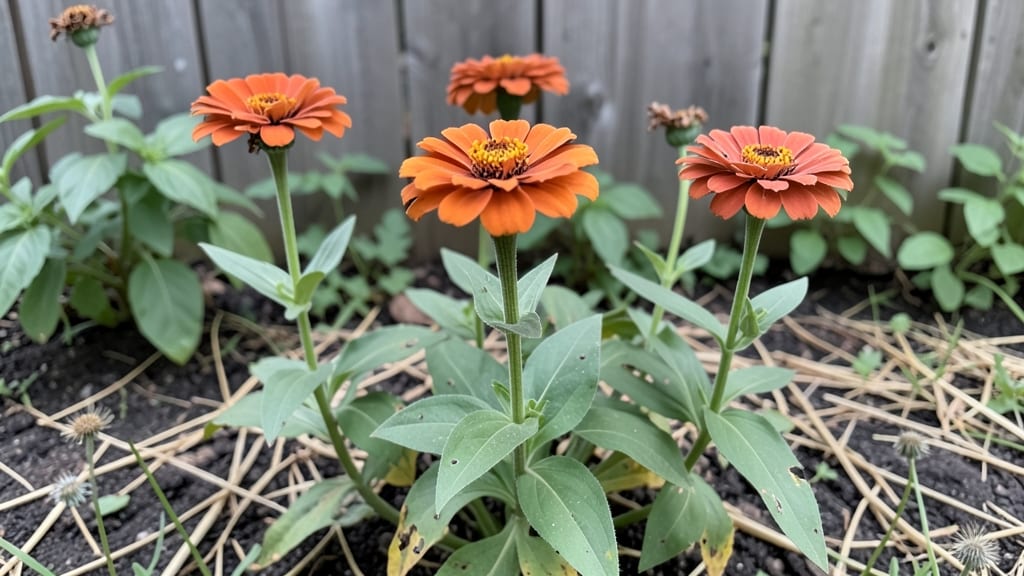
Zinnia flowers grow as one-season wonders because they can't tolerate frost—they die back when temperatures drop below 25°F.
However, their seeds often survive winter in the soil, sprouting fresh plants when spring arrives. 🌱 This natural reseeding explains why zinnias seem to "come back" year after year without replanting, even though they're technically annuals.
True perennials like coneflowers regrow from their roots, while zinnias rely entirely on seed germination for continuity.
For gardeners in cooler climates, this means planning ahead: leave spent blooms on stalks to collect seeds, or intentionally scatter them in fall for surprise spring growth.
The key difference lies in their root systems—zinnias don't develop winter-hardy roots, but their seeds contain all the genetic instructions needed for next year's crop.
💡 In This Article
- Zinnia Flower Life Cycle and Seasonal Growth Patterns
- Extending Zinnia Blooms: Planting and Care Tips
Zinnia flower life cycle and seasonal growth patterns
The zinnia's annual life cycle begins with seed germination, which typically occurs within 7-14 days after planting when soil temperatures reach 60-70°F. This rapid growth contrasts sharply with true perennials like coneflowers, whose roots establish over multiple seasons.
Zinnias develop a fibrous root system that stores minimal energy reserves, making them highly sensitive to frost. When temperatures drop below 25°F, their cells rupture from ice crystal formation, causing irreversible damage. 🌱
What makes zinnias unique is their reproductive strategy: they produce thousands of seeds per plant, each containing a hard outer coating that protects against winter's harsh conditions. This adaptation explains why they often "return" each year through self-seeding, even though they're classified as annuals.
True perennials like black-eyed Susans, however, regrow from their deep taproots, which can withstand -20°F temperatures. The trade-off is that zinnias grow faster and produce more vibrant blooms in their single season.
The key to understanding their seasonal patterns lies in their native habitat: zinnias originate from Mexico and Central America, where they evolved to thrive in warm, dry conditions. Their growth cycle is tightly linked to daylight length—most varieties flower 60-70 days after germination when daylength exceeds 14 hours.
This photoperiod sensitivity explains why they bloom prolifically in summer but fade as autumn approaches and days shorten. 🌞
For gardeners in cooler climates, this means timing is everything. Planting zinnias too early (before last frost) risks stunted growth from cool soil, while late planting may prevent them from flowering before frost. The solution?
Start seeds indoors 6-8 weeks before your last frost date, then transplant when soil reaches 55°F. This controlled environment gives them a head start, compensating for their inability to overwinter outdoors.
Here's how their growth compares to perennials:
- Root system: Zinnias develop shallow fibrous roots; perennials like coneflowers have deep taproots
- Cold tolerance: Zinnias die at 25°F; perennials survive -10°F to -20°F
- Flowering time: Zinnias bloom 60-70 days after germination; perennials may take 2-3 years to reach full bloom
- Seed production: Zinnias produce 1,000-2,000 seeds/plant; perennials rely on fewer, more robust seeds
What most gardeners don't realize is that zinnias' annual nature actually works in their favor for summer color. Their rapid growth and continuous flowering provide vibrant blooms when many perennials are still establishing themselves.
The secret to maintaining this annual display year after year lies in proper seed collection and storage—harvest mature seed heads when they turn brown and store them in a cool, dry place until spring planting. 🌿