
Flowers
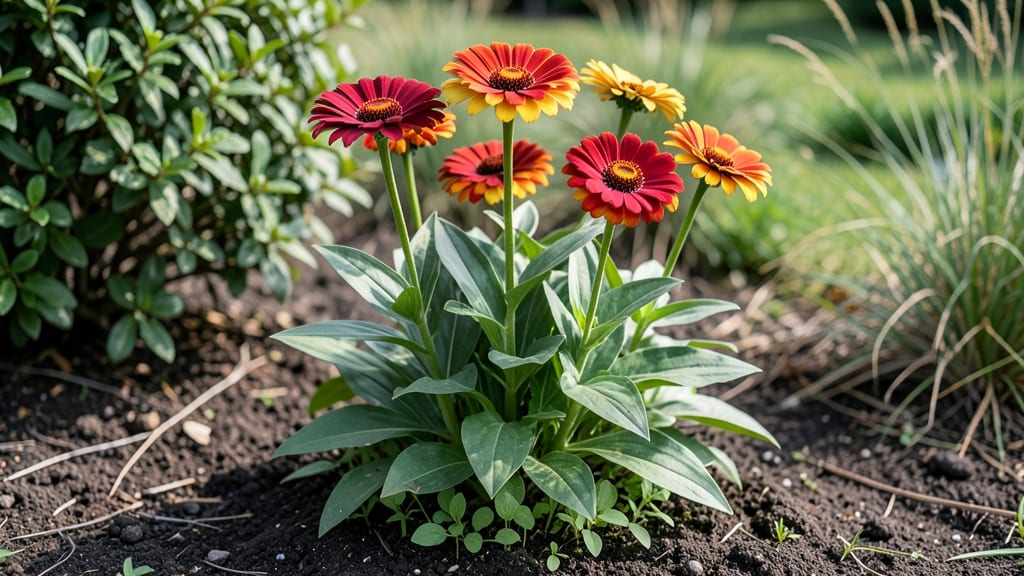
Zinnia flowers are not perennials in most climates, dying back to the ground after frost and requiring replanting each spring. However, in USDA hardiness zones 9-11, they may survive winter and regrow as tender perennials with proper care and protection.
Zinnia flowers act as annuals in most regions because they can't withstand freezing temperatures. Once frost hits, their delicate stems and leaves turn brown and crispy, effectively killing the plant. 🌱 In warmer climates like zones 9-11, however, zinnias can persist through winter's mild conditions and return the following year.
The key difference lies in their root systems—while they don't develop true woody stems like perennials, their fibrous roots can survive in frost-free environments with proper protection.
For gardeners in marginal zones (8-9), extending zinnia life requires strategic overwintering techniques. I've found that covering plants with thick mulch or moving containers to sheltered locations dramatically improves survival rates.
Some varieties even produce self-seeding behavior, giving you free plants the following season if you leave the seed heads intact.
💡 In This Article
- Why Zinnias Act as Annuals in Cold Climates
- Tips to Overwinter Zinnias in Marginal Zones
Why zinnias act as annuals in cold climates
Zinnias behave like annuals in cooler climates because their native tropical origins make them extremely frost-sensitive. When temperatures drop below 32°F, the plant's cellular structure begins to break down—a process called cold acclimation failure. Unlike hardy perennials that develop protective sugars and antifreeze proteins, zinnias lack these adaptations.
Their stems contain high moisture content (around 85-90% when fresh), which freezes and ruptures cell walls, causing the plant to wilt and die within 24-48 hours of frost exposure.
The root system plays a critical role too. While zinnias develop fibrous roots that spread 12-18 inches wide, they're not deep-rooted like true perennials. In cold soil (below 40°F), root activity slows dramatically, starving the plant of nutrients.
The combination of frozen stems and inactive roots creates a double threat—even if roots survive, they can't sustain regrowth without above-ground foliage. 🔥 This is why you'll see zinnias completely blacken and collapse after the first hard frost, unlike perennials that may re-emerge from protected root crowns.
Another key factor is their growth cycle. Zinnias are short-day plants, meaning they flower in response to decreasing daylight hours. This rapid growth pattern (from seed to bloom in 60-75 days) prioritizes above-ground development over root hardiness.
The energy that goes into producing vibrant blooms in red, pink, or yellow hues doesn't get allocated to winter survival structures. Compare this to perennials like coneflowers, which allocate 20-30% of their energy to building winter-resistant root systems.
What most gardeners don't realize is how quickly zinnias respond to temperature changes. Studies show that when nighttime temperatures drop below 50°F for more than 3-4 consecutive nights, zinnias begin shutting down their metabolic processes.
The leaves turn yellow as chlorophyll breaks down, and the plant enters a state of senescence—a programmed shutdown sequence. This physiological response is irreversible once triggered, making zinnias true annuals in cold climates.
Even in marginal zones (like zone 8), zinnias rarely survive winter without intervention. The USDA Plant Hardiness Zone Map shows that zinnias have a tender perennial rating—meaning they can only survive winter in zones where frost never occurs (zones 9-11).
In these warmer regions, zinnias can regrow from their root systems because the ground rarely freezes solid, allowing roots to remain active year-round.
For visual learners, imagine this: In a zone 5 garden, a zinnia's lifecycle looks like a 6-month arc—sprout in spring, bloom all summer, then die back in fall. But in zone 10, that same plant might grow continuously, producing staggered blooms throughout the year with minimal dormancy.
The difference comes down to thermal time accumulation, where cooler climates simply don't provide enough growing degree days for perennial behavior.