
Flowers
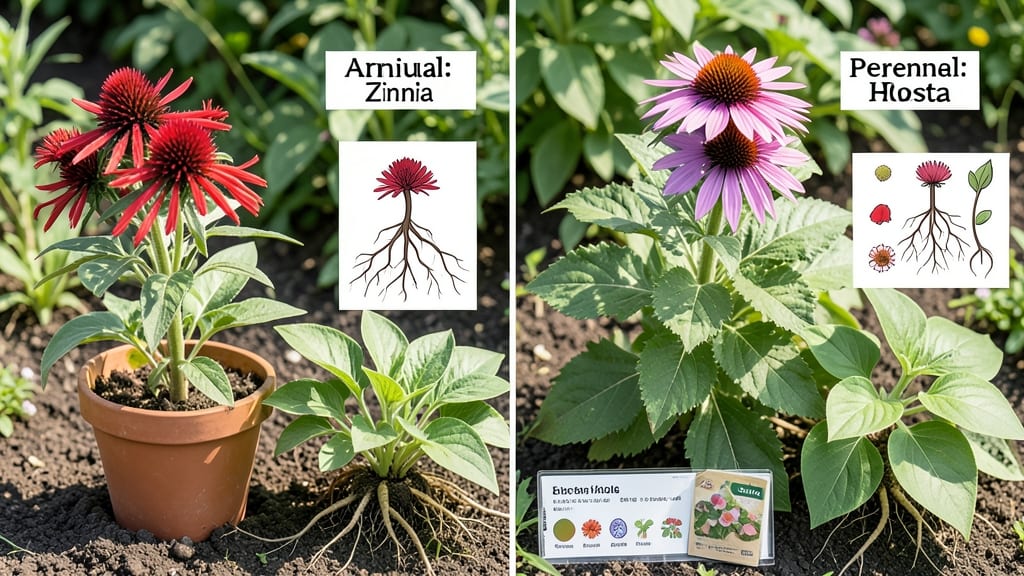
The difference between annuals and perennial flowers lies in their lifespan: annuals bloom once and die after completing their lifecycle in a single growing season, while perennials return year after year from the same root system, often producing even more vibrant blooms annually.
The key distinction isn't just about how long they live, but how they grow and thrive.
Annuals like marigolds or zinnias deliver a burst of color but require replanting each spring, while perennials such as coneflowers or daylilies establish deep root systems that make them low-maintenance once established. 🌸 This means perennials often need less frequent watering and fertilizer after the first year, while annuals demand more consistent care to keep them blooming all season.
The trade-off? Annuals give you instant color changes with different varieties, while perennials build beauty over time with minimal effort.
For gardeners, this difference translates directly to planning. Annuals let you experiment with bold color combinations each year, but perennials create long-term garden structure. Many gardeners use both strategies—planting annuals for seasonal impact and perennials for reliable foundation plants.
💡 In This Article
- Lifespan and Biological Differences Between Annual and Perennial Flowers
- Gardening Strategies for Annuals Versus Perennials
Lifespan and biological differences between annual and perennial flowers
The fundamental difference between annuals and perennials begins at the cellular level with their root systems. Annuals like sunflowers or impatiens develop shallow, fibrous roots that focus energy on rapid above-ground growth and seed production within 90-120 days.
Their entire lifecycle—from seed germination to flowering to seed dispersal—completes in one growing season, after which the plant dies. This strategy prioritizes quick reproduction over longevity, which is why you'll see annuals blooming so vigorously in summer gardens.
Perennials, however, invest in deep, robust root systems that can extend 3-5 feet underground in species like peonies or 1-2 feet in daylilies. These roots store nutrients and energy over winter, allowing the plant to regenerate each spring with minimal new growth. The trade-off?
This deep root system means perennials like coneflowers often take 2-3 years to reach their full flowering potential, but once established, they can live for decades—some perennials like hostas have been known to survive for over 50 years in ideal conditions.
Climate plays a crucial role in how these differences manifest. Annuals thrive in warm-season climates where they can complete their lifecycle before frost, but they're also the only option for gardeners in cold regions who want summer color—since perennials would die back completely in winter.
Perennials, however, have evolved strategies to survive seasonal changes: some like daffodils store energy in bulbs, while others like black-eyed Susans develop woody stems that protect their growing points during dormancy. This biological adaptation explains why perennials often return with even more robust blooms each year.
Another key distinction lies in their reproductive strategies. Annuals pour all their resources into producing seeds quickly, which is why a single marigold plant can generate thousands of seeds in one season.
Perennials, meanwhile, allocate energy between seed production and root maintenance, resulting in fewer seeds per plant but greater genetic stability. This is why many perennials like lavender spread primarily through underground runners rather than seed dispersal.
The sensory difference is striking too—annuals often have more intense fragrances to attract pollinators during their brief flowering window, while perennials develop complex, layered aromas that evolve throughout their lifespan.
Dormancy periods reveal another critical difference. Annuals don't experience true dormancy—they simply complete their lifecycle. Perennials, however, enter a period of reduced metabolic activity during winter or dry seasons.
In temperate climates, this means perennials like bee balm might lose their foliage but keep their roots alive, ready to burst forth with new growth when temperatures rise above 50°F.
This dormancy allows perennials to conserve energy while annuals have already fulfilled their biological purpose and disappeared from the garden.
Consider this comparison: A single annual petunia plant might produce 50-100 flowers in its brief lifetime, while a well-established perennial like a butterfly bush can produce thousands of flowers over multiple seasons from the same root system.
The energy investment is completely different—annuals are like fireworks, brilliant but fleeting, while perennials are like well-tended bonsai trees, developing character and beauty over time.