
Companion Plants
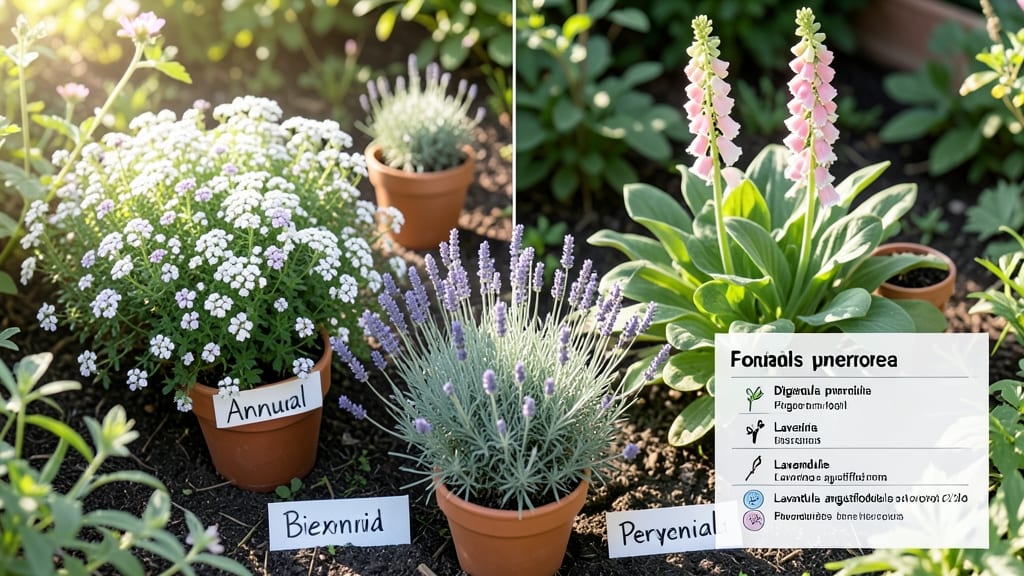
The difference between annual, biennial, and perennial plants lies in their lifespans: annuals complete their life cycle in one growing season, biennials take two years to flower and produce seeds, while perennials regrow yearly from the same root system, often lasting decades or longer.
The key distinction isn't just how long they live—it's how they invest their energy. Annuals like marigolds or sunflowers focus everything on rapid growth and reproduction in a single season, making them perfect for quick garden impact.
Biennials such as foxgloves or hollyhocks store energy in their first year to fuel dramatic blooms the following spring, while perennials like lavender or coneflowers develop deep root systems that let them bounce back year after year.
This explains why perennials dominate established gardens—they're the marathon runners of the plant world.
Understanding these cycles helps you plan your garden like a pro. Annuals give you instant color but require replanting, while perennials deliver long-term beauty with less maintenance.
Biennials are the underdogs—they might not shine immediately, but their delayed payoff can be stunning. 🌱 The right mix creates a garden that thrives across all seasons.
💡 In This Article
- How Plant Lifespans Determine Growth Cycles
- Choosing the Right Plant Type for Your Garden
How plant lifespans determine growth cycles
Annual plants like zinnias or basil follow a high-speed survival strategy: they germinate, grow, flower, and produce seeds—all within a single growing season. This rapid life cycle is triggered by photoperiod (daylight length) and temperature cues.
For example, many annuals detect shorter days in late summer and immediately shift energy from leaves to seed production, ensuring their offspring survive the coming winter. The trade-off? They invest zero energy in root systems or woody growth, focusing entirely on reproduction before dying back.
Biennials take a two-phase approach, storing energy during their first year to fuel dramatic growth in year two. Think of hollyhocks or carrots: their first season is all about building a robust root system and storing nutrients in specialized tissues.
In their second year, they prioritize flowering and seed production, often at the expense of foliage. This strategy works because biennials can "wait out" harsh conditions—like cold winters—by remaining dormant as roots or basal leaves until conditions improve.
The key biological trigger is vernalization (exposure to cold temperatures), which signals the plant it's safe to flower.
Perennials represent the opposite extreme: they prioritize long-term survival through deep root systems and woody growth. Plants like peonies or asclepias (butterfly weed) develop extensive underground networks that store water and nutrients year-round.
Their aboveground growth dies back in winter, but the roots remain alive, ready to regenerate when spring arrives. This persistence is made possible by specialized cells called meristems, which can remain dormant for years while still capable of producing new growth when conditions are favorable. 🌿 The trade-off?
Perennials often take 2-3 years to reach full maturity and flowering.
Environmental factors dramatically influence these cycles. Annuals thrive in unpredictable climates where winter kills everything, while perennials dominate stable regions with distinct seasons. Biennials often appear in transitional zones where winters are cold but not lethal.
For instance, foxgloves (a biennial) might survive a mild winter as a rosette but die if exposed to freezing temperatures as mature plants. This explains why biennials are common in temperate climates like the Pacific Northwest, where winters are wet but not extreme.
Here's what's actually happening at the cellular level: Annuals allocate most of their energy to meristematic growth (new tissue formation) early in the season, while perennials divert resources to root and stem thickening.
Biennials use a hybrid approach, building storage organs (like taproots in carrots) in year one and reproductive structures in year two. This division of labor is governed by plant hormones—auxins promote growth, while gibberellins trigger flowering when conditions are right. The result?
A finely tuned survival strategy tailored to each plant's ecological niche.
Consider how these mechanisms play out in your garden: Annuals give you instant gratification with summer blooms, biennials reward patience with dramatic second-year displays, and perennials deliver decades of low-maintenance beauty.
Understanding these biological trade-offs lets you design gardens that thrive with minimal intervention—whether you want a burst of color in summer or a permanent landscape feature that grows more beautiful each year. 🌱