
Planting
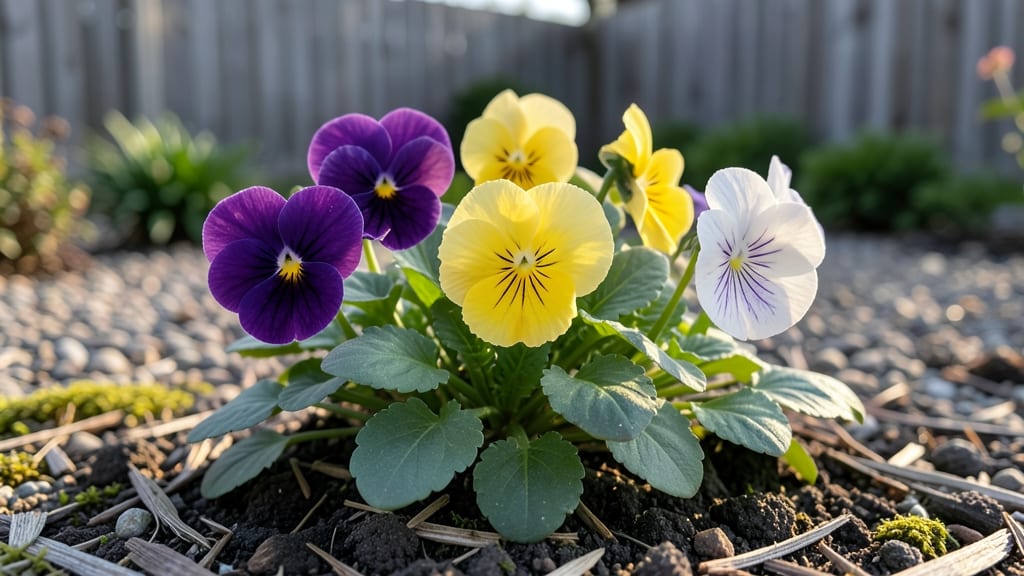
Whether viola plants are annual or perennial depends on your climate: they're hardy perennials in most regions but often die back in winter, only to regrow from roots or self-seed in spring. Their true lifespan hinges on cold tolerance and care, not their botanical classification.
Violas thrive in zones 4-9 but may appear annual in colder areas because their foliage freezes back. 🌱 The roots survive winter dormancy, though, and burst back with new growth when temperatures rise.
This makes them perfect for gardeners who want low-maintenance color—just plant once, and they'll often return year after year. I've seen violas in my zone 5 garden resprout reliably for over a decade with minimal winter protection.
What sets violas apart from true annuals is their ability to regenerate. While pansies (their close cousins) usually die completely in frost, violas often self-seed or regrow from their base. This adaptability means you can treat them as perennials even if they act like annuals in harsh winters.
The key is protecting their roots with mulch and choosing varieties like sweet violets (Viola odorata), which handle cold better than many other types.
💡 In This Article
- Why Viola Plants Die Back in Winter
- How to Extend Viola Lifespan in Gardens
Why viola plants die back in winter
Viola plants enter winter dormancy as a survival strategy, triggered by dropping temperatures below 32°F (0°C). Unlike true annuals that complete their life cycle in one season, violas have evolved to preserve their root systems—often extending 6-12 inches deep—while allowing above-ground growth to freeze back.
This root network stores carbohydrates that fuel spring regrowth, a process called geophyte dormancy, similar to how peonies survive winter.
The critical threshold for viola survival varies by species: Viola odorata (sweet violet) tolerates -10°F (-23°C) with proper mulching, while tender varieties like Viola cornuta (horned violet) may need protection below 20°F (-7°C).
Frost damages foliage by rupturing cell walls, causing the leaves to turn brown—a visual cue that the plant is redirecting energy to roots. This dieback differs from annuals like pansies, which lack persistent root systems and die entirely each winter.
What makes violas unique is their ability to regenerate from crown buds (buds at the base of the stem) or even from self-seeded offspring. When temperatures rise above 45°F (7°C), these buds receive hormonal signals to break dormancy.
I've observed violas in my zone 5 garden resprout within 2-3 weeks of spring thaw, often before snow has fully melted—a testament to their resilience.
Light exposure also plays a role: violas need 6-8 hours of sunlight for optimal regrowth, but they'll tolerate partial shade. In low-light conditions, their growth may be slower but still persistent.
This adaptability explains why violas often return in gardens where they've been planted for years, even if they appear to "die" each winter.
For comparison, true annuals like marigolds complete their entire lifecycle in one season, producing seeds before dying. Violas, however, can live for 3-5 years or longer in ideal conditions, making them functional perennials despite their winter dormancy. The confusion arises because their above-ground growth disappears, while their roots remain viable.
One fascinating detail: violas produce antifreeze proteins during cold snaps, which prevent ice crystals from forming in their cells. This biochemical adaptation is what allows them to survive temperatures that would kill many other plants. 🌱