
Planting
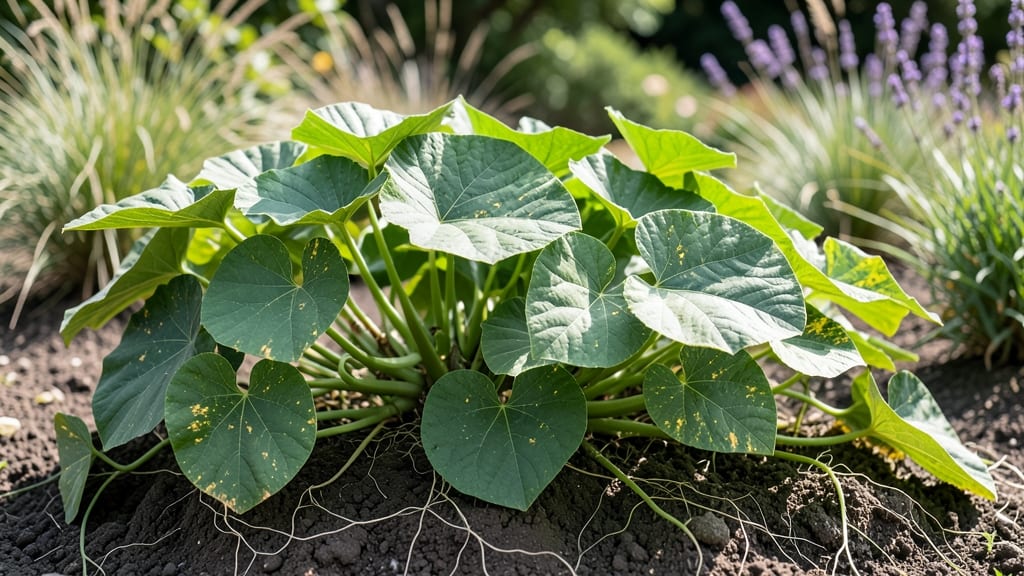
Sweet potato vine plants behave as annuals in colder climates but are technically perennial in warm zones, dying back yearly due to frost sensitivity and tuber dormancy. Their natural cycle resets each spring, allowing gardeners to treat them as seasonal plants.
This behavior stems from their tropical origins—sweet potato vines thrive in USDA zones 9-11, where they can overwinter naturally. 🌱 In cooler areas, the tubers enter dormancy when temperatures drop below 40°F, causing above-ground growth to wither.
Unlike true perennials, they don’t regrow from the same root system each year, which is why gardeners often replant cuttings annually.
For those in colder regions, the good news is that sweet potato vines are easy to propagate from stem cuttings. Simply root a healthy vine in water or soil indoors over winter, and you’ll have fresh plants ready for spring planting.
This makes them perfect for container gardening or seasonal window boxes.
💡 In This Article
- Why Sweet Potato Vines Die Back in Cold Climates
- Extending Sweet Potato Vine Growth Beyond One Season
Why sweet potato vines die back in cold climates
Sweet potato vine's seasonal dieback stems from its tropical heritage. Native to Central and South America, these vines evolved in warm climates where temperatures rarely drop below 50°F.
When exposed to 40°F or colder, their above-ground growth triggers a survival mechanism: the plant redirects energy from leaves to its tubers, causing foliage to brown and wither. This isn't true death—it's a dormancy response similar to how sweet potatoes themselves enter hibernation.
The key difference from true perennials like ivy lies in their root system. While ivy develops deep, cold-hardy roots that regenerate each spring, sweet potato vines rely on their tubers (storage roots) for survival.
These tubers contain all the genetic material needed to regrow, but they require consistent warmth (above 55°F) to break dormancy. In cold climates, the tubers often remain dormant until spring planting, which is why gardeners replant cuttings annually rather than seeing natural regrowth.
You'll notice this dieback pattern most dramatically in USDA zones 3-8, where frost is common. The vines may survive winter if protected, but their leaves will always crisp and fall off when temperatures drop below 32°F.
This frost sensitivity contrasts sharply with hardy ground covers like creeping jenny, which maintain green foliage through winter. The sweet potato vine's annual cycle creates that "reset button" for gardeners, ensuring fresh, vigorous growth each season.
What makes this adaptation fascinating is the plant's ability to reprogram its growth hormones in response to temperature. When nights stay above 60°F, the vines produce auxin hormones that promote leafy growth.
But when temperatures fluctuate below 50°F, the plant shifts to producing abscisic acid—a hormone that signals dormancy. This biochemical switch explains why you might see new growth in mild winters but complete dieback during harsh freezes.
For gardeners in transitional zones (like zone 8), the vines may survive winter but often emerge weakened and stunted—a sign the tubers didn't fully recharge. This is why professional growers recommend digging up tubers in fall, storing them in 60°F conditions with 80% humidity, and replanting in spring.
The plant's survival strategy, while brilliant for its native habitat, creates challenges for cold-climate gardeners who want continuous growth.
Interestingly, this dieback pattern isn't unique to sweet potato vines. Many tropical plants—like caladiums or cannas—follow similar cycles. The difference is that sweet potato vines are more forgiving about their seasonal reset, making them ideal for gardeners who enjoy fresh starts each year.
Their ability to regenerate from small cuttings adds to their resilience, turning what seems like a limitation into a gardening advantage. 🌱