
Flowers
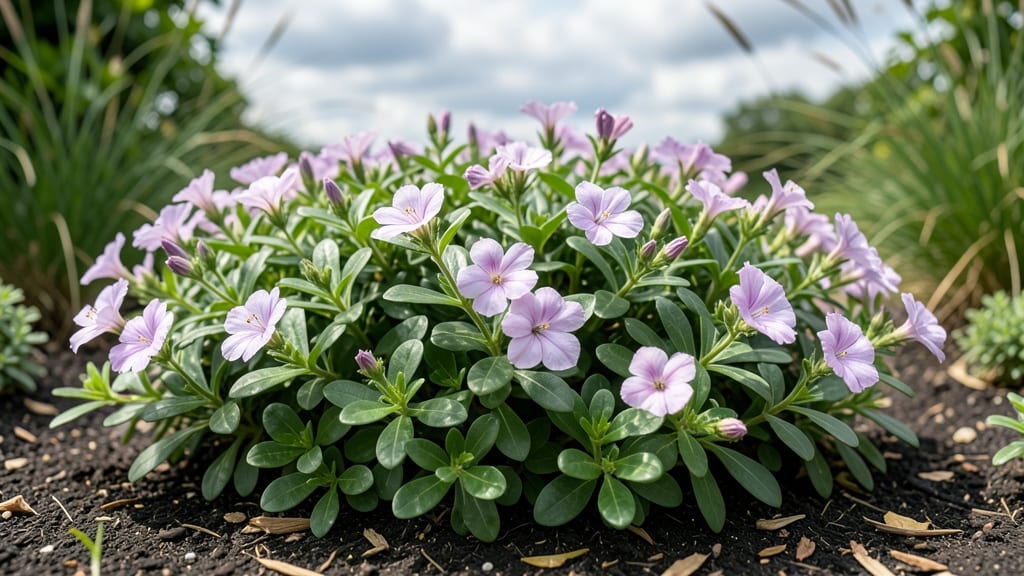
Periwinkle is an annual or perennial plant in most climates, thriving year-round in USDA zones 4-9, though some varieties may die back in freezing winters before regrowing from roots. Its evergreen or semi-evergreen foliage and trailing growth make it ideal for borders and ground cover.
Most gardeners consider periwinkle a perennial because it returns reliably each year, even after winter dormancy. 🌱 The key lies in its robust root system—many varieties, like Vinca minor, survive freezing temperatures by going dormant above ground while keeping their roots alive.
This trait makes periwinkle one of the most low-maintenance plants for shady borders or slopes, where it spreads effortlessly while requiring minimal care.
What sets it apart from true annuals is that it doesn't need replanting every season, though some tropical varieties (like Catharanthus roseus) behave more like annuals in colder zones.
For those in USDA zones 3 or below, periwinkle may still work if planted in sheltered spots with mulch protection. I've seen Vinca major bounce back beautifully after snow cover, proving that with the right conditions, even marginal zones can support this hardy plant.
The secret is patience—wait until late spring to prune back any frost-damaged stems, giving the roots time to push new growth before the heat of summer.
💡 In This Article
- Periwinkle’s Cold Hardiness by Variety and Zone
- Designing with Perennial Periwinkle: Year-Round Landscaping Tips
Periwinkle’s cold hardiness by variety and zone
The cold tolerance of periwinkle depends entirely on its species and root system strength. Vinca minor, the common creeping periwinkle, thrives in USDA zones 4-9 because its fibrous roots store carbohydrates during winter, fueling regrowth by spring.
These roots can withstand temperatures down to -20°F when protected by snow or mulch, making it a true perennial in most climates.
In contrast, Catharanthus roseus (Madagascar periwinkle) behaves as an annual in zones colder than 10, since its roots aren't as cold-hardy and it lacks the same winter dormancy adaptations.
What happens during winter dieback? When temperatures drop below 25°F, the above-ground foliage of Vinca varieties turns brown and appears dead, but the roots remain alive beneath the soil.
This process is called "overwintering dormancy," where the plant conserves energy until warmer soil temperatures (around 50°F) trigger new shoots. 🌿 The key difference between hardy and tender varieties lies in their root depth—Vinca major develops deeper roots than Vinca minor, giving it an extra survival advantage in colder microclimates.
Microclimates play a surprising role in periwinkle's hardiness. A south-facing slope can raise temperatures by 5-10°F compared to a north-facing garden bed, potentially extending its range into zone 3 for some varieties. I've seen Vinca minor survive winters in zone 4 when planted near evergreen shrubs that create windbreaks.
The secret is choosing sheltered spots where snow accumulates—each inch of snow adds 1°F of insulation to the soil.
Not all periwinkle varieties follow the same rules. Catharanthus roseus, despite its name, is tropical and dies in frost, while Vinca difformis (roughe-leaf periwinkle) handles zones 7-11 with ease.
The confusion often comes from mislabeling—what's sold as "periwinkle" in nurseries might actually be Lobelia or Ajuga, which have different cold tolerances. Always check the botanical name on plant tags to avoid surprises.
For gardeners pushing the limits, consider these cold-hardy alternatives within the periwinkle family: Vinca herbacea (spring periwinkle) thrives in zones 3-8, while Vinca erecta handles zones 7-10. These varieties demonstrate how the genus Vinca has evolved different survival strategies across its native range from Europe to Africa.
The takeaway? When selecting periwinkle, match the species to your zone and microclimate—not just the common name.