
Flowers
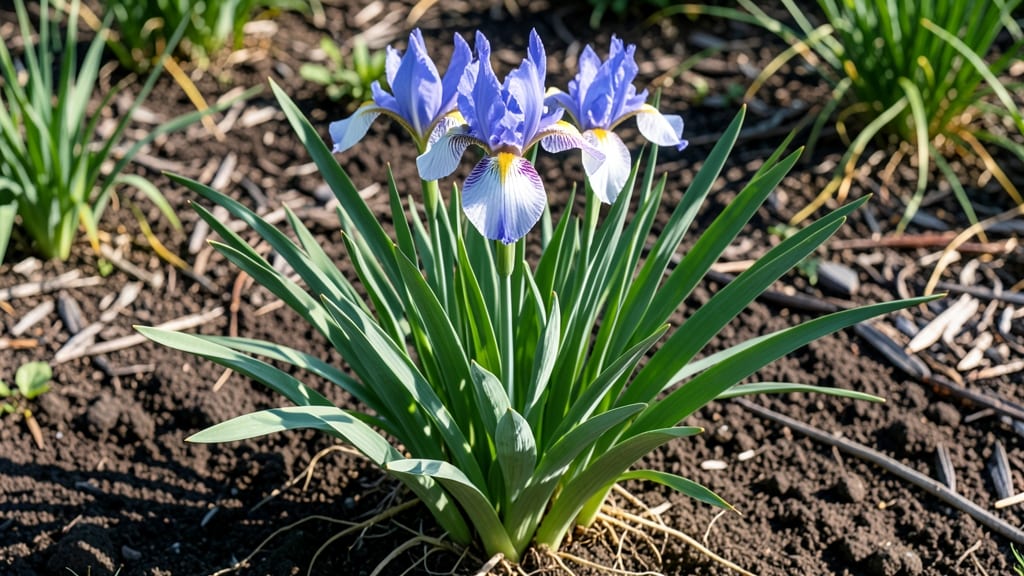
Dutch iris aren't true perennials—they complete their life cycle each year by dying back after flowering, but their prolific self-seeding ensures fresh plants appear annually. Unlike traditional perennials with underground storage, they thrive through natural regeneration rather than persistent root systems.
This annual dieback might seem counterintuitive for a plant often called a "perennial," but it's actually a survival strategy. 🌱 Dutch iris allocate all their energy to producing vibrant blooms and seeds rather than storing nutrients underground. The trade-off?
Their above-ground foliage yellows and collapses after flowering, but the seeds they drop germinate readily in spring, creating dense clusters of new plants. Think of them as "self-replenishing annuals"—they mimic perennial behavior through sheer reproductive power rather than biological persistence.
What makes this cycle fascinating is how it contrasts with bearded iris, which store energy in thick rhizomes year-round. Dutch iris skip this storage step entirely, focusing instead on rapid seed production.
This adaptation explains why they often appear in wildized gardens—they're nature's way of ensuring continuity without relying on complex root systems.
💡 In This Article
- Why Dutch Iris Die Back After Blooming
- How to Grow Dutch Iris Like a Perennial
Why Dutch iris die back after blooming
Dutch iris exhibit this annual dieback because they prioritize reproduction over survival through storage organs. Unlike true perennials like bearded iris, which store energy in thick rhizomes, Dutch iris devote nearly all their resources to producing vibrant blooms and abundant seeds.
This biological trade-off means their foliage collapses after flowering—typically within 6-8 weeks—as the plant has expended its energy reserves. 🌸 The lack of underground storage systems forces them to rely entirely on seed production for the next generation.
The process begins when Dutch iris allocate 80-90% of their photosynthetic energy to flower development rather than root expansion. Their fibrous root system, while extensive, lacks the thick, nutrient-rich rhizomes found in bearded iris.
This energy shift explains why Dutch iris often appear lush and vigorous during their 4-6 week flowering period but then rapidly decline. The seeds they produce contain all the genetic material needed for new plants, ensuring continuity without persistent root structures.
Comparing them to bearded iris highlights the difference: bearded iris maintain their rhizomes year-round, allowing foliage to regrow from the same root system annually. Dutch iris, however, follow a "boom-and-bust" cycle where each plant lives only one growing season.
Their 2-3 inch tall seed capsules split open when mature, scattering hundreds of tiny seeds that germinate in spring—creating the illusion of perennial behavior through sheer reproductive volume. 🌱
This adaptation makes Dutch iris particularly well-suited to disturbed or temporary habitats where they can quickly establish dense colonies. Their self-seeding strategy compensates for the lack of perennial storage systems, allowing them to thrive in areas where other perennials might struggle.
The trade-off is visible dieback, but the resulting seed bank ensures their persistence in the landscape.
What's fascinating is how this cycle mirrors annual plants in some ways while functioning like perennials in others.
The key difference lies in their seed production: while annuals complete their entire life cycle in one season, Dutch iris produce seeds that create new plants for multiple seasons—effectively making them "perennial in behavior" through natural regeneration rather than biological persistence.
This biological mechanism explains why Dutch iris often appear in wildized gardens or naturalized areas—they're nature's way of ensuring continuity without complex root systems. Their ability to self-seed prolifically means each plant doesn't need to survive multiple years; instead, the collective seed production maintains the population year after year. 🌿