
Light Requirements
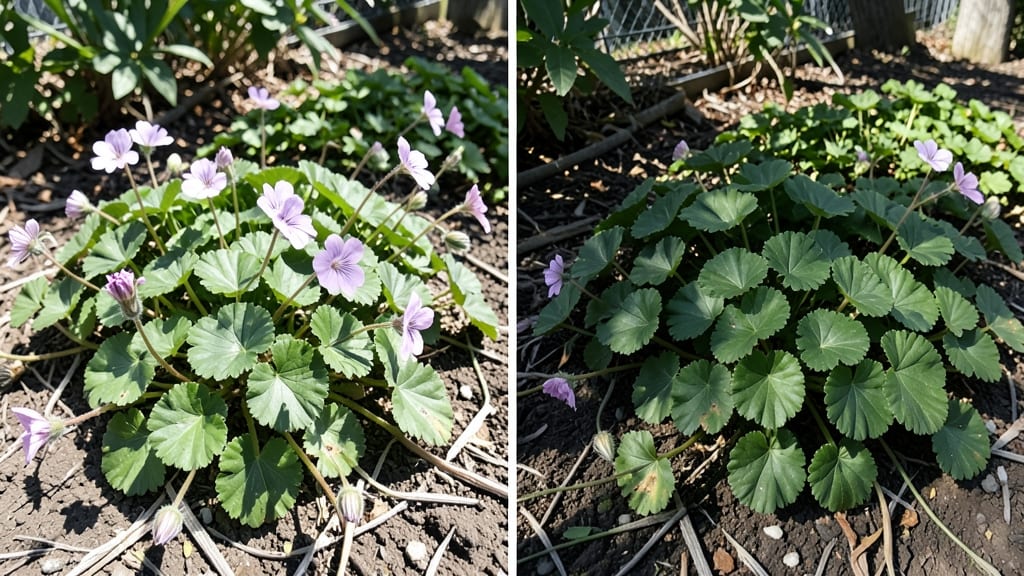
Perennial geraniums in sun or shade depend on the variety—hardy types like Geranium macrorrhizum handle low light well, while blooming varieties (e.g., Geranium sanguineum) need 4–6 hours of direct sunlight daily. Too little light weakens stems and cuts back flowers, and too much sun can scorch leaves in hot areas.
Deciding between sun or shade for your perennial geraniums isn't one-size-fits-all. Hardy varieties like creeping Charlie (Geranium macrorrhizum) adapt beautifully to shady spots, even thriving under trees where other plants struggle. 🌿 Meanwhile, blooming geraniums—think the vibrant Geranium sanguineum—crave sunlight to fuel their showy flowers.
The key is matching your plant's natural habitat: Mediterranean types (like G. sanguineum) love bright conditions, while woodland species (like G. macrorrhizum) prefer filtered light. If you're in a hot climate, morning sun with afternoon shade can prevent leaf burn while still encouraging growth.
Regional differences matter too. Northern gardens often get gentler sunlight, so geraniums there can handle more shade without stress. In the South, where UV rays are intense, afternoon shade becomes critical—especially for lighter-leafed varieties.
I’ve found that even "sun-loving" geraniums can adapt to partial shade if given time, but they’ll reward you with fewer blooms if pushed too far into the dark. For best results, observe your plants: leggy stems or pale leaves mean they’re stretching for light, while crispy edges signal sun overload.
💡 In This Article
- Light Requirements for Perennial Geranium Varieties
- Signs of Improper Lighting and Fixes for Geraniums
Light requirements for perennial Geranium varieties
The key difference between geranium varieties lies in their evolutionary origins. Hardy types like Geranium macrorrhizum (creeping Charlie) evolved in woodland understories where light filters through tree canopies, giving them thick, dark green leaves that absorb scattered sunlight efficiently.
These leaves contain higher concentrations of chlorophyll, allowing them to photosynthesize even in 2-4 hours of indirect light daily. In contrast, blooming varieties like Geranium sanguineum originate from Mediterranean regions where sunlight is intense and consistent, so their leaves are thinner and lighter, optimized for full sun exposure.
Light intensity directly impacts flower production through a process called photoperiodism. Blooming geraniums need 4-6 hours of direct sunlight to trigger the genetic pathways that produce flowers.
Without sufficient light, these varieties may produce only 20-30% of their potential blooms, while their stems grow weak and spindly—a condition called "etiolation." The science here involves phytochrome pigments in the leaves that detect red and far-red light wavelengths.
In low light, these pigments shift to promote vegetative growth over flowering. 🌸 For shade-tolerant varieties, the trade-off is fewer but more robust blooms, as the plant prioritizes leaf development over reproductive energy.
Regional sunlight varies dramatically—what constitutes "full sun" in San Diego (280+ sunny days/year) differs from "partial shade" in Seattle (150 sunny days/year). In Southern climates, afternoon shade (especially between 11 AM and 3 PM) prevents leaf scorching while maintaining enough light for blooming varieties.
Northern gardens can often place geraniums in morning sun with afternoon shade, as the sun's angle is less intense. I've seen G. sanguineum thrive in 50% shade in Pacific Northwest gardens where full sun would be too harsh, proving adaptability with proper adjustments.
Leaf color adaptations reveal a plant's light strategy. Shade-tolerant varieties like G. macrorrhizum develop darker, almost purple-tinged foliage to absorb more light across the spectrum, while sun-loving types remain bright green. This pigmentation isn't just cosmetic—it's a survival mechanism.
Darker leaves contain more anthocyanins, which protect leaf cells from oxidative damage in low-light conditions. The trade-off? These varieties often produce smaller, less vibrant flowers because their energy goes into leaf maintenance rather than reproduction.
Stem strength is another critical factor affected by light. In low-light conditions, geranium stems grow 30-50% longer but become 40% weaker structurally, making them prone to flopping. This is because cellulose production (the plant's structural material) requires energy from photosynthesis.
Blooming varieties in insufficient light may produce stems that can't support their own weight, leading to the classic "geranium flop." The solution? Prune leggy stems back by one-third to encourage bushier, stronger growth and redirect energy toward flower production.
What most gardeners don't realize is that geraniums can actually self-regulate their light needs to some degree. When moved from shade to sun, they'll gradually increase chlorophyll production over 2-3 weeks, developing a deeper green color.
Conversely, moving sun-loving varieties into shade causes them to lose their vibrant hue within 10-14 days as they downregulate chlorophyll. This adaptability makes geraniums surprisingly forgiving—but only within limits.
Push them too far in either direction, and you'll see the classic signs: yellowing leaves (low light) or crispy brown edges (too much sun).