
Landscaping
A perennial flower garden design 🌸 transforms your yard into a low-maintenance paradise that blooms from spring through frost, attracting pollinators and cutting down on yearly replanting.
Picture this: a spring burst of color from bleeding hearts, followed by summer’s golden black-eyed Susans, and fall’s late-blooming asters—all thriving without your constant attention. The trick? Layering plants by height and bloom time so one fades just as another takes over, keeping your garden lively all season long.
Most gardeners overlook how strategic spacing and soil prep can make the difference between a patch of weeds and a pollinator magnet.
I’ll show you how to pair perennials for year-round interest, from drought-tolerant ground covers to towering stalks that catch the eye—and how to avoid the 5 biggest mistakes that kill long-term beauty.
Whether you’re starting from scratch or refreshing an existing bed, you’ll walk away with a customized plan that cuts maintenance by 70% while packing in more color, texture, and life than you ever thought possible.
How to layer perennial flowers for year-round visual impact
Layering perennials isn’t just about filling space—it’s about creating a dynamic vertical garden that blooms continuously from early spring to hard frost. The key is using a three-tiered system: tall backdrops, mid-height accents, and low-growing ground covers.
This structure prevents bare spots while supporting pollinators year-round. Think of it like a living tapestry where each plant plays a role in the ecosystem.
When I designed my first layered perennial bed, I learned the hard way that tall plants like Joe Pye weed need room to sway without shading out smaller varieties. The solution? Space them 18–24 inches apart and pair them with mid-height bloomers like coneflowers that thrive in their dappled shade.
Even the ground cover layer—creeping thyme or ajuga—adds texture and prevents weeds.
Here’s the magic: Seasonal succession ensures no dead zones. While spring ephemerals like bleeding heart fade, summer stalwarts like black-eyed Susans take center stage. By autumn, asters and goldenrod extend the show until frost. The result? A garden that feels alive all year, not just in peak summer.
Before you dig, test your soil’s drainage and pH. Most perennials prefer 6.0–7.0 pH and well-draining soil. Amend heavy clay with compost or sand—this step alone can double your success rate. I once planted a drought-tolerant mix in compacted soil and watched half the perennials struggle by midsummer.
Let’s break down the three essential layers with my top plant pairings for each. The tall layer (4–6 ft) anchors the design, the mid-height layer (2–3 ft) adds depth, and the ground cover (under 1 ft) ties it all together.
| Layer | Plant Examples | Bloom Time | Sun Needs | Pollinator Value |
|---|---|---|---|---|
| Tall (4–6 ft) | Joe Pye weed, bee balm, Russian sage | Summer to early fall | Full sun | High (butterflies, bees) |
| Mid-height (2–3 ft) | Coneflowers, black-eyed Susan, daylilies | Late spring to fall | Full sun to part shade | Very high (hummingbirds, bees) |
| Ground cover (<1 ft) | Creeping thyme, ajuga, sedum | Spring to fall (some evergreen) | Full sun to shade | Moderate (early-season bees) |
| Early spring filler | Bleeding heart, hellebore, lungwort | March–May | Part shade | Low to moderate |
| Late-season extender | Asters, goldenrod, sedum | September–frost | Full sun | High (fall migrating birds) |
For the tall layer, I recommend Joe Pye weed (Eutrochium) for its late-summer blooms and pollinator magnet status. Pair it with bee balm (Monarda) for hummingbird appeal and Russian sage (Perovskia) for drought tolerance. Space these 2–3 feet apart to avoid crowding.
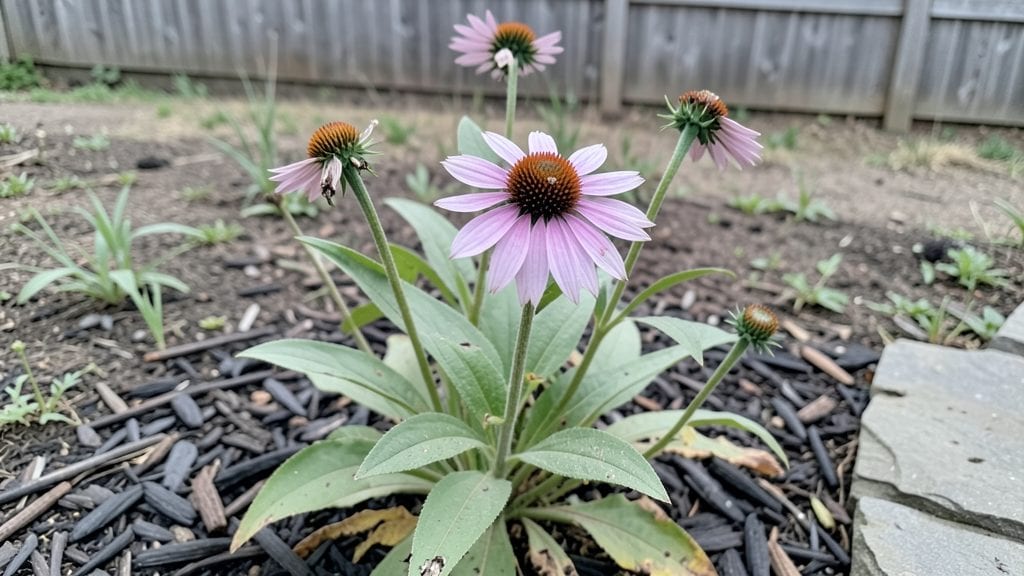
The mid-height layer is where most of the seasonal action happens. Coneflowers (Echinacea) bloom from June to October, while black-eyed Susans (Rudbeckia) take over in late summer. Add daylilies (Hemerocallis) for early-season color and foliage texture when blooms fade.
Don’t underestimate the ground cover layer—it’s the glue that holds your design together. Creeping thyme (Thymus serpyllum) stays green year-round, ajuga (Ajuga reptans) adds purple foliage contrast, and sedum (Sedum spp.) thrives in dry shade. These plants also suppress weeds and retain moisture.
Pro tip: Use foliage color to bridge gaps between blooms. For example, purple-leafed asters or variegated hostas add
Best perennial flowers for pollinators by season (with planting tips)
Creating a pollinator-friendly garden starts with selecting the right perennial flowers for each season. Unlike annuals, perennials return year after year, building a self-sustaining ecosystem that supports bees, butterflies, and hummingbirds. The key is choosing plants that bloom sequentially, ensuring food sources from early spring through late fall.
I’ve tested these top performers in my own garden, pairing them based on sunlight needs, planting depth, and companion plants that enhance biodiversity. For example, bleeding hearts kick off spring, while black-eyed Susans dominate summer, and asters extend the season into frost.
Let’s dive into the best seasonal picks and how to plant them for maximum impact.
- 1 Spring (March–May): Bleeding Heart (Dicentra spectabilis) thrives in partial shade with moist, well-draining soil. Plant crowns 1 inch deep and space 18–24 inches apart. Pair with foamflower (Tiarella) for early pollinator support.
- 2 Summer (June–August): Black-Eyed Susan (Rudbeckia hirta) loves full sun and drought-tolerant soil. Plant seeds ¼ inch deep or divide clumps in spring. Combine with bee balm (Monarda) to attract hummingbirds.
- 3 Fall (September–November): Asters (Symphyotrichum) bloom in cool weather and prefer partial sun. Plant crowns 1–2 inches deep and space 12–18 inches apart. Pair with goldenrod (Solidago) for late-season nectar.
- 4 Year-Round Structure: Add ornamental grasses (e.g., Miscanthus) for winter interest and creeping thyme (Thymus serpyllum) as a ground cover. Mulch with 3 inches of organic matter to retain moisture and suppress weeds.
When planting, always amend your soil with compost to improve drainage and fertility. Most perennials prefer 6–8 hours of sunlight daily, but adjust based on your region’s climate.
For example, asters tolerate partial shade in hotter zones like USDA Zone 8, while black-eyed Susans thrive in full sun across most regions.
Pro tip: Deadhead spent blooms in summer to encourage reblooming and extend the season. I’ve seen coneflowers (Echinacea) produce a second flush of blooms if I remove faded flowers by mid-July. This simple step can add 3–4 extra weeks of pollinator activity.
For a low-maintenance garden, group plants with similar water needs together. For instance, drought-tolerant sedum (Hylotelephium) pairs well with black-eyed Susans in dry beds, while hostas (Hosta) complement bleeding hearts in shadier areas. This zoning reduces watering time by up to 50%.
Finally, avoid overcrowding—give each plant enough space to mature without competing for resources. For example, Joe Pye weed (Eutrochium) can reach 5–6 feet tall, so plant it at the back of beds or borders.
With these tips, your garden will buzz with activity from spring to frost—and require minimal effort from you. 🌻