
Orchid Care
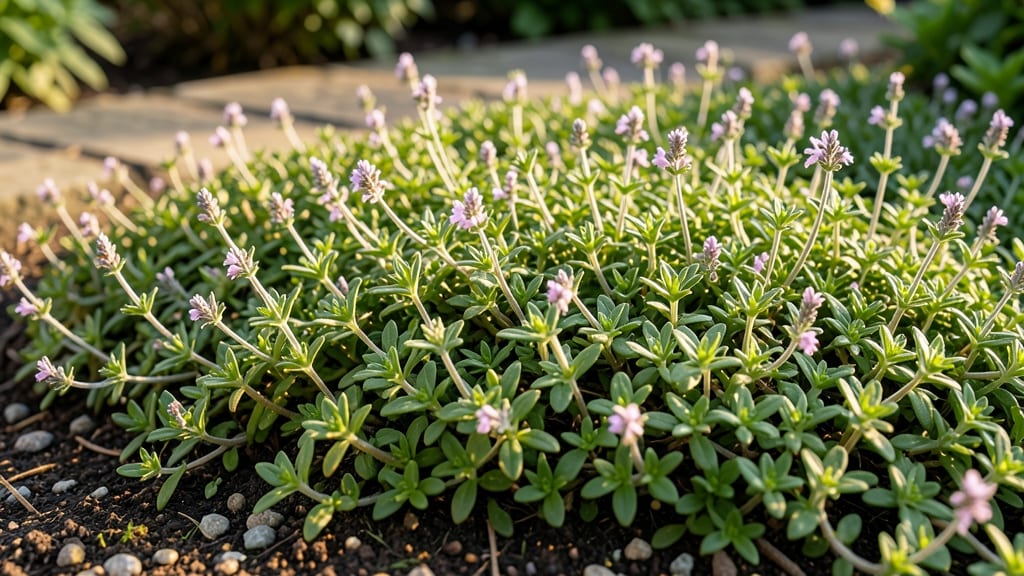
Creeping thyme is a perennial plant that appears to die back each winter but regrows vigorously from its root system when spring arrives, making it a long-lived ground cover with minimal annual care.
This hardy herb survives winter by going dormant, with its woody stems and root crowns protected below the frost line. 🌱 Unlike annuals that complete their life cycle in one season, creeping thyme's roots store energy to fuel new growth as soon as temperatures rise.
Most varieties thrive in USDA zones 5-9, where they'll return year after year with proper winter prep—like light mulching and avoiding overwatering during dormancy. The key difference from annuals is that creeping thyme doesn't need replanting, as its persistent root system ensures it comes back stronger each spring.
What sets creeping thyme apart is its ability to adapt to cold climates while still delivering that signature aromatic foliage season after season. Unlike annuals that must be replanted, this perennial forms dense mats that suppress weeds and require minimal intervention once established.
The only "maintenance" is occasional trimming to control spread and occasional division if the plant looks crowded.
💡 In This Article
- Why Creeping Thyme Survives as a Perennial Plant
- How to Maintain Creeping Thyme Through Winter Dieback
Why creeping thyme survives as a perennial plant
Creeping thyme's perennial nature stems from its specialized underground structure that acts like a biological battery. The plant develops a woody stem base called a crown, which sits just below the soil surface and contains dormant buds.
These buds remain viable even when the above-ground growth dies back in winter, thanks to protective layers of cells that prevent frost damage. The root system extends deeper, storing carbohydrates produced during summer growth—these sugars fuel regrowth when spring arrives.
Here's where photosynthesis plays a crucial role: During the growing season, creeping thyme produces energy through its leaves, which is transported to the roots and stored as starches. When temperatures drop below 20°F, the plant enters dormancy, halting active growth but maintaining cellular integrity.
This stored energy allows new shoots to emerge within 2-4 weeks of consistent spring temperatures above 40°F. The plant's ability to regenerate from this root system is why it thrives as a perennial in zones 5-9, where winters are cold but not extreme enough to kill the protected crown.
The plant's cold-hardiness comes from its ability to supercool—lowering its internal temperature below freezing without forming damaging ice crystals. This process is similar to how some animals survive winter dormancy. Creeping thyme varieties like 'Elfin' or 'Coccinium' have particularly robust root systems that can withstand 10-15°F temperatures without permanent damage.
What's fascinating is how the plant prioritizes root health over foliage—it will often sacrifice above-ground growth to protect its regenerative base during harsh winters.
What sets creeping thyme apart from annuals is its growth habit: while annuals complete their entire life cycle in one season, creeping thyme's root system continues to expand each year. This persistent underground network allows it to spread gradually through stolons (horizontal stems) while maintaining its perennial status.
The plant's ability to photosynthesize even in partial shade helps it rebuild energy reserves quickly after winter, ensuring vigorous regrowth. This biological efficiency is why creeping thyme can live for decades with minimal care.
Consider this comparison: Annual herbs like basil must be replanted each spring, while creeping thyme's root system continues developing year after year. The plant's woody stems provide structural support for new growth, and its aromatic leaves emerge from these same stems each spring.
This dual-function system—storage and regrowth—is what makes creeping thyme such a resilient perennial ground cover. 🌿
The plant's survival strategy also includes its ability to adjust growth patterns based on environmental conditions. In cooler climates, it grows more slowly in summer to build stronger root reserves, while in warmer zones, it may spread more aggressively.
This adaptability is another reason why creeping thyme thrives across such a wide range of USDA zones, from the Pacific Northwest to the Mid-Atlantic region.