
Plants
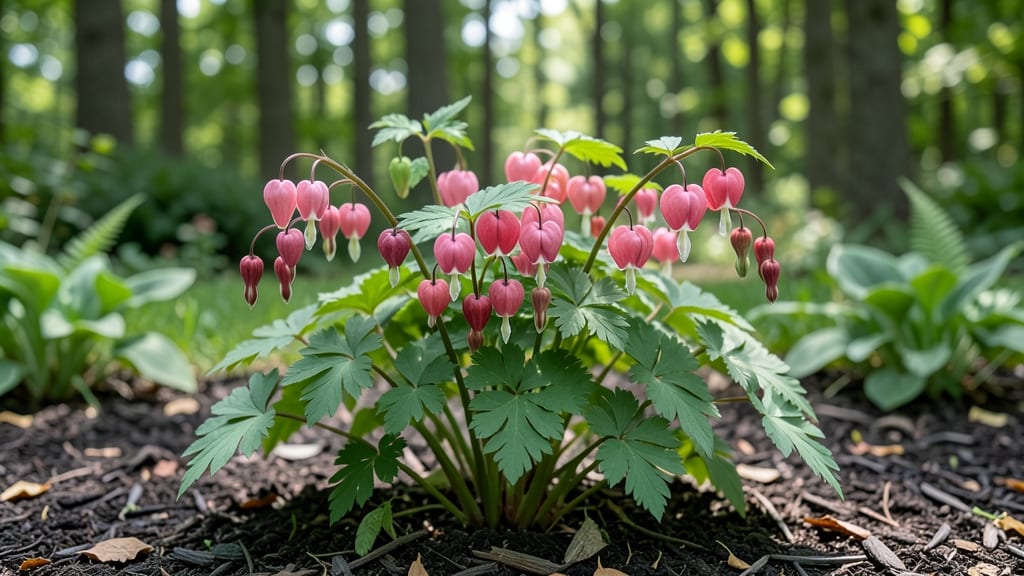
Yes, bleeding hearts are perennials that thrive in USDA zones 3-9, returning each year with proper care, though their lifespan varies—typically 5-10 years under ideal conditions. They die back to the ground in winter but regrow from their rhizomes in spring.
Bleeding hearts earn their perennial status through a clever survival strategy: their underground rhizomes act like energy banks, storing nutrients to fuel regrowth each spring. 🌱 Unlike annuals that complete their life cycle in one season, these plants enter a natural dormancy during winter, conserving resources until temperatures rise.
The key to their longevity lies in consistent moisture, well-draining soil, and protection from harsh winter winds—all factors that help them exceed the typical 5-10 year lifespan when conditions are perfect.
What sets bleeding hearts apart from other perennials is their dramatic seasonal transformation. While they may appear dead in winter, their rhizomes remain alive below ground, ready to burst back to life with the first warm days.
This makes them ideal for gardeners who want year-after-year blooms with minimal effort, though their delicate foliage does require careful winter protection in colder zones.
💡 In This Article
- Why Bleeding Hearts Die Back and Regrow Annually
- Best Growing Conditions for Long-Lived Bleeding Hearts
Why bleeding hearts die back and regrow annually
Bleeding hearts undergo a natural dormancy cycle that distinguishes them from annuals and biennials. Their above-ground foliage wilts and dies back in late fall or early winter, but the real magic happens underground.
The plant's rhizomes—horizontal, creeping root stems—store carbohydrates and nutrients like a biological battery, ready to fuel regrowth when conditions improve. This energy reserve allows them to survive winter's freeze-thaw cycles, which can damage less resilient plants. 🌱
The cold hardiness of bleeding hearts (USDA zones 3-9) enables this survival mechanism. Their rhizomes can tolerate temperatures down to -30°F to -40°F when properly mulched, though young plants need extra protection in zone 3.
Unlike annuals that complete their life cycle in one season or biennials that bloom, die back, and bloom again in their second year, bleeding hearts have a built-in reset button—each year's dormancy actually rejuvenates the plant, potentially extending its lifespan beyond the typical 5-10 years.
This dormancy isn't just about survival—it's a strategic adaptation. When temperatures drop below 40°F for extended periods, the plant's metabolic processes slow dramatically, conserving energy. The rhizomes remain metabolically active but at a minimal level, allowing them to "wait out" winter while other plants perish.
This is why you'll often see bleeding hearts emerging earlier in spring than many other perennials—their energy reserves are already primed for action. 💫
What makes this cycle particularly fascinating is the plant's ability to regenerate from just a small piece of rhizome. Even if winter damage occurs above ground, as long as the rhizome remains intact, the plant can regrow.
This resilience explains why bleeding hearts often outlive their expected 5-10 year lifespan—some well-maintained specimens in ideal conditions have been known to thrive for 20+ years, though their vigor may decline after 15 years without rejuvenation.
Consider this comparison: Annuals like marigolds complete their entire life cycle in one season, while biennials like foxgloves store energy for two years before flowering. Bleeding hearts, however, use their rhizomes to create a perpetual cycle—each year's dormancy isn't an endpoint but a preparation for another season of growth.
This is why gardeners often describe them as "self-sustaining" perennials that require less annual attention than many other garden plants. 🌿
The plant's dramatic seasonal transformation—from lush foliage to complete dormancy—is actually a survival strategy that makes it uniquely adaptable. While other perennials might struggle with winter dieback, bleeding hearts use this cycle to their advantage, emerging each spring with fresh energy stored from the previous year's photosynthesis.
This biological efficiency is what gives them their perennial classification and makes them such reliable garden plants. ✨