
Flowers
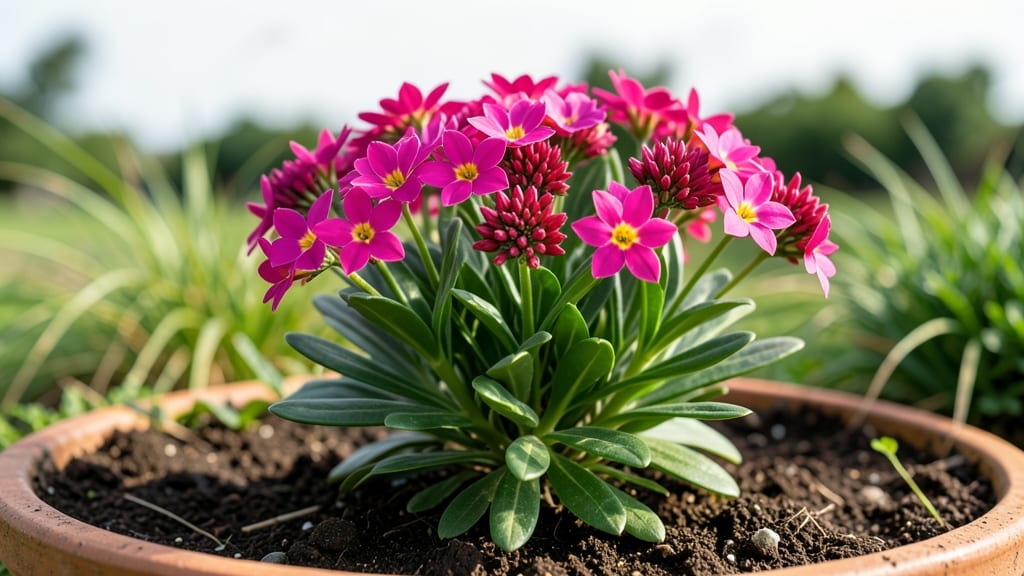
Whether pentas plants are annual or perennial depends on your climate—Pentas thrive as annuals in colder regions but can overwinter as perennials in frost-free zones like USDA 10-12, where they regrow from roots with proper winter care and mulching.
This difference comes down to temperature tolerance.
Pentas plants are tropical natives, so they can't handle freezing temperatures—even light frost will kill them back to the ground. In warmer climates, their deep root systems allow them to survive winter dormancy, while in colder areas, they complete their life cycle each year. Mulching with 2-3 inches of organic material protects roots from temperature swings, while cutting back stems to 2-3 inches above soil helps redirect energy to root survival. 🌱
For gardeners in marginal zones (USDA 9-10), overwintering indoors in pots is often the best solution. Place them in a cool, bright spot and reduce watering—roots stay dormant but alive. If you notice yellowing leaves or stunted growth in spring, it's a sign the plant struggled through winter stress.
The key is consistency: whether you're growing pentas as annuals or perennials, their care needs shift with the seasons.
💡 In This Article
- How Climate Affects Pentas Lifespan as Annual vs Perennial
- Winter Survival Tips for Pentas in Cold Climates
How climate affects pentas lifespan as annual vs perennial
Pentas plants originate from tropical regions of Africa and Asia, where temperatures rarely drop below 50°F (10°C). This explains why they behave as annuals in most U.S. climates—their delicate stems and foliage cannot survive freezing temperatures.
When nighttime lows fall below 32°F (0°C), the entire above-ground plant will die back, completing its annual life cycle. However, the real story happens below the soil: pentas develop thick, fibrous root systems that can survive brief cold snaps if protected.
The USDA hardiness zone system is your best guide. In zones 10-12, pentas naturally persist as perennials because winter temperatures stay above 40°F (4°C). Their roots remain active enough to regenerate foliage in spring, often within 4-6 weeks after last frost.
In contrast, zones 9 and below see more extreme temperature fluctuations—roots may survive but struggle to regrow without intervention. The critical threshold is 28°F (-2°C): below this, even protected roots risk damage.
Root hardiness is where pentas surprise many gardeners. While stems die at 32°F (0°C), roots can tolerate 20°F (-7°C) for short periods if insulated. This is why mulching with 3-4 inches of organic material (like straw or shredded leaves) creates a 5-10°F (3-6°C) warmer microclimate at soil level.
The science here is simple: organic mulch decomposes slowly, releasing heat and insulating against rapid temperature drops. Without this protection, roots can dry out or freeze, turning next year's potential perennial into an annual.
Temperature fluctuations create another challenge. Pentas hate sudden cold snaps after warm spells—this "thermal shock" stresses roots. In USDA 9, where winters average 30-40°F (-1 to 4°C), pentas often survive but produce weaker growth.
The key difference between annual and perennial behavior comes down to consistent winter temperatures. In frost-free zones, pentas enter a natural dormancy, while in colder areas, they must be treated as annuals or given intensive winter care to mimic their native climate.
Consider this comparison: A pentas in USDA 11 might grow 2-3 feet tall with minimal care, while one in USDA 8 may only reach 1 foot if overwintered. The same plant becomes either a showstopper or a struggling annual based solely on climate.
This is why gardeners in marginal zones often experiment with container growing—pots can be moved indoors during cold snaps, giving roots the stable conditions they need to persist.
What most people overlook is how pentas adapt their growth patterns. In perennial climates, they focus energy on root expansion during summer, storing nutrients for spring regrowth. Annual pentas, meanwhile, prioritize rapid flowering and seed production before winter.
This biological trade-off explains why perennial pentas often bloom 2-3 weeks later than annuals—they're "catching up" after winter dormancy. 🌿