
Flowers
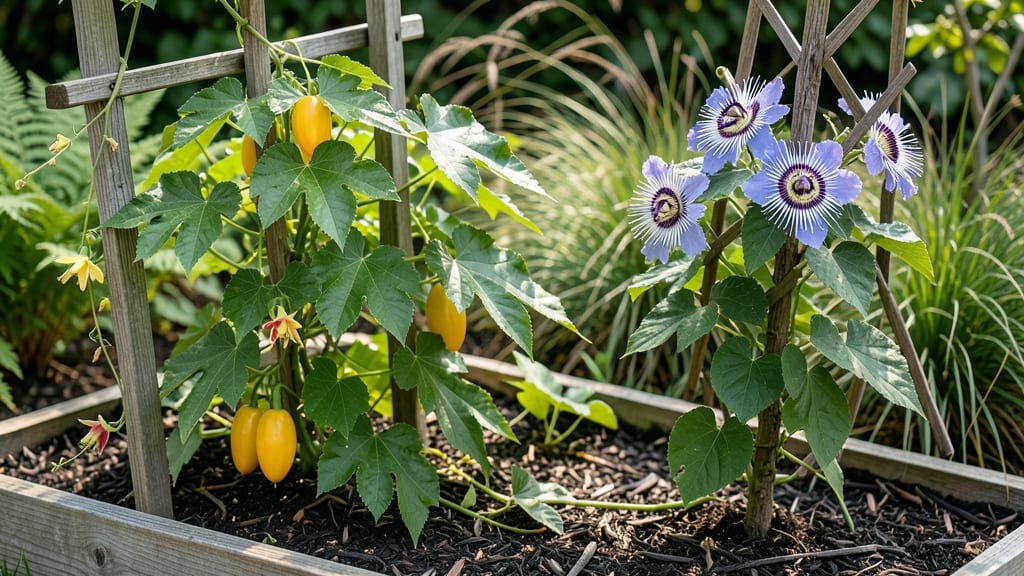
Whether passion flower acts as an annual or perennial depends on its underground corms: in frost-prone areas, it dies back each winter and regrows yearly, while in warmer climates, those same corms survive year-round, making it a true perennial. Your winter care routine directly impacts its long-term growth.
This behavior comes down to the plant's survival strategy—passion flower stores energy in its corms during dormancy, allowing it to bounce back when conditions improve. 🌱 In USDA zones 8-11, where winters rarely drop below 20°F, the corms naturally persist, giving you that perennial blooming cycle.
But in colder zones (4-7), you'll need to treat it like an annual unless you take protective measures like deep mulching or container growing. The key difference? Perennial varieties reward you with repeat blooms for years, while annuals require replanting each spring.
For gardeners in transitional climates, the solution often lies in winter prep. I've found that covering the base with 4-6 inches of straw mulch before the first frost gives the corms a fighting chance to survive.
In containers, simply move them to a garage or basement during winter—this simple trick can turn what would be an annual into a long-lived perennial. The plant's ability to adapt makes it surprisingly resilient once you understand its needs.
💡 In This Article
- How Passion Flower Corms Influence Its Lifespan
- Climate-Based Growing Tips for Year-Round Passion Flower Care
How passion flower corms influence its lifespan
The passion flower's lifespan hinges entirely on its corms—thick, tuber-like storage organs that act like nature's battery pack. These corms store carbohydrates, proteins, and water, allowing the plant to survive harsh winters.
When temperatures drop below 32°F, the above-ground foliage dies back, but the corms remain dormant underground, conserving energy until spring. This biological adaptation explains why passion flowers behave differently in various climates.
In warmer regions (USDA zones 8-11), where winter temperatures rarely fall below 20°F, the corms naturally persist year after year, making the plant a true perennial.
The corm's protective layer prevents freezing, and the plant can regrow from the same root system annually. 🌿 For example, Passiflora incarnata (maypop passionflower) thrives as a perennial in Florida's subtropical climate, producing blooms for decades from the same corms.
In contrast, colder climates trigger dormancy, forcing gardeners to replant annually unless they take protective measures.
The corm's size and health directly impact the plant's vigor. A mature corm can reach 2-3 inches in diameter and contains enough stored energy to produce a robust vine the following season. Smaller corms (1 inch) may struggle to regrow, resulting in weaker plants.
This is why experienced growers prioritize corm care—harvesting, storing, and replanting healthy corms ensures consistent growth. The corm's ability to regenerate also explains why passion flowers can recover from frost damage, as long as the corm itself remains intact.
Temperature triggers are the plant's built-in survival mechanism. Below 40°F, the corm enters dormancy, halting growth until warmth returns.
This process is regulated by hormones like abscisic acid, which accumulates in response to cold stress. 🌱 In frost-prone areas, gardeners must mimic these natural conditions by providing insulation or moving corms to protected environments. Without intervention, the corms may freeze, killing the plant entirely.
The contrast between annual and perennial behavior comes down to whether the corm survives the winter or not.
Another fascinating aspect is how different passion flower varieties respond. Passiflora caerulea (blue passionflower) often behaves as a perennial in zone 7 with proper winter care, while Passiflora edulis (passionfruit) typically acts as an annual in colder zones due to its more delicate corms.
The corm's thickness and waxy coating play a role—thicker corms store more energy and resist freezing better. This biological diversity means gardeners must research their specific variety to determine whether it can thrive as a perennial in their climate.
Understanding this process helps explain why some gardeners see passion flowers return year after year while others struggle with annual growth. The corm's role isn't just about storage—it's the plant's entire survival strategy. By protecting these underground structures, you're essentially giving your passion flower a second chance every spring. 💫