
Flowers
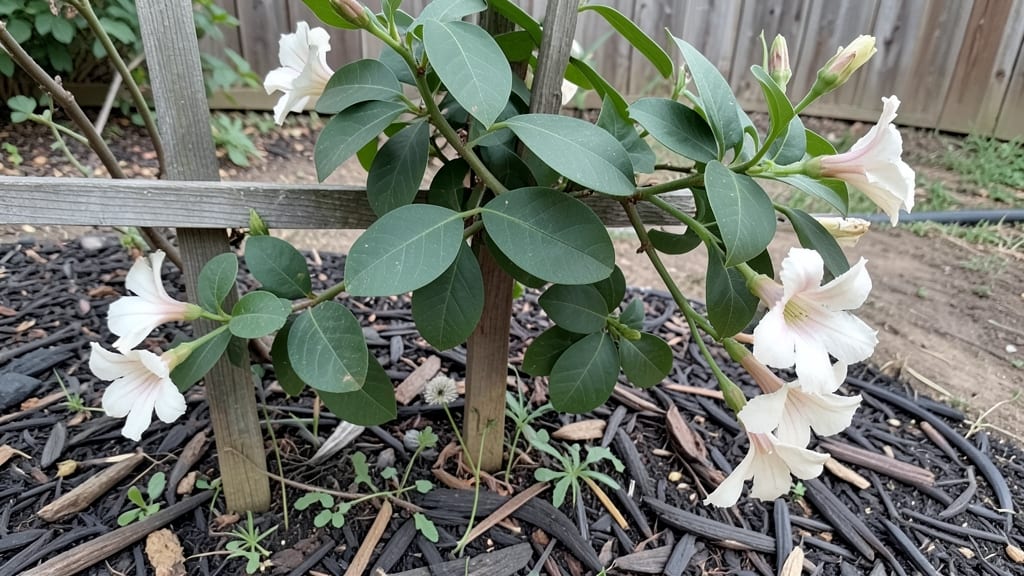
Whether mandevilla trellis is annual or perennial depends on your climate: it thrives as a hardy perennial in USDA zones 9-11 but must be treated as an annual in colder regions, needing winter protection or indoor storage to survive frost.
This tropical vine’s survival hinges on temperature—its roots and stems can’t tolerate freezing, so gardeners in cooler zones must either dig up tubers or move potted plants indoors before 30°F hits. 🌿 In frost-free areas, mandevilla naturally regrows each spring from its root system, while northern growers often replant cuttings yearly.
The key difference? Perennial mandevillas enjoy consistent warmth, while annual versions get a seasonal reboot.
For those in marginal zones (like zone 8), overwintering in a garage with 50°F temps and bright grow lights can bridge the gap—just avoid soggy soil and sudden cold snaps. I’ve seen mandevillas bounce back after proper dormancy, proving they’re tougher than their "annual" label suggests!
💡 In This Article
- Mandevilla Growth Cycle: Perennial vs Annual Behavior
- Extending Mandevilla’s Life: Overwintering and Cold-Climate Care
Mandevilla growth cycle: perennial vs annual behavior
Here's what's actually happening beneath the surface: mandevilla's tropical heritage means its growth cycle is tied to temperature thresholds that trigger dormancy or death. Native to South America, this vine evolved in environments where temperatures rarely drop below 50°F—any colder, and its cells begin to rupture.
The critical threshold is 30°F, where ice crystals form in the plant's vascular system, blocking water flow and causing irreversible damage to both stems and leaves. 🌡️
In frost-free zones (USDA 9-11), mandevilla behaves like a true perennial, developing a robust underground root system that stores energy through winter. These roots can survive mild seasonal fluctuations, allowing new shoots to emerge each spring from the same genetic material.
The key difference is that perennial mandevillas maintain their structural integrity year-round, while annual versions in colder climates must regenerate entirely from cuttings or tubers each season.
What most people don't realize is how the plant's growth habit changes based on climate. In permanent growing zones, mandevilla produces woody stems that can reach 15-20 feet when properly supported, while annual versions in containers rarely exceed 6 feet without pruning.
The tropical variety also exhibits continuous flowering when temperatures stay above 65°F, whereas northern plants typically flower only during their summer growing season before entering dormancy.
The science behind this involves the plant's cambium layer—the growth tissue responsible for producing new cells. In perennial mandevillas, this layer remains active year-round, allowing for gradual stem thickening. In annual versions, the cambium shuts down completely during winter, requiring complete regrowth from dormant buds in spring.
This is why you'll often see northern gardeners propagate from cuttings each year—they're essentially restarting the plant's life cycle annually.
Consider these key factors when evaluating your mandevilla's behavior:
- Root system: Perennial varieties develop thick, fibrous roots that can survive 3-4 years with proper care, while annual versions have more delicate root structures
- Flowering pattern: Tropical mandevillas produce continuous blooms when temperatures stay above 65°F, while seasonal varieties have 3-4 month flowering windows
- Cold tolerance: Even hardy varieties show leaf damage at 32°F and stem dieback below 28°F
The most striking example of this behavior difference is how mandevilla responds to pruning. In perennial climates, aggressive pruning in late winter stimulates vigorous new growth from established stems.
In annual climates, pruning is typically done for shape control rather than growth stimulation, as the plant must rebuild its structure each season from scratch.
This fundamental difference explains why some gardeners in marginal zones (like zone 8) can successfully overwinter mandevilla while others must treat it as annual—it's all about whether you can maintain the critical 50°F minimum temperature threshold consistently.