
Orchid Care
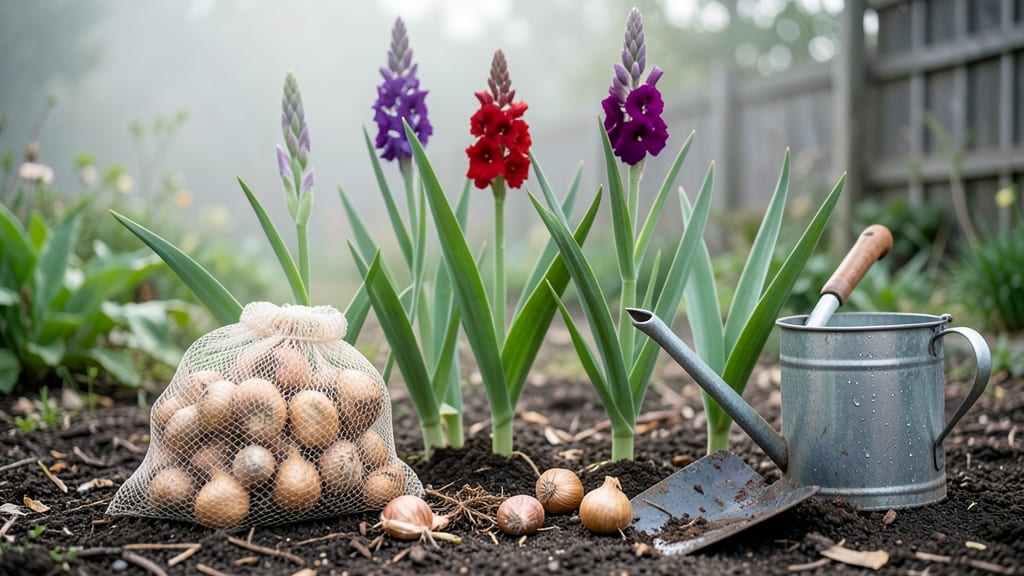
Gladiolus bulbs are perennial plants, but gardeners in colder climates treat them as annuals because their corms don't survive freezing winters. In warmer zones, these underground storage structures regrow each year with proper care.
This behavior comes down to how gladiolus corms store energy—unlike true perennials with deep root systems, gladiolus rely on these bulb-like structures to survive between seasons. 🌱 In zones with mild winters (like USDA zones 8-11), they naturally regrow from the same corms year after year, sometimes even blooming for multiple seasons without replanting.
The key difference is temperature: corms need consistent warmth to break dormancy, which simply doesn't happen in freezing climates.
What's interesting is that even in colder regions, you can extend their lifespan by digging up corms after the first frost, curing them, and storing them properly until spring. This turns what seems like an annual into a semi-perennial with minimal effort—just a little extra planning during the off-season.
💡 In This Article
- Why Gladiolus Corms Act Like Perennials in Warm Climates
- How to Overwinter Gladiolus Bulbs in Cold Regions
Why gladiolus corms act like perennials in warm climates
Gladiolus corms store energy in a way that mimics perennial behavior—these thickened underground stems contain concentrated starches and sugars that fuel regrowth. Unlike true perennials like daffodils, which develop deep root systems, gladiolus rely entirely on their corms for survival.
When temperatures stay above 40°F through winter, the corms remain dormant but viable, ready to sprout when spring warmth triggers cell division. This process is called geophyte dormancy, where the plant conserves energy until conditions are favorable.
The magic happens in late winter when soil temperatures reach 55-60°F—this warmth signals the corm to break dormancy. New shoots emerge from the top, while roots grow downward to anchor the plant. In warm climates, this cycle repeats annually without intervention.
For comparison, daffodil bulbs also regrow yearly, but their underground structures are true bulbs (layered stems) rather than corms (solid storage stems). Gladiolus corms are more delicate, which is why they struggle in freezing conditions.
What makes this perennial-like behavior fascinating is the corm's layered structure. Each year, a new corm forms above the old one, while the original shrinks as it feeds the new growth. This telescoping effect creates a chain of corms that can produce multiple blooms over several seasons.
In ideal conditions (like Florida or California), a single planting can continue flowering for 3-5 years before needing division. The key is maintaining consistent moisture and avoiding winter freezes that would rupture the corm's delicate tissue.
Light also plays a role—gladiolus corms need 6-8 hours of sunlight daily to produce strong blooms. In northern climates where winters are harsh, this light requirement becomes impossible to meet during the dormant season, which is why gardeners in these areas typically replant fresh corms each year.
The trade-off is stunning summer blooms, but at the cost of losing the plant's natural perennial cycle. In milder zones, you'll often see gladiolus returning year after year without replanting, proving their hidden perennial potential.
Here's what's actually happening underground: The corm's outer layers protect it from drying out while allowing controlled water absorption. When temperatures rise, enzymes activate that convert stored starches into sugars for new growth.
This biological process is why gladiolus can be such prolific bloomers—each corm contains enough energy to produce 1-3 flower spikes per season, depending on its size. The larger the corm (typically 2-4 inches in diameter), the more dramatic the display.
One common misconception is that gladiolus are true perennials everywhere. In reality, they're facultative perennials—meaning their perennial nature depends entirely on climate.
In zones 8-11, they'll reliably regrow; in zones 6-7, they might survive with proper overwintering; but in zones 4-5, they're effectively annuals unless you take special storage precautions. This climate-dependent behavior is what makes gladiolus such an interesting study in plant adaptation.