
Orchid Care
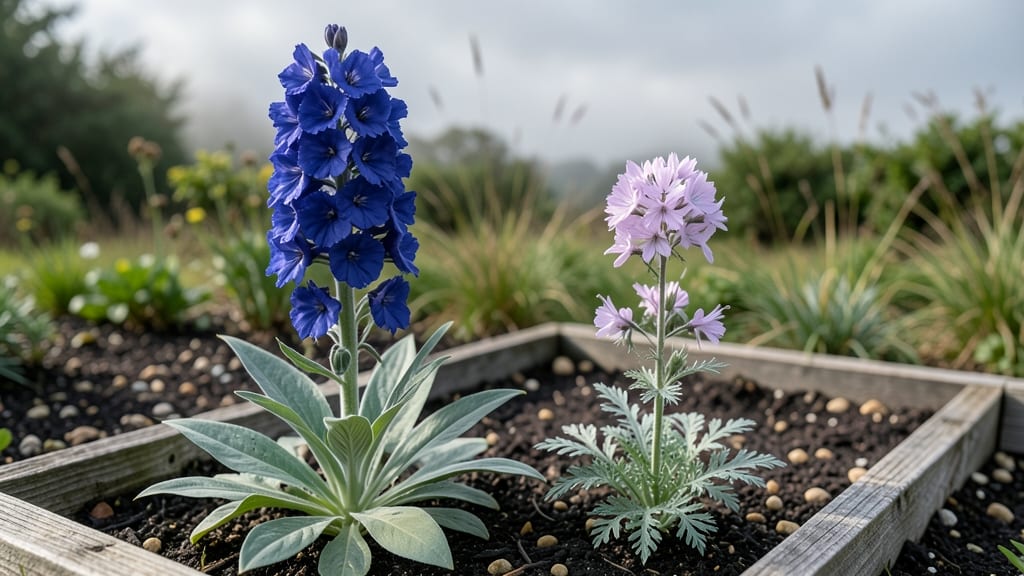
Whether delphiniums grow as annuals or perennials depends entirely on your USDA Zone—perennial in Zones 3-7 but annual in warmer Zones 8-11. Their ability to survive winter hinges on cold hardiness, with some varieties regrowing from roots each spring while others completely die back.
Delphiniums thrive as perennials in cooler climates because their deep root systems store energy to regrow after winter dormancy. 🌱 In milder zones where temperatures rarely drop below 20°F, these roots can't survive, forcing gardeners to treat them as annuals.
The good news? Even in warmer areas, you can still enjoy their stunning blooms by replanting seeds each year or using cold frames to extend their growing season.
What makes this distinction important is how you care for them. Perennial delphiniums need winter mulch to protect their roots, while annuals benefit from early spring planting and consistent deadheading to encourage nonstop blooms.
I've found that in marginal zones (like Zone 7), a little extra winter protection can turn an annual into a short-lived perennial—just be prepared for potential setbacks if temperatures dip unexpectedly.
💡 In This Article
- Delphinium Cold Hardiness by USDA Zone
- Growing Delphiniums as Annuals vs. Perennials
Delphinium cold hardiness by USDA Zone
The key difference between annual and perennial delphiniums lies in their root systems and how they handle winter dormancy. Delphiniums in Zones 3-7 develop deep taproots that can survive temperatures down to -30°F, allowing them to regrow each spring.
These roots store carbohydrates that fuel regrowth, much like how peonies or daylilies overwinter. In contrast, varieties in Zones 8-11 lack this cold resistance because their roots can't tolerate prolonged exposure below 20°F, forcing them to complete their lifecycle in a single season.
What's fascinating is how delphiniums enter dormancy. When nighttime temperatures drop below 45°F for several weeks, the plant's growth slows, and energy shifts underground. The foliage may yellow and die back, but the roots remain alive, ready to sprout when temperatures rise above 50°F in spring.
This process is similar to how tulip bulbs survive winter—both rely on stored energy to restart growth. 🌱 However, in warmer zones, this dormancy cycle never fully completes, and the roots weaken over time without proper cold exposure.
The USDA Zone boundaries aren't absolute—some delphinium varieties, like 'Blue Bird' or 'Black Knight', have shown exceptional hardiness in Zone 7 with proper winter protection (like mulching). These cultivars can push their cold tolerance slightly lower than 20°F when shielded from wind and insulated with 4-6 inches of organic mulch.
The trade-off? Their blooms may be slightly smaller in the first year after winter, as energy is diverted to rebuilding root reserves.
Soil type also plays a surprising role. Delphiniums in well-draining, slightly alkaline soil (pH 6.5-7.5) handle winter better because excess moisture can cause root rot during thaw cycles. In heavier clay soils, even cold-hardy varieties may struggle because waterlogged conditions accelerate root decay.
This is why gardeners in marginal zones (like Zone 7b) often amend soil with sand or compost to improve drainage before winter.
Here's what happens at the cellular level: When temperatures drop below 20°F, delphinium roots produce antifreeze proteins that prevent ice crystal formation in their cells. These proteins are similar to those found in winter wheat, allowing the plant to survive subfreezing temperatures.
In warmer zones, this protective mechanism isn't triggered, and the roots simply can't endure the stress. 💫
For gardeners in Zones 7-8, the solution often lies in microclimates. Planting delphiniums near south-facing walls or in raised beds can create pockets where temperatures stay 5-10°F warmer than the surrounding area, potentially extending their perennial lifespan.
This is why some gardeners in these zones successfully grow delphiniums as short-lived perennials—with careful site selection and winter protection.