
Flowers
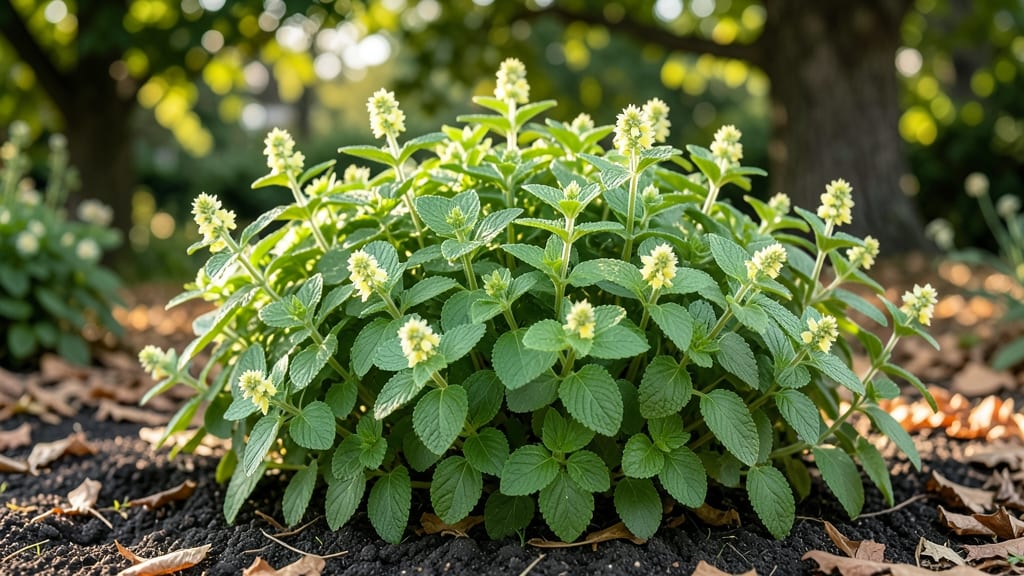
Deciding whether lemon balm is annual or perennial depends on your climate: it's a hardy perennial in USDA zones 4-9, surviving winters by dying back to roots before regrowing in spring. In colder regions, its frost sensitivity makes it behave like an annual, but strategic replanting from divisions guarantees it returns year after year.
Lemon balm's perennial nature in moderate climates comes from its underground rhizomes, which store energy to regrow once temperatures rise. 🌱 The confusion arises because many gardeners mistake its winter dormancy for death—especially in zones 3 or colder, where frost kills the above-ground growth completely.
Even in its native perennial zones, a harsh winter might reduce its vigor, but proper mulching (like straw or leaves) can shield roots from extreme cold and encourage stronger regrowth.
For those in marginal zones, container growing offers flexibility—simply move pots indoors before frost hits. Dividing established plants every 2-3 years also rejuvenates growth, as older clumps produce weaker stems.
I've found that even in zone 5, a well-mulched patch will often bounce back stronger than expected, proving that lemon balm's resilience often exceeds gardeners' initial assumptions.
💡 In This Article
- Lemon Balm’s Perennial Growth Cycle Explained
- How to Extend Lemon Balm’s Life Beyond One Season
Lemon balm’s perennial growth cycle explained
The key to understanding lemon balm's perennial nature lies in its specialized underground structure: a network of rhizomes that function like natural energy banks. These thickened, horizontal stems store carbohydrates and nutrients during dormancy, allowing the plant to survive temperatures as low as -25°F in protected conditions.
Unlike true annuals like basil, which die completely after seed production, lemon balm's rhizomes remain alive beneath the soil, ready to sprout new shoots when soil temperatures reach 50°F in spring.
Here's what happens during winter dormancy: the above-ground foliage yellows and collapses as temperatures drop below 32°F, but the rhizomes enter a state of metabolic slowdown. This process, called cold acclimation, involves the plant converting sugars into antifreeze-like compounds that protect cellular structures.
In USDA zones 4-9, this adaptation allows lemon balm to regrow from the same root system year after year, while in colder zones (3 or below), the rhizomes may suffer damage if not properly protected.
The visual deception comes from how dramatically the plant appears to die back. Many gardeners assume lemon balm is annual because it looks completely spent by late fall, with no visible growth above ground. However, what seems like death is actually a survival strategy—similar to how peonies or hostas behave.
The difference is that lemon balm's regrowth is often more vigorous than these perennials because its rhizomes are more aggressive spreaders, capable of producing multiple shoots from a single underground network.
Climate plays a crucial role in this cycle. In zone 5, for example, lemon balm typically dies back to the ground but returns robustly in spring. In zone 9, it may maintain some evergreen foliage through mild winters.
The confusion arises because gardeners in marginal zones (like zone 4 edges) sometimes see their plants fail to regrow, leading them to assume it's annual.
This is where proper winter care makes all the difference—adding 3-4 inches of mulch can raise soil temperatures by 5-10°F, making the difference between survival and failure.
What sets lemon balm apart from true annuals is its ability to reproduce both sexually (through seeds) and asexually (through rhizomes). This dual strategy gives it a survival advantage: even if the above-ground plant is killed by frost, the rhizomes can regenerate.
In contrast, annuals like basil must rely entirely on seed production for the next generation, making them more vulnerable to environmental fluctuations.
For those in transitional zones, understanding this growth cycle explains why lemon balm often outperforms expectations. I've seen patches in zone 5 that appeared completely dead in winter only to produce 3-foot-tall plants by early June—proof that what looks like failure is actually the plant's clever adaptation strategy. 🌿