
Flowers
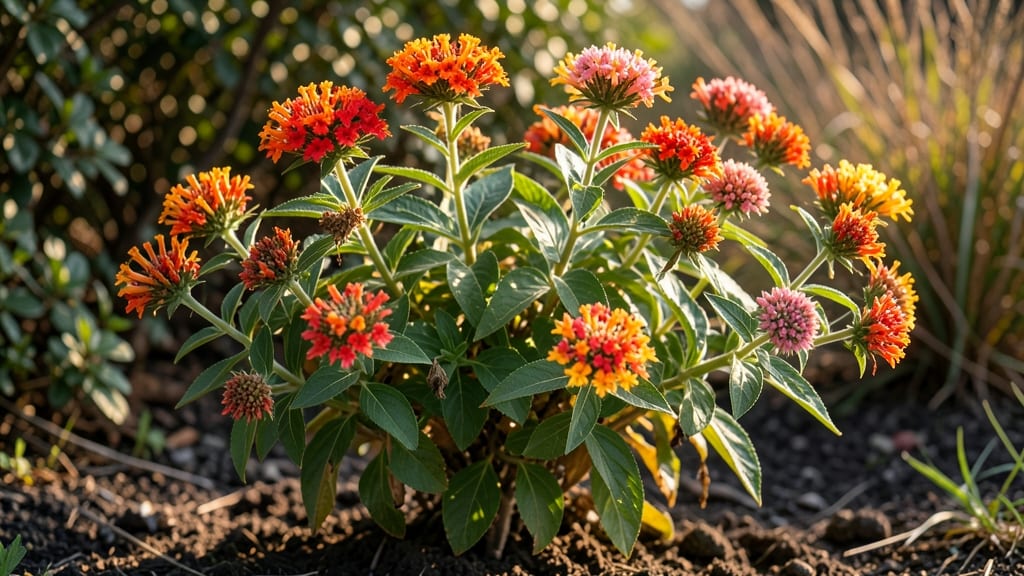
Whether lantana is annual or perennial depends on your climate—it thrives as a hardy perennial in warm zones (8-11) where it regrows yearly, but dies back completely in freezing temperatures, forcing gardeners in colder areas to replant it each spring.
Lantana's behavior hinges on temperature tolerance—its roots survive mild winters but freeze in colder zones, forcing it to regrow from seed each spring. 🌱 In USDA zones 8-11, you'll see vibrant blooms return yearly, while northern gardeners often treat it as an annual.
The key difference lies in those hardy root systems: in warm climates, they act like a living backup, while frost kills them back to the ground.
Many gardeners in colder regions still grow lantana by starting new plants each season, as its drought resistance and colorful flowers make it worth the effort.
For those in transitional zones (7 or below), overwintering potted lantana indoors can extend its lifespan—just bring it inside before temperatures drop below 30°F. Pruning back dead growth in early spring also encourages fresh foliage, though it won't regrow from the same roots as it would in warmer climates.
The plant's adaptability makes it a favorite for both perennial gardeners and annual lovers, depending on where you live.
💡 In This Article
- How Climate Zones Determine Lantana’s Lifespan
- Growing Lantana as a Year-Round or Seasonal Plant
How climate zones determine lantana’s lifespan
Lantana’s classification as a tender perennial stems from its tropical origins, where temperatures rarely dip below 30°F. In USDA hardiness zones 8-11—spanning much of the southern U.S. and coastal regions—lantana’s deep, fibrous root system survives winter dormancy, storing energy to fuel rapid regrowth when temperatures rise.
These roots contain specialized cells that produce sugars during photosynthesis, which act as natural antifreeze, protecting the plant from light frosts (28-30°F) that would kill above-ground growth. 🌡️
The turning point occurs when temperatures drop below 25°F for extended periods. At this threshold, even lantana’s hardened roots succumb to cellular damage, causing the entire plant to die back to the ground.
This dieback isn’t permanent in warm zones because the roots remain viable, sprouting fresh shoots as soon as soil temperatures reach 60°F in spring.
In contrast, gardeners in zones 7 and colder face a different challenge: the roots rarely survive winter, forcing them to replant from cuttings or seeds each season.
What makes lantana unique is its ability to regenerate from just a few inches of root left in the ground. Unlike true perennials that rely on a robust crown, lantana’s survival strategy depends on its extensive root network spreading horizontally up to 3 feet underground.
This adaptation explains why even heavily pruned plants in warm climates bounce back—new shoots emerge from nodes along the roots, creating dense foliage within weeks. 🌱
In colder climates, this root resilience becomes irrelevant since frost penetrates deeper. The plant’s above-ground growth freezes solid, and without protected roots, it behaves like an annual. This is why gardeners in Minnesota or New England treat lantana as a seasonal favorite rather than a perennial staple.
The key difference lies in whether the roots survive winter: in warm zones, they do; in cold zones, they don’t.
Consider this comparison: In Florida (zone 9), lantana plants I’ve observed return every year with minimal care, while in Ohio (zone 6), even well-established plants die back completely unless overwintered indoors. The 15°F difference between these zones determines whether lantana acts as a perennial or annual.
This climate sensitivity is why many nurseries label lantana as "tender perennial"—it’s not cold-hardy enough for northern climates but too persistent to be a true annual.
The botanical term for this behavior is "tender perennial," meaning it survives winter only in protected microclimates or specific zones. For example, lantana might thrive in a sheltered garden bed in zone 7 but fail in an exposed location.
This variability is why gardeners must consider both their zone AND local frost patterns when deciding how to grow lantana. 🌿