
Flowers
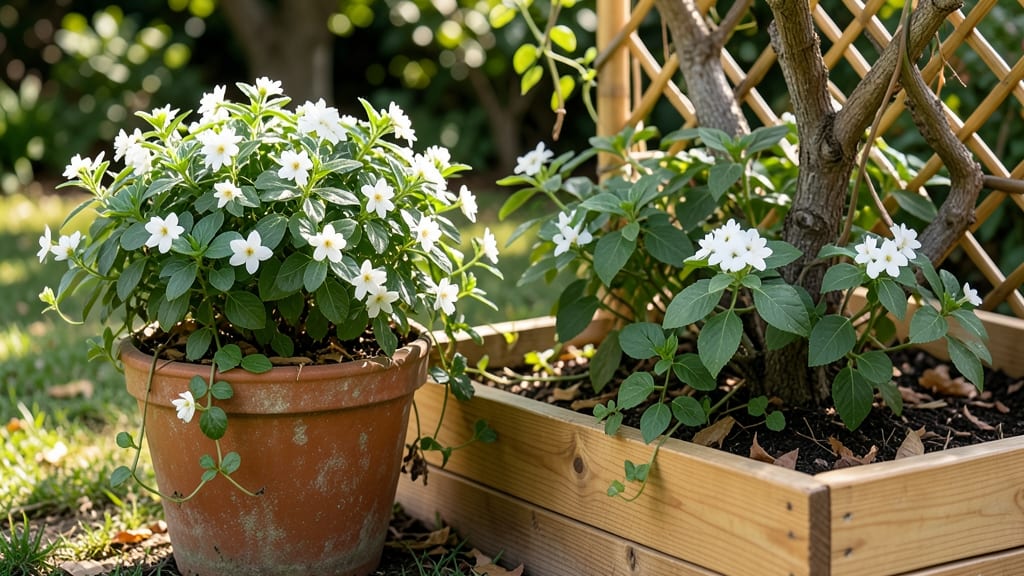
Whether jasmine plants are annual or perennial depends entirely on your climate zone: hardy varieties like Winter Jasmine (Jasminum nudiflorum) thrive as perennials in USDA Zones 5-9, while tender types such as Common Jasmine (Jasminum officinale) die back in frost and regrow yearly in colder regions. The freezing threshold determines whether they'll return each spring or need replanting annually.
Understanding this distinction comes down to root survival—jasmine roots in Zones 5-9 can withstand 15-20°F without damage, while tender varieties need protection below 25°F. 🌱 Winter Jasmine's yellow blooms in late winter prove its cold resilience, while Common Jasmine's delicate white flowers require winter mulching or container overwintering in colder areas.
I've seen gardeners in Zone 6 successfully grow Winter Jasmine as a living fence, while their Common Jasmine plants return every spring after dieback.
For those in warmer climates (Zones 10+), even tender jasmine varieties can behave like perennials, though they may need pruning to control growth. The key is matching your local winter lows to the species' hardiness ratings—this simple step can transform a seasonal plant into a long-lived garden staple.
💡 In This Article
- Cold Zone Hardiness and Jasmine Plant Lifespan
- Choosing the Right Jasmine for Your Climate
Cold Zone hardiness and Jasmine plant lifespan
The difference between annual and perennial jasmine comes down to root survival during winter dormancy. Hardy varieties like Winter Jasmine (Jasminum nudiflorum) have evolved to withstand temperatures as low as -15°F to -20°F in USDA Zones 5-9.
Their roots contain natural antifreeze compounds—similar to how some trees produce glycerol in their sap—that prevent ice crystals from forming in cell walls. This allows them to remain dormant yet alive through freezing conditions, ensuring new growth in spring.
In contrast, tender jasmine species like Common Jasmine (Jasminum officinale) have roots that begin to suffer damage at 25°F or below. Their cells lack these protective compounds, so frost causes water within root tissues to expand and rupture cell membranes—a process called osmotic shock.
This is why gardeners in Zones 7-9 often see their Common Jasmine plants die back to the ground each winter, only to regrow from the base when temperatures rise above 50°F in spring.
The key mechanism here is dormancy depth. Hardy jasmine varieties enter a deeper, more protected dormancy state, while tender types experience a lighter dormancy that still leaves them vulnerable.
Think of it like comparing a well-insulated house (hardy jasmine) to a thin blanket (tender jasmine) during a winter storm—the insulation makes all the difference in survival. 🌡️
Even within hardy species, there are variations. For example, Winter Jasmine can tolerate 30°F for extended periods without damage, while its cousin, Primrose Jasmine (Jasminum mesnyi), struggles below 20°F.
This is why gardeners in Zone 6 might successfully grow Winter Jasmine as a perennial but need to protect Primrose Jasmine with thick mulch or container overwintering.
What most gardeners don't realize is that even hardy jasmine plants experience cold acclimation—a process where they gradually build cold tolerance in fall.
If you plant them too late in the season (after 60 days before first frost), their roots won't have time to harden off properly, making them more susceptible to winter damage. This is why early fall planting is crucial for perennial jasmine success.
Consider this comparison: In Zone 5, Winter Jasmine's roots can survive -15°F winters, while Common Jasmine roots will die back at 25°F.
The difference is like comparing a winter coat rated for -10°F versus a lightweight sweater only good for 40°F—one keeps you warm through a blizzard, while the other leaves you shivering. This fundamental difference determines whether your jasmine returns year after year or needs replanting annually.