
Planting
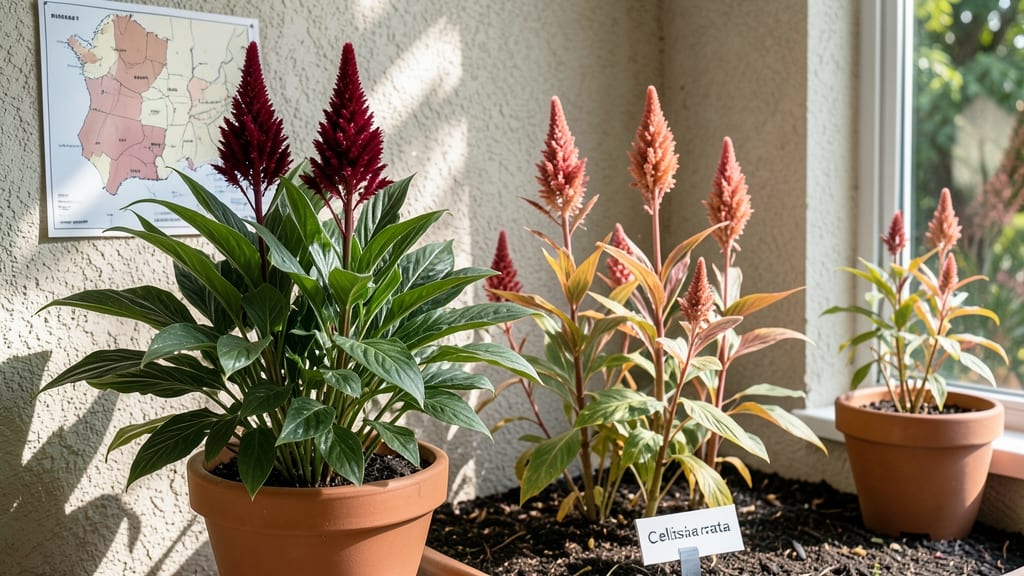
The celosia plant is not a perennial in most climates—it thrives as an annual but dies back in cold winters. However, in USDA Zones 10-12, it may survive year-round with proper care, regrowing from the base after frost.
The celosia plant's lifespan depends entirely on your climate. 🌱 Native to tropical and subtropical regions, its delicate foliage and stems can't withstand freezing temperatures, which is why it behaves as an annual in most of the U.S. However, the good news is that with strategic care—like bringing potted plants indoors before the first frost or selecting hardier varieties—you can extend its growing season in colder areas.
What sets celosia apart is its ability to regenerate in warmer zones. In USDA Zones 10-12, where winters rarely drop below 30°F, the plant often returns year after year from its roots, proving it can act like a short-lived perennial.
This makes it a fantastic choice for gardeners in those regions who want vibrant, long-lasting color without the commitment of true perennials.
💡 In This Article
- Celosia Plant Lifespan: Why It Dies in Cold Climates
- How to Overwinter Celosia in Cold Regions
Celosia plant lifespan: why it dies in cold climates
Celosia's tropical heritage explains why it struggles in cold climates. Originating from Africa, Asia, and South America, this plant evolved in regions where temperatures rarely drop below 50°F. Its thin stems and delicate leaves contain minimal internal water storage, making them highly susceptible to frost damage.
When temperatures fall below 32°F, ice crystals form within the plant cells, rupturing their membranes and causing irreversible damage. 🌡️
The root system plays a critical role in celosia's survival. Unlike hardy perennials, celosia develops a shallow, fibrous root structure that lacks the energy reserves to sustain it through winter dormancy.
True perennials like hostas store carbohydrates in their roots to fuel regrowth, but celosia's roots contain only enough energy for a single growing season. This biological limitation means the entire plant—roots and all—often dies back when exposed to prolonged cold.
Temperature triggers another key mechanism: photoperiod response. As daylight shortens in fall, celosia detects the seasonal change and begins preparing for dormancy. However, unlike cold-hardy perennials that enter a true dormant state, celosia's response is more like an annual's—it focuses its energy on seed production rather than root survival.
This evolutionary adaptation makes perfect sense in its native tropical environments but becomes a liability in temperate climates. 🌱
Even in marginally cold-hardy zones (USDA Zone 9), celosia's survival depends on microclimates. A protected spot near a south-facing wall might allow the plant to endure light frosts, while exposed areas will see complete dieback.
The plant's inability to withstand even brief cold snaps—especially when combined with wind—explains why it's classified as an annual in most gardening regions.
What most gardeners don't realize is how quickly celosia responds to temperature changes. Within just 24-48 hours of exposure to 30°F temperatures, you'll see the first signs of damage: blackened leaf edges and wilted stems.
This rapid response contrasts sharply with cold-hardy plants like salvia, which can survive -10°F with proper preparation. The lack of cold tolerance makes celosia a seasonal showstopper rather than a long-term garden staple. ❄️
For those in transitional zones, the key difference between annual and perennial behavior becomes clear when comparing celosia to its hardier cousin, the cockscomb variety (Celosia cristata).
While both share tropical origins, the cockscomb's slightly thicker stems and more robust growth habit give it a marginal edge in colder climates—but even these varieties rarely survive winter exposure. The fundamental limitation remains the plant's biological makeup, not just environmental conditions.