
Aphids
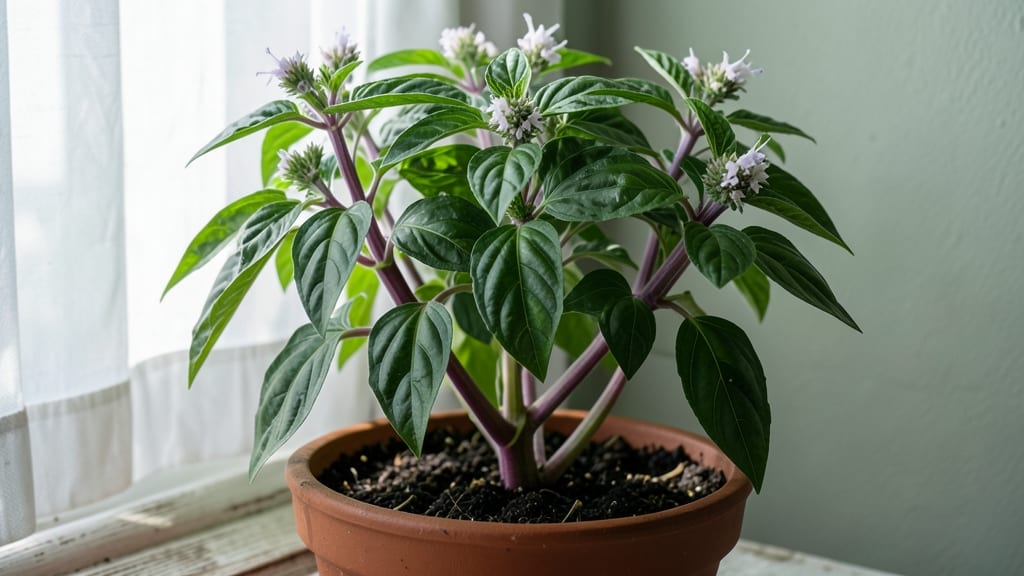
Thai basil behaves as a short-lived perennial only in frost-free zones 9–11, where its underground rhizomes survive mild winters. Outside these areas, it’s typically grown as an annual or overwintered indoors.
Thai basil's survival strategy relies on its rhizomatous root system, which stores nutrients and energy underground.
Unlike true perennials that regrow reliably year after year, Thai basil's underground network allows it to persist for 2-3 years in ideal conditions before declining. 🌱 In colder climates, gardeners often treat it as an annual or bring potted plants indoors before the first frost to encourage regrowth.
This adaptability makes it a favorite for home gardeners who want fresh Thai basil year-round with minimal effort.
What sets Thai basil apart from other basils is its ability to re-sprout from cuttings even after the main plant dies back. This trait, combined with its rhizomes, explains why it can sometimes return in spring even when grown as an annual.
For those in colder zones, late-summer propagation is key—taking cuttings before frost ensures you can restart your plants indoors until spring.
💡 In This Article
- How Thai Basil’s Rhizomes Help It Survive as a Short-Lived Perennial
- Growing Thai Basil in Cold Climates: Indoor Overwintering and Annual Care
How Thai basil’s rhizomes help it survive as a short-lived perennial
Thai basil’s survival strategy hinges on its rhizomatous root system, which functions like a natural energy bank. These horizontal underground stems store carbohydrates, nutrients, and water—similar to how sweet potatoes or ginger rhizomes operate.
Unlike true perennials like asparagus (which have thick, woody crowns), Thai basil’s rhizomes are more delicate, storing just enough reserves to sustain regrowth for 2-3 years in frost-free conditions. 🌱 The key difference is that true perennials maintain robust root systems year-round, while Thai basil’s rhizomes gradually deplete their energy stores without replenishment from new growth.
In zones 9–11, where winter temperatures rarely drop below 20°F, these rhizomes remain dormant but viable through mild winters. The plant’s ability to regenerate depends on two critical factors: soil temperature (must stay above 40°F) and moisture retention in the root zone.
Without freezing stress, the rhizomes can push out new shoots as early as late winter, giving Thai basil its short-lived perennial behavior. This contrasts sharply with sweet basil, which lacks rhizomes and must be replanted annually even in warm climates.
What’s fascinating is how these rhizomes prioritize energy storage. When the above-ground plant senesces (dies back) in late summer, the rhizomes redirect all remaining nutrients—up to 30% of the plant’s total energy reserves—into underground storage.
This adaptation explains why Thai basil can sometimes re-emerge the following spring even after being treated as an annual. 💛 The trade-off? Without proper care, the rhizomes weaken over successive years, leading to smaller or sparser regrowth.
For gardeners in frost-free zones, this means Thai basil can become a low-maintenance perennial if given consistent care. The rhizomes’ shallow depth (4-6 inches below soil) also makes them vulnerable to disturbance—over-cultivation or heavy foot traffic can sever these critical storage organs.
In contrast, deeper-rooted perennials like mint or comfrey thrive with more aggressive growth habits and deeper rhizome systems.
Here’s what sets Thai basil’s rhizomes apart from other herbs:
- Energy storage: Stores 15-25% more carbohydrates than sweet basil’s roots, enabling limited regrowth
- Regrowth timing: New shoots appear 4-6 weeks earlier in spring than from seeds
- Cold tolerance: Rhizomes survive down to 18°F for short periods, but prolonged cold kills them
The practical takeaway? In ideal conditions, Thai basil’s rhizomes act like a biological reset button—allowing the plant to "come back to life" without replanting.
But this only works if the rhizomes remain undisturbed and the climate stays mild. 🌿 In colder zones, this natural resilience becomes the foundation for successful indoor overwintering techniques.