
Pests and Diseases
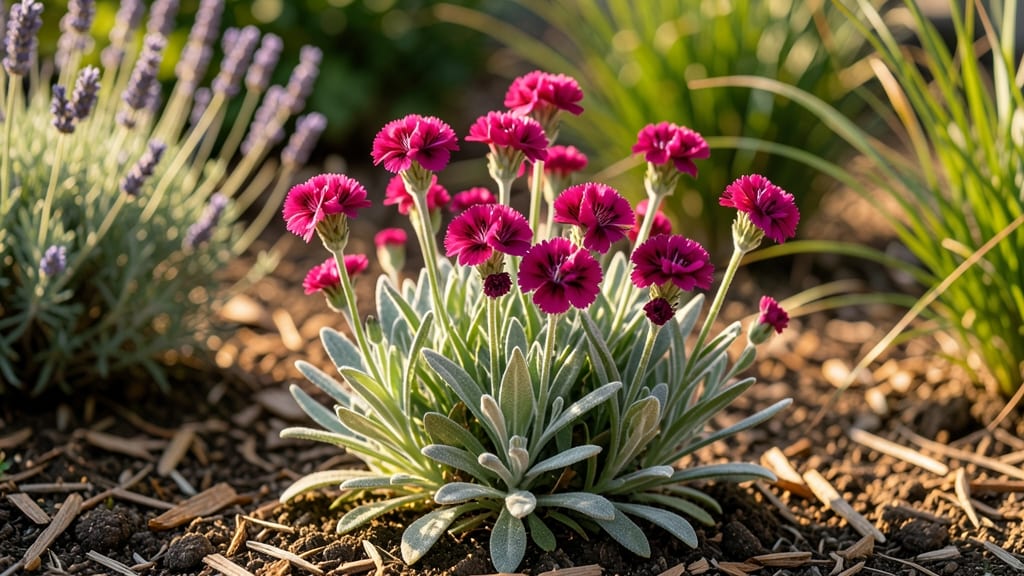
Dianthus is a perennial in most climates because its tough underground rhizomes store nutrients and moisture for regrowth. However, cold-sensitive varieties often die back in winter unless you protect them with mulch or frost covers, turning them into short-lived perennials or annuals in freezing zones.
This hardy behavior comes from dianthus's unique root system, which acts like a natural battery for the plant. 🌱 The rhizomes store carbohydrates and water during growing seasons, allowing shoots to emerge quickly in spring.
In milder climates (USDA zones 4-9), this means reliable year-after-year blooms, while colder regions often need extra winter care to prevent freeze damage. The key difference between hardy and tender varieties lies in their rhizome thickness and insulation needs—thicker roots handle frost better but still benefit from protective layers.
For gardeners in colder areas, the solution is simple: apply 3-4 inches of mulch around the base after the first frost and use burlap wraps or frost cloth for extra protection. This mimics the plant's natural dormancy period while preventing root freeze.
I've found that even tender varieties like 'Firewitch' dianthus can survive multiple winters with these precautions, making them more perennial-like in practice.
What's interesting is how dianthus adapts—some varieties actually die back to the ground in winter but regrow from the same rhizomes in spring, while others produce new shoots from protected buds.
This dual strategy explains why they're often classified as "short-lived perennials" in cold climates—they're not true annuals, but their lifespan depends heavily on winter survival conditions.
💡 In This Article
- How Dianthus Rhizomes Enable Perennial Growth
- Climate-Specific Dianthus Care for Year-Round Blooms
How dianthus rhizomes enable perennial growth
Dianthus plants rely on their rhizomes—thick, horizontal underground stems—to act as energy storage units, much like a potato's eyes or a ginger root. These specialized stems contain starch reserves and specialized cells that store water, allowing the plant to survive harsh conditions.
When temperatures drop, the rhizomes enter a dormant state, slowing metabolic processes to conserve energy while protecting the plant's core. Hardy varieties like 'Firewitch' or 'Pink Charm' have thicker rhizomes that can withstand -20°F to -10°F temperatures, while tender types may struggle below 0°F.
The magic happens in spring when warmer soil triggers the rhizomes to break dormancy and send up new shoots. This process is regulated by photoperiodism—the plant's internal clock responds to increasing daylight hours, signaling it's time to regrow.
The rhizomes also produce auxin hormones, which stimulate root and shoot development. What's fascinating is how these underground structures can regenerate even if the above-ground foliage dies back completely—a survival strategy that explains why dianthus often returns year after year, even after severe winters.
Here's where the distinction between hardy and tender varieties becomes clear: hardy dianthus develop deeper rhizome systems (often 3-5 inches underground) that insulate against frost, while tender types have shallower roots (1-2 inches deep) that freeze more easily.
The rhizomes' ability to reabsorb nutrients from dying foliage before winter also plays a role—the plant essentially recycles its own resources to fuel next year's growth. This biological adaptation explains why dianthus can thrive in poor soils while still producing vibrant blooms.
Consider this comparison: in USDA Zone 5, a hardy dianthus might lose its leaves in winter but regrow from the same rhizome system, while a tender variety in the same zone could die back completely unless protected.
The rhizomes' dormancy cycle is what truly makes dianthus perennial in most climates—it's not just about surviving winter, but about storing enough energy to launch a full bloom cycle the following spring. Without this underground reserve system, dianthus would behave more like an annual, relying entirely on seed propagation.
What most gardeners don't realize is how soil temperature affects rhizome activity. Even in mild winters, if the ground freezes solid, rhizomes can suffer from oxygen deprivation in waterlogged soils. This is why well-draining soil is crucial—it allows gases to circulate while maintaining moisture levels that prevent rhizome desiccation.
The ideal soil mix for perennial dianthus should contain 50% native soil, 30% compost, and 20% perlite or sand to create this perfect balance.
For those wondering about division techniques, dianthus rhizomes can be separated every 2-3 years to prevent overcrowding. Simply dig up the clump in early spring, gently pull apart the sections (each with at least 1-2 buds), and replant.
The rhizomes' natural ability to regenerate roots means even damaged sections often survive, making propagation surprisingly easy. This biological resilience is what turns dianthus from a seasonal plant into a reliable garden perennial in most climates.