
Flowers
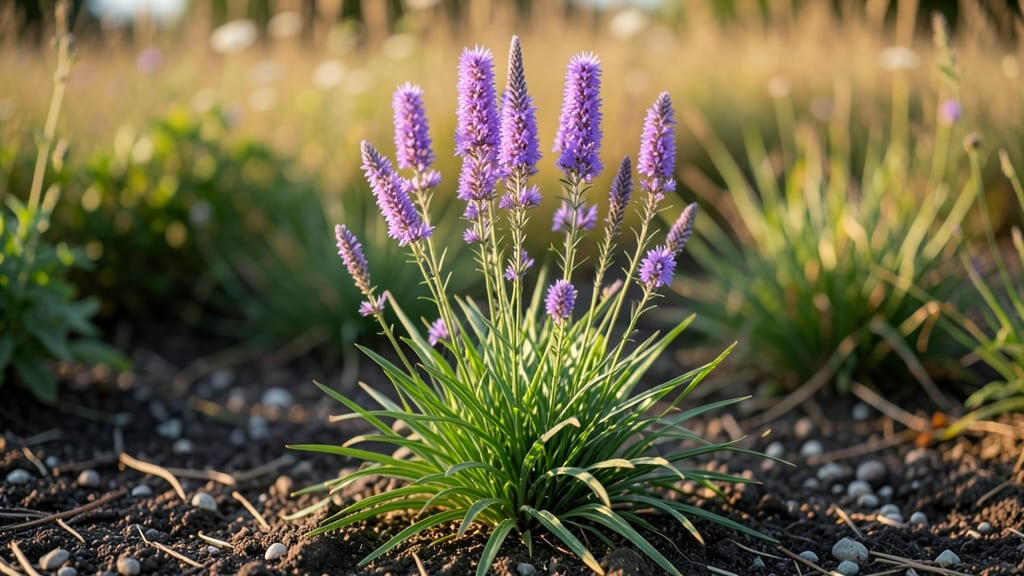
Yes, liatris is a perennial plant that thrives year-round thanks to its tough underground rhizomes, which store energy for regrowth after winter dormancy and blooming seasons.
Liatris earns its perennial status through its specialized rhizome system, which acts like a built-in energy reserve.
These thick, fibrous roots store carbohydrates and nutrients during the growing season, allowing the plant to push through frost and emerge stronger each spring. 🌱 Unlike annuals that complete their lifecycle in one season, liatris plants can live for decades with proper care, often returning with vibrant purple blooms year after year.
This hardiness makes liatris particularly appealing for gardeners seeking low-maintenance plants. The rhizomes also help the plant tolerate drought conditions once established, though they still benefit from occasional watering during their first growing season. Understanding this growth mechanism helps explain why liatris often outperforms many other wildflowers in challenging climates.
💡 In This Article
- How Liatris Rhizomes Sustain Perennial Growth
- Caring for Liatris Perennials: Planting and Maintenance Tips
How liatris rhizomes sustain perennial growth
Liatris survives as a perennial thanks to its specialized rhizome system, which functions like a biological battery. These thick, horizontal roots store carbohydrates—primarily starches and sugars—as energy reserves during the growing season. When temperatures drop, the rhizomes enter dormancy, conserving energy until spring warmth triggers regrowth.
This process is similar to how tulip bulbs store nutrients, but liatris rhizomes are more fibrous and spread horizontally rather than forming a single bulb.
The rhizomes also contain high concentrations of antioxidants and growth hormones that protect against frost damage. Studies show these underground structures can withstand temperatures as low as -20°F when properly insulated by soil or mulch.
Unlike bulbous perennials that rely on a single storage organ, liatris rhizomes form a network that allows the plant to regenerate even if parts are damaged. 🌿 This redundancy explains why established liatris clumps often recover quickly after harsh winters.
What makes liatris particularly resilient is its ability to photosynthesize through its rhizomes during early spring, even before shoots emerge. This gives it a head start over many other perennials that must rely entirely on stored reserves.
The plant's flowering stems develop from these rhizomes in late spring, with each stem capable of producing 50-100 tiny purple blooms that attract pollinators. This multi-year flowering cycle continues as long as the rhizomes remain healthy and undisturbed.
Comparing liatris to other perennial types reveals its unique advantages. While daffodils store energy in bulbs and peonies use thick roots, liatris rhizomes combine storage with vegetative spread.
This means each year, the plant can expand its territory by 6-12 inches through rhizome growth, creating denser clumps that are more drought-resistant. The trade-off is that this spread requires more space than bulbous perennials, which stay contained to their original planting area.
One fascinating adaptation is the rhizome's ability to produce new shoots from nodes along its length. If you accidentally cut a rhizome during division, each segment with a node can regenerate a new plant. This makes propagation effortless compared to plants that require careful bulb handling.
The rhizomes also help liatris tolerate poor soil conditions by filtering nutrients from a wider area, making it more adaptable than many ornamental perennials.
For gardeners, understanding this growth mechanism explains why liatris often thrives where other plants fail. The rhizomes' ability to store water and nutrients means the plant can survive 3-4 weeks without rain once established, while still producing vibrant blooms.
This combination of storage capacity and spread makes liatris one of the most reliable perennials for low-maintenance gardens. 💛