
Flowers
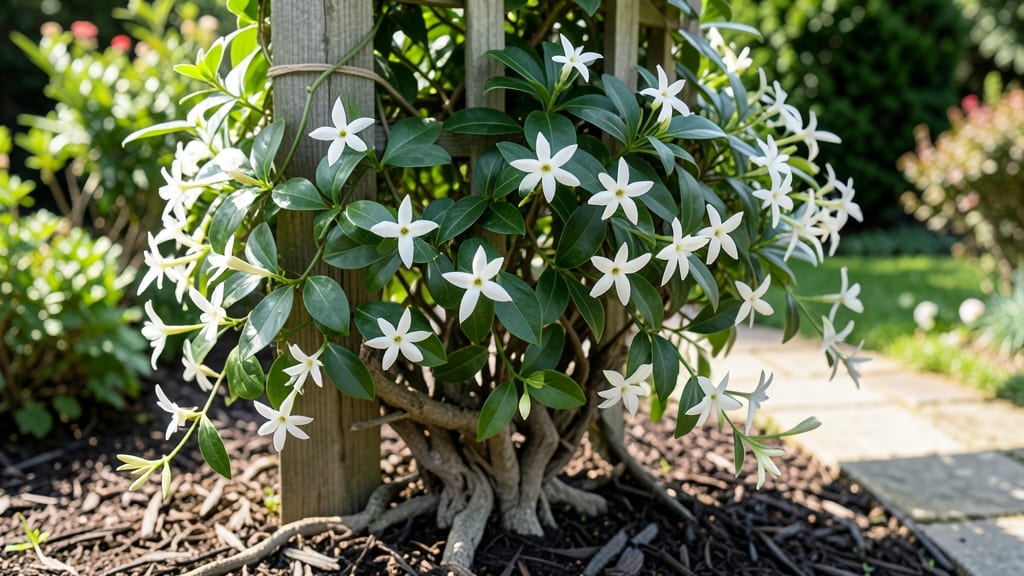
Star jasmine acts as a perennial plant in USDA zones 7-11, thanks to its deep root system that stores energy during winter dormancy and revives each spring. In colder regions, it may appear dead above ground but often recovers from its roots with proper protection.
Star jasmine's perennial nature comes from its ability to enter a natural state of dormancy when temperatures drop. 🌱 The plant's roots remain alive underground, storing nutrients and energy to fuel regrowth once spring arrives.
This makes it a reliable choice for gardeners in mild climates, as it returns year after year with minimal care. In colder areas, the above-ground growth often dies back but can be coaxed back to life with proper winter protection like mulch or frost blankets.
What sets star jasmine apart is its resilience—even if the stems appear damaged after winter, the roots frequently remain viable. This hardiness is why many gardeners choose it for trellises and arbors, as it can recover beautifully with just a little patience and attention in early spring.
💡 In This Article
- How Star Jasmine Roots Overwinter and Regrow
- Climate-Specific Care for Star Jasmine Perennials
How star jasmine roots overwinter and regrow
Star jasmine's perennial survival hinges on its deep, fibrous root system that stores carbohydrates and nutrients during winter dormancy. When temperatures drop below 40°F, the plant triggers a natural shutdown, halting above-ground growth while the roots remain active.
These roots can extend 3-5 feet deep, accessing moisture and energy reserves that sustain the plant through frost. The key mechanism is the conversion of stored starches into sugars, which act as a biological antifreeze, protecting cellular structures from freezing damage.
What makes star jasmine uniquely resilient is its ability to tolerate 10-15°F temperatures for short periods without permanent damage. The plant's evergreen leaves contain waxes that reduce water loss, while its roots produce proteins that stabilize cell membranes during freeze-thaw cycles.
This physiological adaptation explains why star jasmine often recovers even after stems appear blackened by frost. 🌿 The deeper the root system, the greater its capacity to regenerate new shoots once temperatures rise above 50°F consistently.
Spring regrowth begins when the roots detect increasing daylight and soil temperatures around 55-60°F. New shoots emerge from the crown (the base where stems meet roots), drawing on the stored energy reserves.
This process typically takes 2-4 weeks after the last frost, with growth accelerating in response to warmer air and soil. Unlike annuals that must be replanted yearly, star jasmine's root system acts as a biological battery, recharging each season to produce its signature fragrant white flowers.
The plant's dormancy isn't complete hibernation—roots continue slow metabolic activity, breathing through microscopic pores called lenticels. This allows them to absorb any available moisture while conserving energy.
In ideal conditions (well-drained soil, 6-8 hours of sunlight), star jasmine can even produce limited foliage during mild winters, giving it a head start on spring growth. The trade-off is that colder winters may delay emergence until late spring, but the roots remain viable for years.
Here's what happens at the cellular level: Cold-hardy proteins in star jasmine roots bind to cell membranes, preventing ice crystal formation that would rupture them. This is similar to how antifreeze works in car engines, but naturally occurring.
The plant also produces higher concentrations of proline, an amino acid that acts as a cellular protectant during stress. These adaptations explain why star jasmine often recovers even after stems appear completely dead above ground.
For gardeners, this means star jasmine can be pruned back severely in late winter without harming the plant. The roots will still have sufficient energy to regenerate new growth from the base.
This hardiness is why star jasmine thrives in coastal climates where temperatures rarely drop below 20°F, and why it can often be coaxed back to life in colder zones with proper winter care.