
Flowers
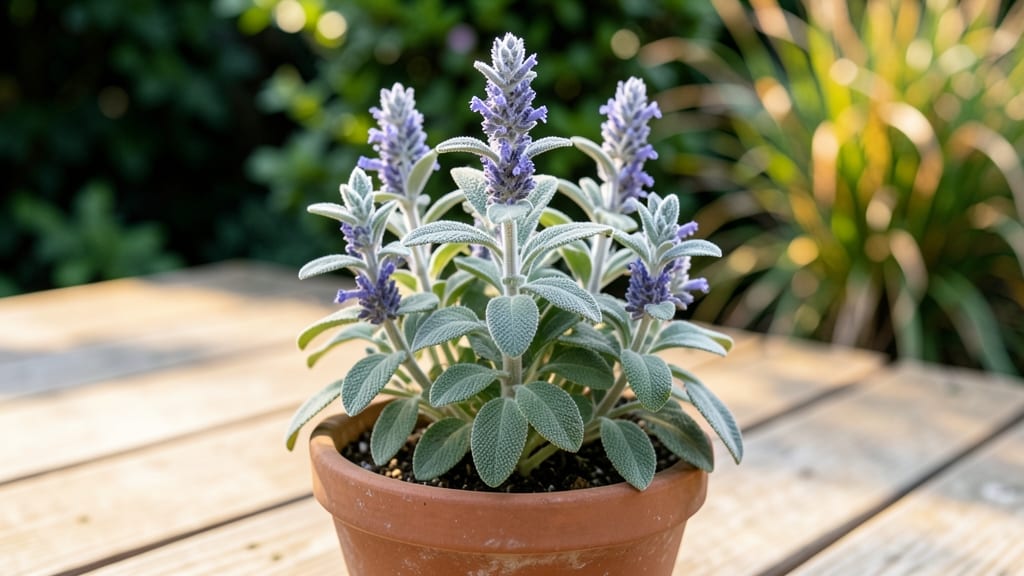
Sage behaves as a perennial plant in mild climates but exhibits annual dieback in colder regions, where it returns each spring from its hardy root system. Whether it thrives long-term depends on winter conditions and proper seasonal care.
This dual nature comes down to temperature tolerance—sage's roots can withstand frost, but above-ground growth stops when temperatures drop below 10°F. 🌿 In warmer zones (USDA 7+), it grows continuously, while in colder areas (USDA 5-6), it sheds leaves but survives underground.
The key to perennial success lies in protecting roots from extreme cold and ensuring adequate drainage, which prevents rot during winter dormancy.
What sets sage apart is its resilience—even after full dieback, the roots store enough energy to regrow within 4-6 weeks of spring warmth. This makes it a low-maintenance perennial for gardeners in transitional climates, provided you mulch heavily before frost and avoid overwatering during dormancy.
💡 In This Article
- How Sage’s Perennial Nature Works in Different Climates
- Caring for Sage Over Winter to Ensure Spring Regrowth
How sage’s perennial nature works in different climates
Sage's perennial behavior hinges on its root system, which stores carbohydrates and nutrients to fuel regrowth. Unlike annuals that complete their life cycle in one season, sage's roots remain dormant but alive through winter, capable of surviving temperatures down to -10°F in hardy varieties like Salvia officinalis.
This underground resilience explains why it returns each spring—even after full above-ground dieback. The key mechanism is its deep taproot system, which can extend 3-5 feet deep, accessing moisture and nutrients even when surface soil freezes.
In warmer climates (USDA zones 7-10), sage grows continuously, producing new growth year-round with minimal dormancy. The leaves remain aromatic and green throughout winter, though growth slows during cooler months.
In contrast, colder regions (USDA zones 5-6) trigger a full dormancy cycle: leaves turn brown and crisp, stems die back, but the root crown remains protected.
What's fascinating is how the plant converts stored sugars into antifreeze-like compounds during frost, preventing cellular damage—a survival strategy shared with other hardy perennials like lavender.
The transition between perennial and annual behavior depends entirely on winter severity. In zones 4 and colder, sage often behaves more like an annual, as prolonged sub-zero temperatures can kill even the roots.
This explains why gardeners in these areas must treat it as a short-lived perennial or take extra winter precautions. The plant's natural range in the Mediterranean and Balkan regions (where winters are mild) further proves its adaptability—it thrives where frost is rare but struggles with prolonged freezing.
What most gardeners miss is how sage's growth cycle mirrors deciduous trees: it sheds foliage to conserve energy during cold months. The brown stems you see in spring aren't dead—just dormant.
When temperatures rise above 40°F, new shoots emerge from the root collar within 2-3 weeks, demonstrating the plant's remarkable ability to "reset" each season. This cycle makes sage one of the most resilient culinary herbs for gardeners in transitional climates.
For visual comparison, imagine a 3-year-old sage plant in zone 7: it may reach 2 feet tall with multiple woody stems by summer, then shrink to a brown skeleton by winter, only to rebound fully by spring.
In zone 5, that same plant might survive only 2 winters without protection, showing how climate directly dictates its perennial nature. The root system's size—often 6-12 inches wide—is what determines its ability to store enough reserves for regrowth.
Here's the botanical secret: sage's leaves contain 1-2% essential oils, including thujone and camphor, which act as natural antifreeze agents. These compounds help protect cellular structures during freezing, though they're not as effective as specialized proteins found in true cold-hardy perennials.
This explains why well-established sage plants (3+ years old) survive better—they've built up more root mass and oil reserves over time.