
Planting
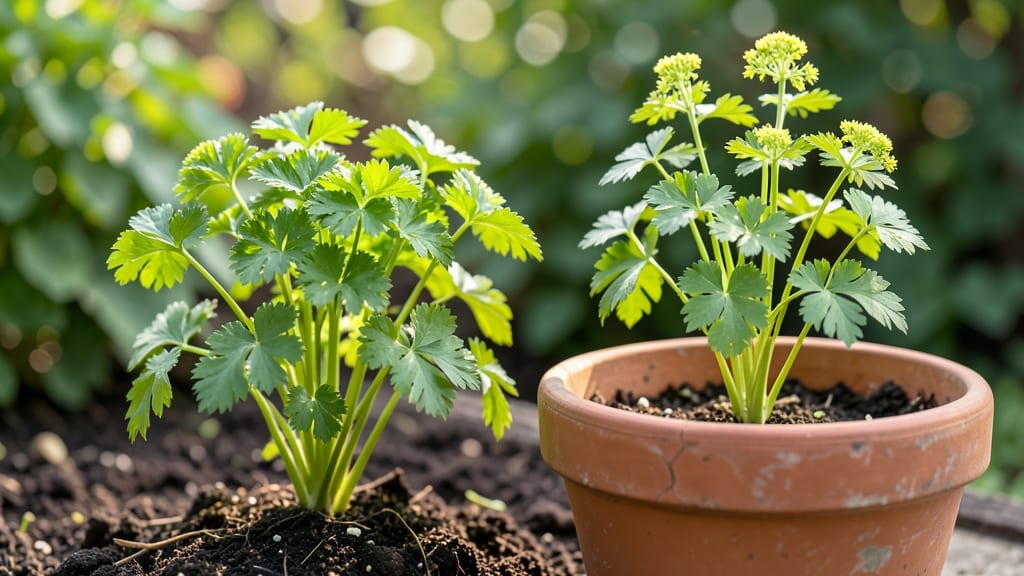
Parsley is not a true perennial plant, though it often behaves like one by regrowing from its root system for 1-2 years in mild climates. Its lifespan is determined by cold zones, where freezing temperatures typically kill it—but roots may survive to resprout.
Parsley's classification as a biennial means it follows a two-year growth cycle, storing energy in its taproot during the first year to fuel flowering and seed production in its second. 🌱 Unlike true perennials that regrow annually from the same root system, parsley's resilience depends on climate—it thrives in USDA zones 3-11 but struggles with prolonged frost.
The key to extending its life lies in protecting its roots during winter, which is why gardeners in colder regions often use mulch or containers to simulate perennial behavior.
What sets parsley apart is its ability to regenerate from even small root fragments, making it surprisingly hardy when given proper care. This trait explains why many gardeners mistakenly call it a perennial—its persistence in favorable conditions creates the illusion of perennial growth.
For those in frost-prone areas, selecting cold-hardy varieties like 'Moss Curled' and implementing winter protection strategies can significantly extend harvests.
💡 In This Article
- Why Parsley Dies Back in Cold Climates
- How to Overwinter Parsley for Year-Round Harvests
Why parsley dies back in cold climates
Parsley follows a biennial lifecycle, meaning it completes its growth cycle in two years rather than returning annually like true perennials. During its first year, the plant focuses on building a robust taproot system that stores carbohydrates and nutrients.
This root can grow up to 12-18 inches deep, acting as an energy reserve for the plant's second year. The key difference from perennials like chives is that parsley doesn't have the same regenerative underground stems (rhizomes) to survive year after year.
The second year is all about reproduction—parsley bolts (sends up a tall flowering stalk) and produces seeds, which is when its flavor often becomes bitter. This biological process is triggered by hormonal changes in response to daylight length and temperature shifts.
In cold climates, frost interrupts this cycle by damaging the plant's above-ground growth, but the real damage comes when temperatures drop below 20°F, which can kill the entire plant if the roots aren't properly protected. 🌱 The taproot itself is surprisingly resilient, but prolonged exposure to freezing soil (below 32°F) will eventually kill it too.
What makes parsley's survival strategy unique is its ability to regenerate from even small root fragments. When you see parsley regrowing in spring, it's often from these surviving root pieces that have stored enough energy to produce new shoots.
This is why gardeners in mild climates (USDA zones 8-11) can harvest parsley for multiple years—it's not truly perennial, but its root system gives it perennial-like behavior. In contrast, true perennials like asparagus or rhubarb have specialized underground stems that continuously produce new shoots each season.
Cold hardiness varies by variety, with some types like 'Moss Curled' showing slightly better resilience in colder zones (USDA 3-7). The critical factor is soil temperature—parsley roots can survive brief cold snaps if the ground doesn't freeze solid, but they need protection when winter temperatures persist.
This is why mulching with 4-6 inches of straw or leaves becomes essential in frost-prone areas, creating an insulating layer that maintains soil temperatures above freezing.
Here's what actually happens when frost hits: The plant's cells begin to dehydrate as ice crystals form in the soil, disrupting water uptake. At temperatures below 28°F, cellular damage becomes irreversible unless the roots have stored sufficient reserves.
This is why second-year plants (which have already used some of their stored energy for flowering) are more vulnerable than first-year plants with full root reserves.
The good news is that even if the plant appears dead in spring, those roots might still be viable—just waiting for warmer soil to trigger regrowth.
For gardeners in transitional climates (zones 5-7), the key is timing—cutting back parsley before the first hard frost gives the roots more energy reserves to survive winter. This is different from true perennials which can handle winter dieback and regrow from their established root systems.
Parsley's survival depends entirely on how well it can protect and utilize its stored energy during dormancy. 💫