
Flowers
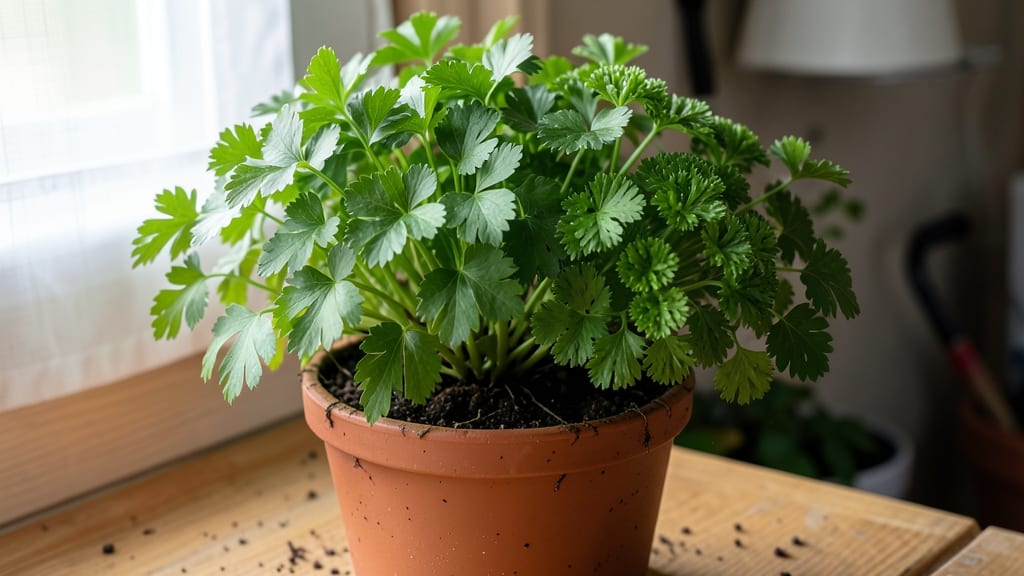
Parsley isn't a true perennial herb, but it acts like one in many gardens by regrowing from its root crown for 1-2 years before eventually bolting. Its lifespan can be extended with proper care and climate conditions.
Technically classified as a biennial, parsley completes its life cycle over two years in colder regions. 🌱 The key lies in its taproot system, which stores energy to regenerate foliage when conditions are right—often making it seem perennial.
In milder climates, parsley can persist for years, but it eventually exhausts its root reserves and bolts (sends up a flower stalk) after 2-3 seasons. The secret to keeping it thriving longer? Consistent moisture, nutrient-rich soil, and protecting it from extreme cold or heat.
This dual nature explains why gardeners sometimes treat parsley as a perennial—it often returns year after year without replanting. However, its true botanical classification as a biennial means it's not as hardy or long-lived as true perennials like thyme or rosemary.
Understanding this helps you manage expectations and care strategies for maximum harvests.
💡 In This Article
- Parsley’s Root System and Lifespan Explained
- How to Extend Parsley’s Growth as a Long-Lived Herb
Parsley’s root system and lifespan explained
Parsley's classification as a biennial stems from its unique taproot system, which stores energy in its first year of growth. Unlike fibrous-rooted annuals that die after flowering, parsley develops a thick, carrot-like root that accumulates starches and nutrients.
This root crown allows it to regenerate foliage when conditions improve—typically in spring after winter dormancy. The confusion with perennials arises because this regrowth can happen for 2-3 years in mild climates, mimicking perennial behavior.
The key difference lies in its flowering cycle: true perennials like oregano or lavender produce flowers annually without dying back, while parsley bolts (sends up a flower stalk) after 18-24 months in most climates. This bolting triggers seed production and eventual death of the plant.
In colder regions (USDA zones 3-5), the first year focuses on root development, while the second year produces leaves and flowers. In warmer zones (6-10), the cycle accelerates, with bolting occurring within 12-18 months if not harvested properly. 🌱
What makes parsley's lifespan extendable is its ability to survive mild winters when protected. The taproot can remain dormant through -10°F to 15°F temperatures if insulated with mulch or snow.
This cold hardiness explains why gardeners in zones 6-10 often see parsley return year after year—it's not true perennial growth, but rather repeated cycles of root survival and regrowth. The plant's energy reserves in the taproot support multiple leaf harvests before eventually depleting.
Harvesting practices significantly impact lifespan. Cutting leaves too aggressively early in the season can weaken the root system's ability to store energy. I've found that harvesting no more than 1/3 of the plant at a time and avoiding cuts below the lowest set of leaves preserves the root's vitality.
The plant's natural tendency to bolt is triggered by day length and temperature changes, not just age—so timing harvests to avoid long daylight periods in late spring can delay bolting by 4-6 weeks.
Soil quality plays a surprising role too. Parsley thrives in well-draining soil with a pH of 6.0-7.0, which prevents root rot while maximizing nutrient uptake. Poor soil conditions force the plant to divert energy to survival rather than leaf production, accelerating the biennial cycle.
Adding compost annually replenishes nutrients and supports the root's energy storage capacity. The result? Healthier regrowth and delayed bolting in subsequent seasons. 💛
Consider this comparison: true perennials like thyme have fibrous root systems that spread horizontally, while parsley's vertical taproot stores energy like a carrot. This structural difference explains why parsley can't persist indefinitely—its energy reserves are finite.
However, with proper care, those reserves can support 2-3 productive growing seasons before the plant's natural cycle takes over.